
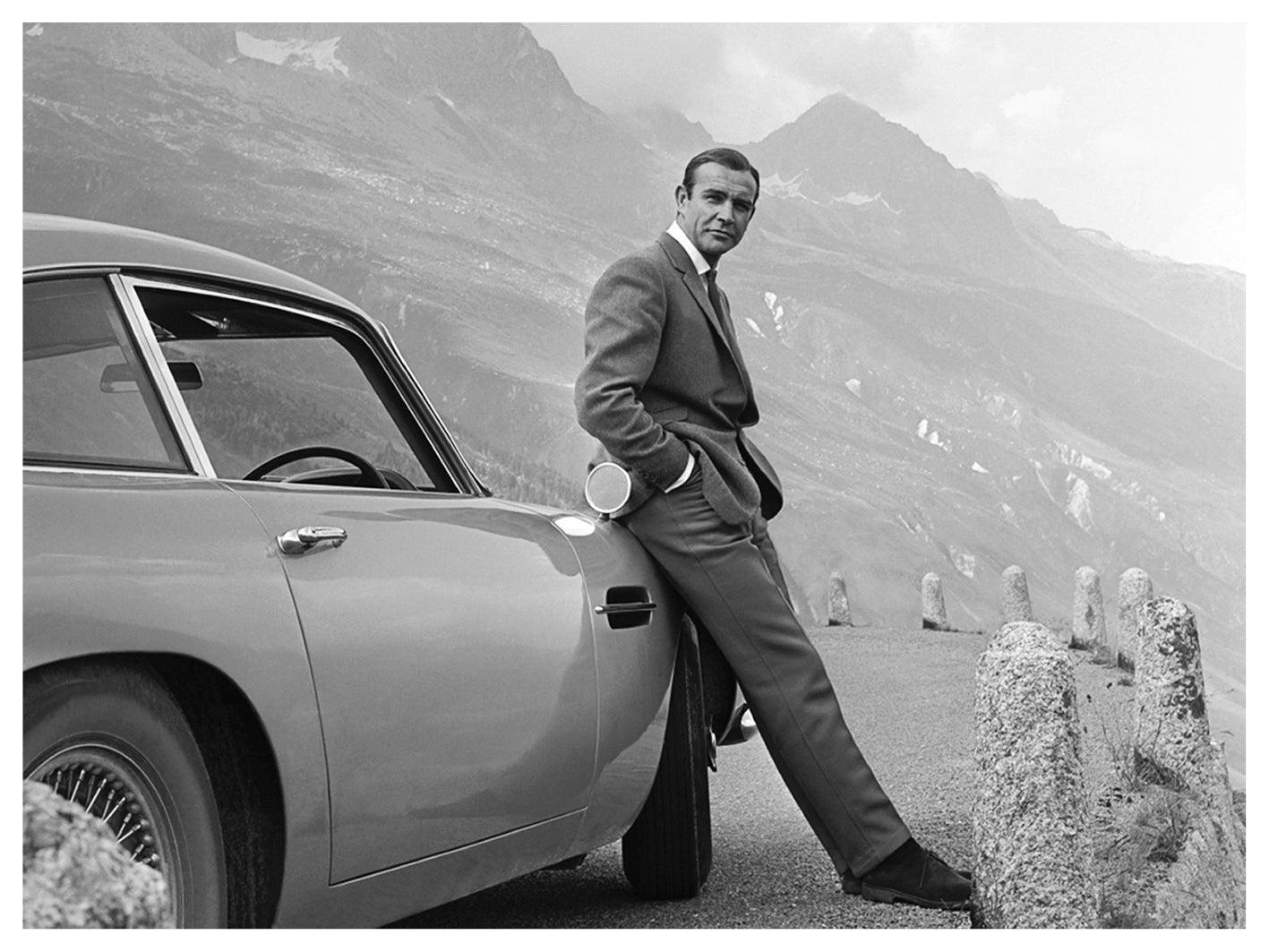

There was a moment when automobiles stopped being machines.
They entered the theater.
Not literally, perhaps, but culturally. Somewhere between Hollywood mythology, European cinema, and the rise of visual luxury, cars abandoned the role of transportation and became symbols — objects capable of speaking before their owners ever did.
Cinema understood something very early: desire rarely moves alone.
It arrives dressed.
Sometimes in tailoring. Sometimes in architecture. Sometimes in silence.
And very often, on four wheels.
The Moment Cinema Understood Luxury
Cinema understood something long before modern branding: objects could speak.
Long before dialogue explained power, elegance, or status, automobiles had already begun doing the work visually.
Perhaps no figure embodied this transformation more powerfully than Sean Connery as James Bond.
When Connery stepped beside an elegant automobile, the image communicated something larger than transportation. It suggested confidence, refinement, danger, and a distinctly modern idea of masculinity.
The car became part of the performance.
Not decoration.
Identity.
In many ways, the automobile became an extension of the cinematic character itself — as recognizable as a tailored suit or a perfectly chosen watch.
This relationship between luxury and visual storytelling would later evolve through figures like Daniel Craig, whose version of Bond transformed elegance into something quieter, more restrained, yet equally powerful.
The audience was never simply watching someone drive.
They were watching a world.
A way of moving.
A form of power.
Even publications such as Sight and Sound Magazine increasingly explore how cinema builds psychological meaning through visual objects rather than dialogue alone — a language luxury automobiles have mastered for decades.

The Automobile as Performance
Before cinema, a car was largely functional.
After cinema, it became theatrical.
The arrival of an automobile on screen began to carry emotional meaning. It could announce status before conversation. Seduction before intimacy. Wealth before explanation.
Luxury stopped being ownership.
Luxury became atmosphere.
The polished silhouette pulling into view.
The silence before a door opens.
The confidence of someone stepping out of a perfectly chosen machine.
Cinema taught audiences how to interpret these gestures instinctively.
Without explanation, we understood who belonged to power.
And who merely wanted to imitate it.
The Birth of Automotive Mythology
What cinema truly gave luxury automobiles was mythology.
A great cinematic object no longer belonged entirely to reality.
It entered imagination.
This may explain why certain images remain emotionally permanent.
We rarely remember only the character.
We remember the silhouette.
Sean Connery emerging from timeless elegance.
Daniel Craig arriving with restraint and quiet force.
Cinema transformed automobiles into emotional memory — and memory, perhaps, is where luxury survives longest.
Certain vehicles became impossible to separate from ideas larger than themselves: mystery, aristocratic confidence, sophistication, rebellion, seduction.
The machine disappeared.
The mythology remained.

Why Luxury Cars Became Status Symbols
What makes luxury automobiles culturally fascinating is not speed.
It is symbolism.
A luxury vehicle tells a story before language begins.
Cinema amplified this truth.
The right automobile could communicate lineage, confidence, taste, emotional distance, or silent power in seconds.
A car became social language.
An extension of identity.
A silent biography.
This may explain why luxury automobiles continue to fascinate even people with little interest in engineering itself.
Because desire was never mechanical.
It was emotional.
Symbolic.
Cultural.
Even magazines such as GQ and Esquire frequently frame luxury masculinity through the relationship between clothing, objects, watches, architecture, and automobiles — all visual cues that quietly shape identity.
The Theater of Desire
Perhaps this is why certain automobiles continue to fascinate across generations.
Not because of horsepower.
But because they survived as myths.
Cinema gave them emotional permanence.
Once an object enters mythology, it stops behaving like an object at all.
It becomes memory.
It becomes fantasy.
It becomes culture.
And perhaps luxury, at its highest level, has always been this:
The art of entering a room — or a scene — at exactly the right moment.
Editor’s Note
At QEditorial Magazine, we often speak about fashion, architecture, hospitality, and objects of desire — but cinema has perhaps always been the greatest architect of aspiration.
Luxury automobiles did not become cultural symbols through engineering alone. They became mythology through atmosphere, storytelling, and the emotional worlds cinema quietly built around them.
This article is not about cars in the traditional sense. It is about what happens when an object begins to represent something larger than itself: confidence, elegance, masculinity, status, memory — or simply the fantasy of belonging to another world.
Because sometimes, culture teaches us not only what to desire, but how to desire it.
— QEditorial Magazine
Fashion, Culture, Identity



Leave a Reply