
Why the return of Miranda Priestly

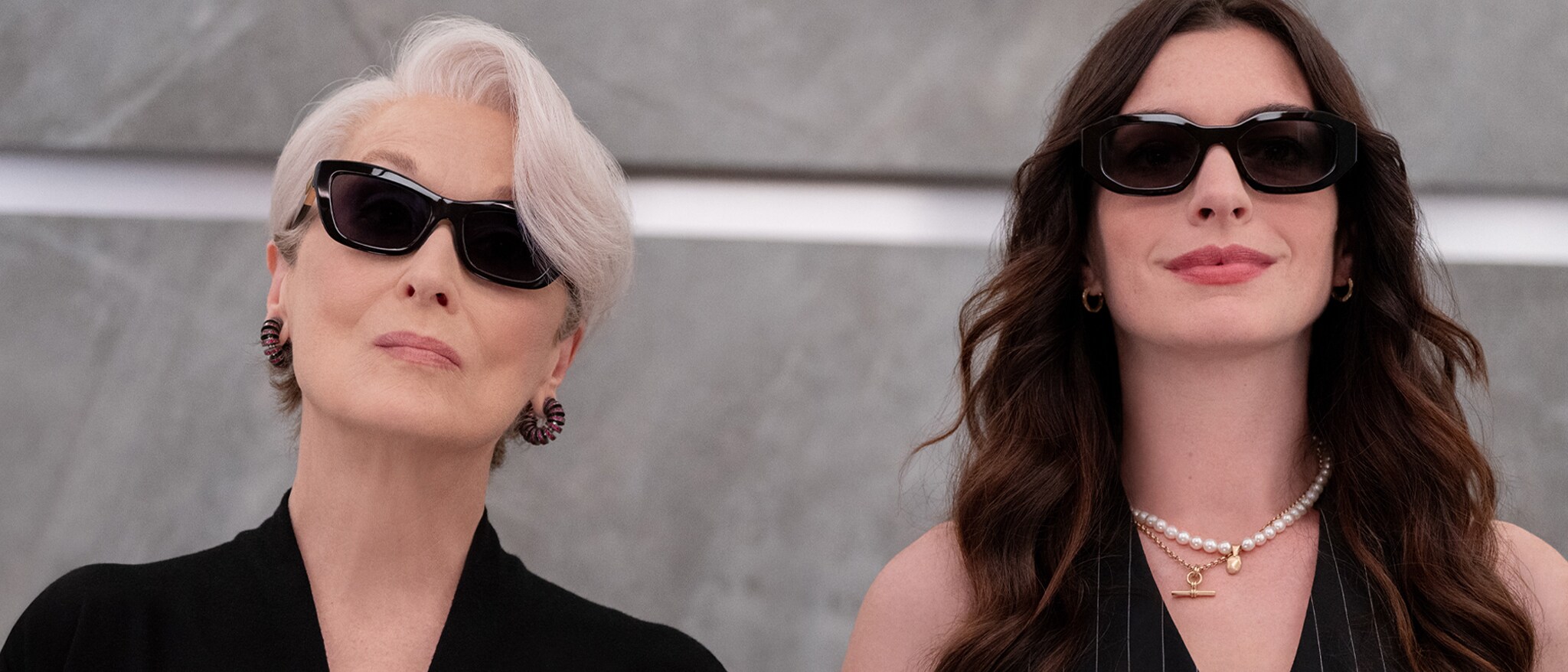
Nearly twenty years after the original film turned fashion into posture, fear, ritual, and ambition, The Devil Wears Prada 2 returns not simply as a sequel, but as a cultural event. Officially set for release on May 1, 2026, the film arrives with the weight of memory behind it—but also with something more interesting: the sense that fashion is once again ready to look at itself through one of its most enduring fictions.
What makes this return especially revealing is not only the film, but the way Vogue has chosen to frame it. The magazine has treated the sequel less like ordinary entertainment news and more like an extension of fashion’s own mythology: first through an exclusive early look at the film, then through its broader editorial orbit around Miranda Priestly, image-making, and the afterlife of magazine power.

That editorial framing became even more significant with the May 2026 Vogue conversation between Meryl Streep and Anna Wintour, a moment that made the boundary between fiction and institutional fashion memory feel almost deliberately thin. Miranda Priestly has always existed in the cultural shadow of the fashion editor as archetype: disciplined, feared, elegant, and untouchable. But when Vogue itself begins staging that tension so openly, the sequel becomes more than a film. It becomes a mirror that fashion media is willing to hold up to its own face.
There is also something timely in the sequel’s arrival now. As broader coverage from ELLE and Variety makes clear, the return of this story is being read not only as nostalgia, but as a commentary on media authority itself. The world that once made Miranda Priestly feel untouchable no longer exists in quite the same way. Print has changed. Editorial power has changed. Fashion has become faster, louder, more commercial, and more transparent about its own machinery. That is exactly why Miranda matters again: not because she belongs to the past, but because she now represents a form of authority the industry is still trying to redefine.

Even the film’s promotional wardrobe has been absorbed into fashion discourse. Vogue’s coverage of the press tour, its analysis of modern power suiting, and its piece on Anne Hathaway’s tour wardrobe all suggest the same thing: this is not being sold merely as a film release, but as a fashion narrative. The clothing is not there to decorate the story. It is the story’s second language.
And that is why this sequel feels unexpectedly relevant. The first Devil Wears Prada gave popular culture an unforgettable image of fashion power. This new chapter seems poised to ask what remains of that power when the structures beneath it begin to shift. In that sense, Miranda Priestly returns not only as a character, but as a question: what does authority look like when the world that once obeyed it has already changed? Fashion has always needed its myths. The real fascination of The Devil Wears Prada 2 is that it arrives at a moment when myth itself must learn how to survive modernity.

Editor’s Reflection
Some stories do not return to entertain.
They return to measure what time has changed.
The Devil Wears Prada 2 enters a world that no longer believes in authority in the same way, and that is precisely what makes it interesting. The original film gave fashion one of its most enduring myths: power made visible through silence, discipline, precision, and distance. It showed us that elegance could command a room before saying a word.
But myth behaves differently when it comes back.
It is no longer only memory. It becomes confrontation.
Today, fashion exists inside a far more exposed system—faster, more commercial, more public in its mechanisms, and less protected by mystery. In such a landscape, the return of Miranda Priestly means more than nostalgia. It suggests that fashion is once again looking at its own image, but this time with greater awareness of what has been lost, what has been revealed, and what still refuses to disappear.
That is why this sequel matters.
Not because it revives an icon, but because it places that icon in a changed world and asks whether power can still appear immaculate when the structures behind it are no longer invisible.
Fashion has always depended on image.
But its deepest influence has never come from image alone. It comes from myth—from the figures, symbols, and fictions through which an industry learns to recognize itself.
And perhaps that is the real reason this story returns now: not to repeat the past, but to ask whether fashion still knows how to believe in its own legends.
By Nicolò Di Stefano

For selected advertising and editorial partnerships, contact qeditorial@gmail.com.


Leave a Reply