
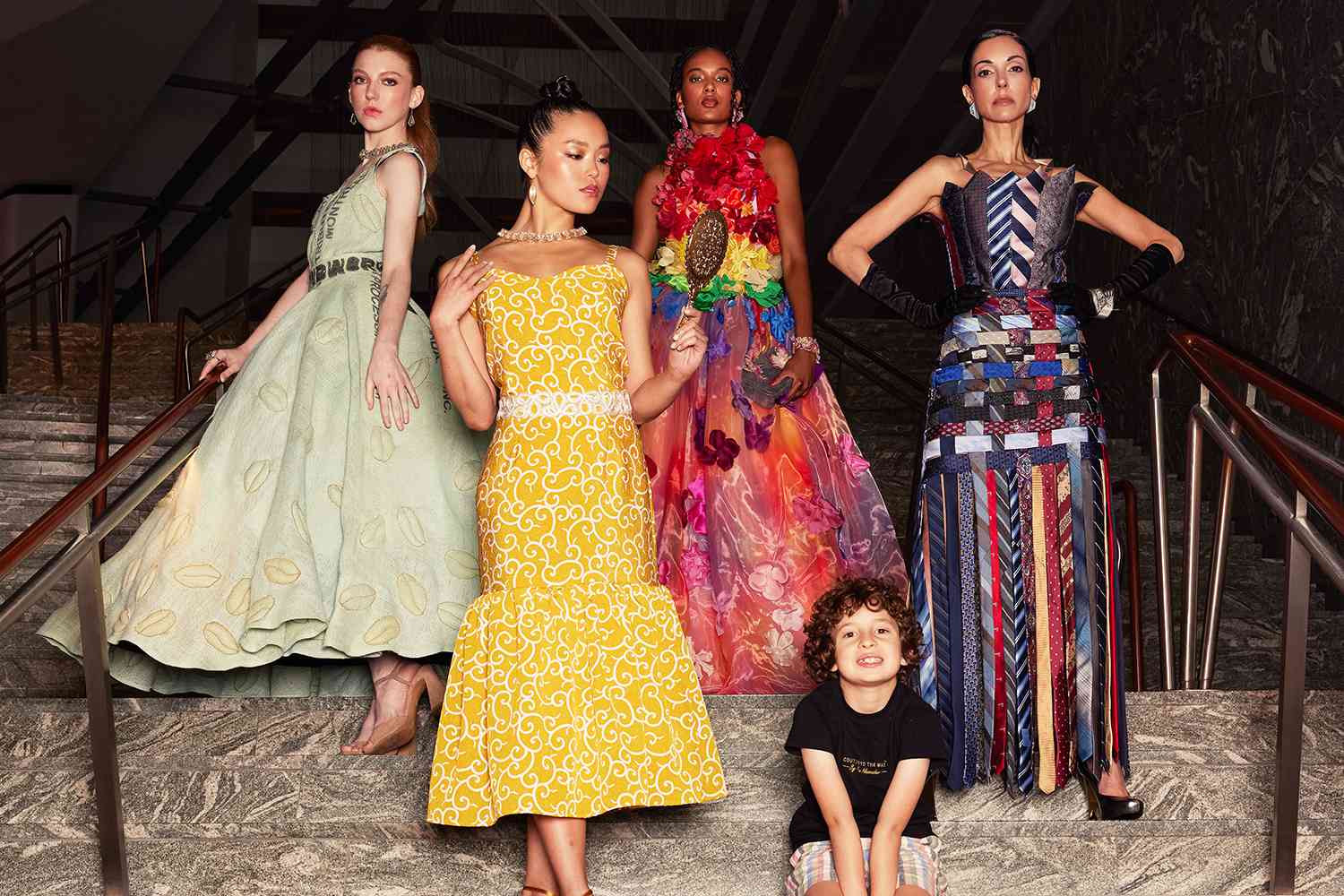
Max Alexander, the young prodigy who turned instinct into authorship

Fashion has always loved youth.
But it does not always know what to do with genius when it arrives too early.
That is what makes Max Alexander so compelling. He is not simply a child who likes clothes, nor a charming internet phenomenon dressed in the language of creativity. He is something rarer: a young talent whose relationship with fashion appears instinctive, almost pre-rational, as though beauty reached him before the world had time to explain it. According to People, Max began designing and creating garments at just four years old, long before most children could even articulate a vocation.
Part of the mythology surrounding him comes from the claim that made him widely viral: Max said he believed he had been Guccio Gucci in a past life. That detail matters, especially if one wants to write about him with credibility. The public record ties that statement to Gucci, not Versace. But whether one reads it as fantasy, intuition, or a child’s dramatic certainty is almost beside the point. What matters is the force of imagination behind it. In Max’s world, fashion is not a pastime. It is memory, identity, and inner language.
And yet the true elegance of his story lies elsewhere.
Max Alexander belongs to a generation growing up in an era more willing to hear children when they speak with conviction. His rise says as much about his parents as it does about his own brilliance. Talent alone is never enough; it must be recognized, protected, and allowed to develop. Public profiles tied to his work openly note that his account is managed by his mother, and his official biography credits his mother’s encouragement as instrumental in the launch of his label, Couture to the Max, in 2021.

That is what gives the story cultural weight.
Max is not merely a gifted child. He is the product of a moment in which some families have begun to understand that children’s ideas are not always fleeting, decorative, or naive. Sometimes they are the earliest expression of authorship. Sometimes they are the first shape of destiny.
The world of fashion, which so often celebrates vision in retrospect, was forced to confront his in real time. In January 2023, Good Morning America introduced him as a six-year-old designer already drawing major attention, with some of his pieces selling for more than $1,000. That alone was enough to disturb the usual hierarchy of legitimacy: a child not playing at design, but participating in its economy, its imagery, and its public conversation.
Then came the moment that transformed fascination into documented achievement. Guinness World Records officially recognized Max as the youngest person to design a runway show, for a presentation at Denver Fashion Week on November 18, 2023, when he was 7 years and 266 days old. Guinness also notes that he had already been designing, sewing, and selling garments internationally since the age of four. Fashion, in other words, did not merely notice him. It had to record him.

Since then, his trajectory has only grown more extraordinary. In 2024, People reported on his expanding body of work and noted that he already had more than 100 custom handmade garments in his portfolio. Then, in March 2026, People reported that Max debuted a sustainable 15-look collection at Paris Fashion Week, becoming the youngest designer to showcase a runway collection there. What began as precocity had become presence. What first appeared as a viral curiosity had entered the formal architecture of the industry.
But perhaps the most interesting question is not whether Max Alexander is extraordinary. He clearly is.
The more interesting question is what his existence reveals about our time.
We live in an age that can amplify youth instantly, sometimes carelessly, sometimes cruelly. But it is also an age in which young voices, when met with care, can bypass the old gatekeepers and arrive directly in culture. Max’s story reflects both the promise and the tension of that reality. He forces the fashion world to ask whether it truly believes in talent, or only in talent once it has been aged, institutionalized, and made safe.
There is something almost old-world about him, despite his age. Not in the literal claim of reincarnation, but in the seriousness of his instinct. The silhouettes, the theatricality, the certainty, the refusal to wait for permission — these do not feel borrowed from childhood as we usually imagine it. They feel closer to vocation. And vocation, when it appears that early, unsettles everyone around it.
That is why Max Alexander matters editorially.
Not because he is young.
But because he makes youth impossible to dismiss.
He embodies a rare convergence: imagination, parental support, visibility, and timing. He is what happens when a child’s creative impulse is not laughed away but given structure. He is evidence that talent can arrive before adulthood, and that when it does, the responsibility falls not only on the child, but on the adults, institutions, and culture that choose either to nurture it or reduce it to spectacle.

Editor’s Reflection
The real provocation of Max Alexander is not that he is young, nor even that he is gifted. It is that he reminds us how often the world mistakes age for authority. Talent does not always wait to become adult before it becomes real. Sometimes it arrives early, fully lit, asking only for one thing: to be taken seriously.
by Nicolò Di Stefano
Selected by the Editor
A project from a world where fashion meets animal identity.




Leave a Reply