
How Bengal Byzantine Broadway carries Sabyasachi’s Indian identity through denim, tailoring and jewellery on his return to New York Fashion Week.
When Sabyasachi returned to New York Fashion Week in September 2026, nearly two decades had passed since his last appearance there. At his spring 2009 presentation, shown in September 2008, he took the design language he had developed in India and adapted it for an international fashion audience. His fabrics, embroidery and handwork were unmistakably his, but the clothes themselves used Western silhouettes.
Sabyasachi Mukherjee is an Indian fashion designer whose work has become closely associated with Indian bridalwear, textiles, jewellery and craftsmanship.
His return with Bengal Byzantine Broadway feels different for precisely that reason. The collection moved beyond the saris, lehengas and bridalwear most closely associated with the house, yet remained recognisably Sabyasachi.
On this runway, familiar Indian silhouettes were no longer the sole carriers of the house’s identity.
At the time, Sabyasachi was still translating his work for an international fashion system. Looking back, Sabyasachi has emphasised the importance of establishing his identity in India before pursuing international expansion. In an interview with The Times of India in August 2026, he explained:
“If I had gone to New York too early, New York would have shaped my vision of what Sabyasachi would have been, and I would never have found my voice.”
Over the years, his work became closely associated with Indian silhouettes, bridalwear, saris, lehengas, traditional textiles and elaborate embroidery. He built a visual identity that extended beyond any one garment and became recognisable across an entire wardrobe.
That vocabulary had already begun to expand beyond those familiar silhouettes. When Sabyasachi opened his New York flagship in 2022, The New York Edit introduced trenches, trousers, shirts and dresses alongside the house’s established visual language. It was an early indication of how the Sabyasachi world could move into a more global wardrobe.
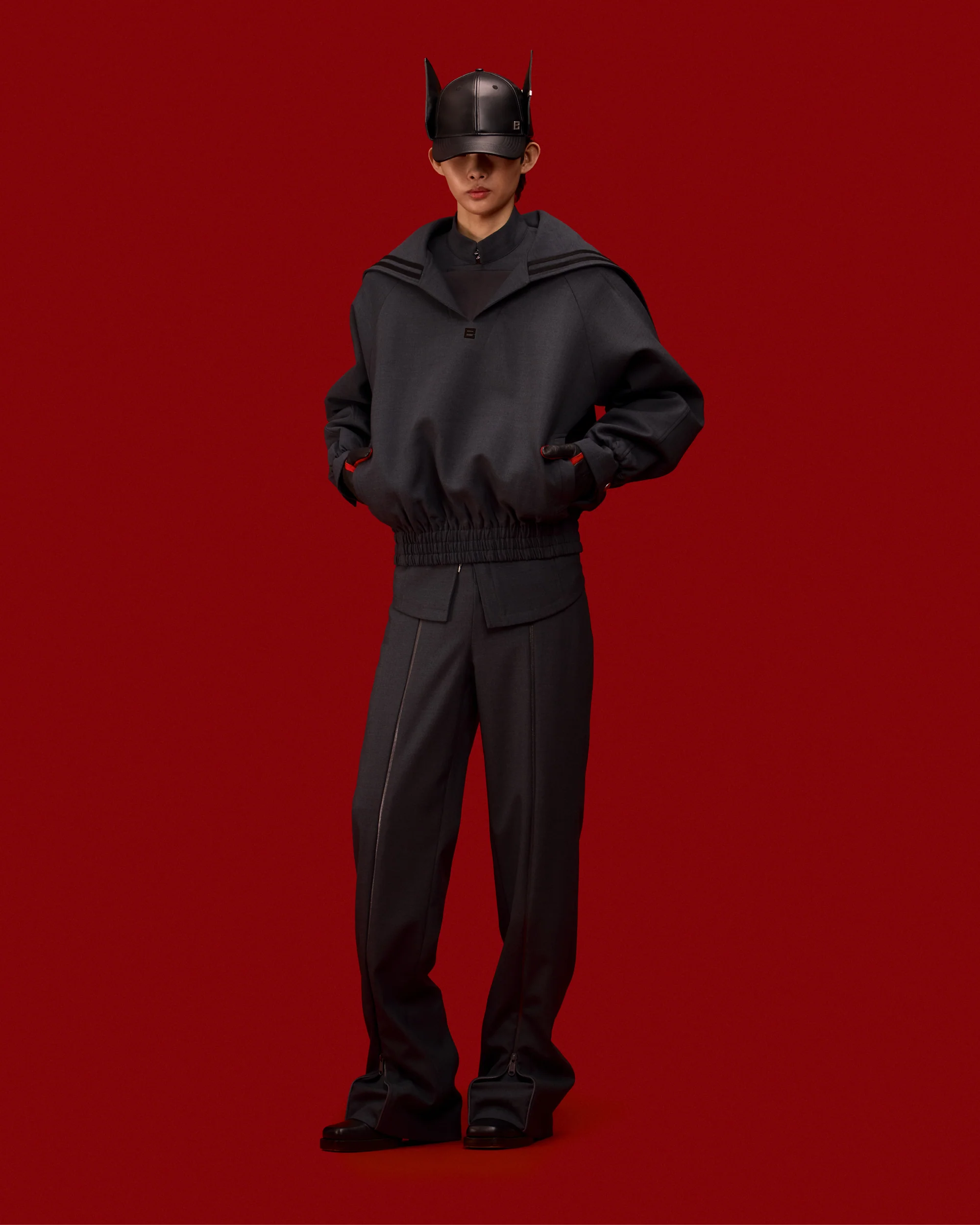
The 72-look collection opens with Christy Turlington in an all-denim look. There are plaid shirts, embroidered jackets, tailored trousers, leather footwear and cowboy hats. There are floral prints, beadwork and sequins, with grounded colours interrupted by flashes of red.
Calling the collection a meeting of Indian craft and Western fashion does not quite explain what makes it work. Indian craft can appear on clothes that don’t necessarily feel Indian, and craftsmanship alone does not automatically give a garment an Indian identity. With Sabyasachi, the effect is different because the craft sits within an identity he has spent years making recognisable. His use of ornament, historical references and styling gives even a changed silhouette a familiar character.
The collection’s title brings its three worlds together: Bengal, Byzantine and Broadway. Bengal brings in Sabyasachi’s Calcutta (his enduring muse) and its textile traditions. Byzantine brings ornament, jewellery and a fascination with historical luxury. Broadway places these references in New York, alongside the codes of American dressing. But the collection does not treat these three worlds as separate chapters. An American wardrobe piece can carry Indian embroidery and be finished with Byzantine-inspired jewellery. The references overlap rather than taking turns.
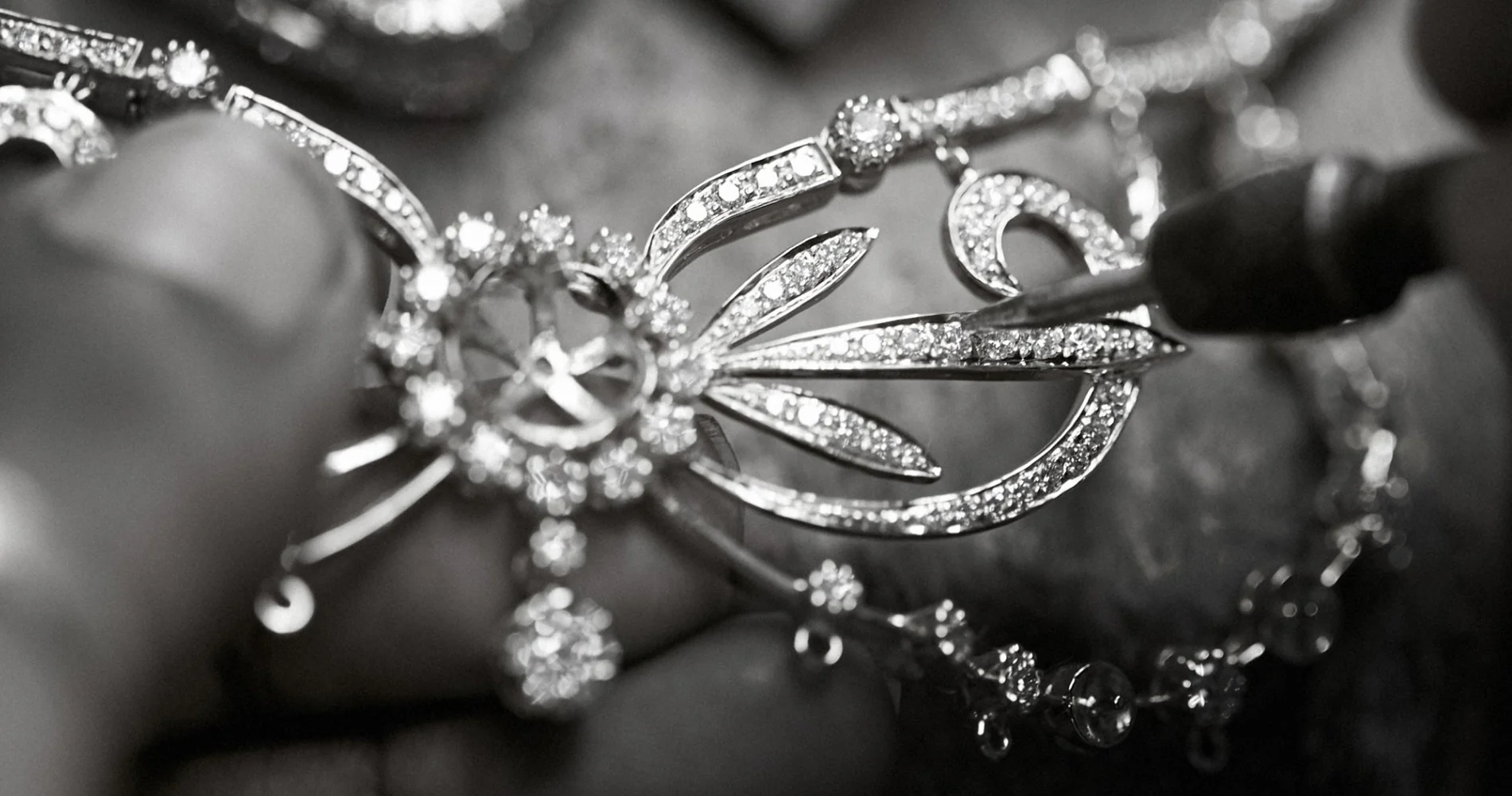
The collection also marked the first phase of Sabyasachi’s multi-year collaboration with The Metropolitan Museum of Art, making the jewellery part of the collection’s story rather than simply an accessory to it. The Pantokrator Pendant Necklace draws on an 11th–12th-century Byzantine ivory from the museum’s collection, while the Zodiac Rivière takes its imagery from Emperor Jahangir’s zodiac coins. The references move between Byzantine and Mughal histories, reinforcing the collection’s interest in how different cultures meet and travel across time.
This raises a question about Sabyasachi’s clothes: if you remove the sari, the lehenga and the other immediately recognisable Indian silhouettes, how do you still know it is Sabyasachi? Part of the answer lies in how he puts a wardrobe together, particularly in the balance between ornate pieces and simpler clothes.
This is where the styling becomes as important as the individual clothes. The 72 looks feel less like separate ideas and more like parts of the same wardrobe. A denim piece can sit comfortably beside an embroidered jacket, and a more elaborate look does not make a simpler one feel unfinished. There is a careful balance between maximalism and restraint, allowing heavily worked pieces to sit naturally alongside everyday clothes.
Embed from Getty Images
The natural light and uncluttered setting kept the focus on the clothes rather than overwhelming them with production. The fast pacing allowed the collection to move without turning every look into an individual statement.
The final look worn by Avanti Nagrath was a black sari. After denim, plaid, cowboy hats and tailoring, it could have been read as the collection’s obvious return to India. But India had never disappeared from the runway. The sari at the end makes Sabyasachi’s Indian identity impossible to overlook.
He was already presenting Western silhouettes in his spring 2009 collection, shown in September 2008. What feels different now is that, on this runway, he appears less concerned with translating his identity for an international audience. Somewhere between Bengal, Byzantine and Broadway, the collection makes a convincing case that his world no longer needs a sari to be recognisable.
Author’s Note
What stayed with me about this collection was how naturally its different references belonged together. Denim, embroidery and jewellery carried a shared sensibility, even as the silhouettes changed. Writing this piece became a way of considering how a designer’s identity can remain recognisable while making room for new forms of expression.
By Aditi Dhapola



Leave a Reply