
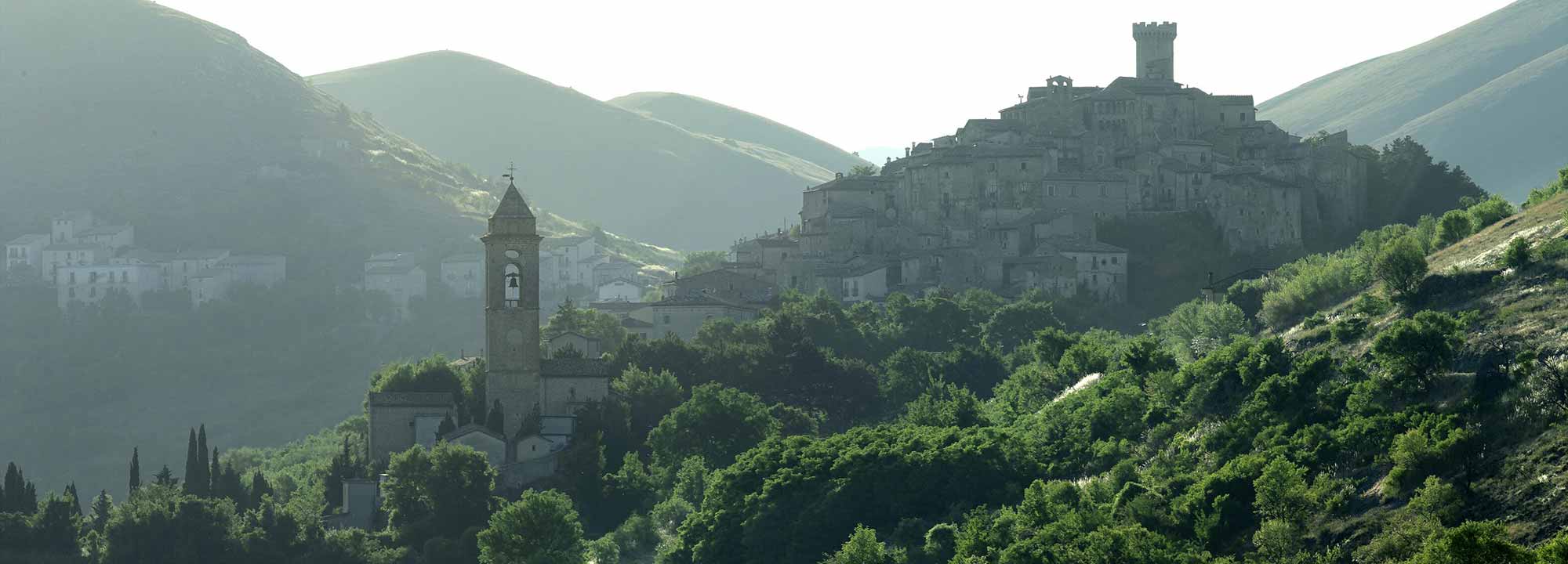
In the mountains of Abruzzo, a hotel dispersed through a medieval village brings domestic history, local craftsmanship and the meaning of preservation into the experience of a stay.

This arrangement changes the relationship between accommodation and destination. Moving between spaces means encountering the settlement itself. The village becomes part of the stay, extending the experience beyond the bedroom door.
Daniele Kihlgren, the founder of the Sextantio project, encountered Santo Stefano during a motorcycle journey in the late 1990s. His idea was to create economic value through the conservation of its historic buildings and landscape. The project would make preservation central to its approach to hospitality.
That ambition raises a question larger than the restoration of any individual house. When an old place acquires a new purpose, how much of its earlier life can remain legible?

At Sextantio, the answer begins with the interiors. The hotel describes a restoration that retains traces of rural life in the buildings, uses recovered architectural materials and draws on the furniture and textiles of the Abruzzo mountains. Modern technology is concealed. Handwoven bedspreads and traditional domestic objects contribute to the rooms’ identity.
The references are unusually specific. Photographs taken in Abruzzo during the 1920s by Swiss linguist Paul Scheuermeier informed the interiors. Research undertaken with the Museo delle Genti d’Abruzzo also helped establish the project’s understanding of local customs, crafts and domestic life.
A photograph of an ordinary room can hold information that a monumental building does not: the placement of a bed, the proportions of a table, the objects considered necessary for daily use. Looking at such records shifts attention towards the people who inhabited a space and the practical decisions through which they made it their own.

Read in this context, furnishing becomes a way of interpreting history. An object matters through its relationship to a particular household culture. Its material, construction and use can tell us something about the world that produced it.
There is, however, a responsibility in making these environments desirable to contemporary travellers. The hardship of rural life should remain part of the account. A room once shaped by necessity acquires a different meaning when chosen for leisure. Recognising that difference allows the beauty of its materials to coexist with a more honest understanding of its past.
The same attention to everyday history extends to food. Sextantio’s research with the Museo delle Genti d’Abruzzo included interviews with older residents of Santo Stefano and neighbouring communities. These conversations produced an archive of more than seventy recipes, including preparations missing from regional cookbooks or no longer commonly made.

At Sextantio Cucina, chef Dino Como brings that research into a contemporary restaurant. Its Roots menu draws on the traditional agro-pastoral repertoire, while Evolution gives the chef scope to explore Abruzzo’s ingredients through his own approach. The dining space also carries local history: part of the palazzo once accommodated wool dyeing, and its handmade ceramics draw on research into everyday pottery.
The connection between room and table gives the project its coherence. Food, furniture and architecture can be understood as related expressions of how a community lived: what it grew, what it made, what it preserved and what it passed between generations.
For hospitality, this suggests a broader measure of quality. Comfort still matters, but so does the opportunity to understand where one has arrived. A memorable stay can deepen attention to a place, making its details more meaningful rather than merely more photogenic.
Sextantio is compelling because it places that possibility at the centre of its identity. Its restored houses invite a conversation about how the past can remain present in spaces that continue to be used.
The lasting question is what we take away from them. Beyond an image of an atmospheric room, there may be a greater sensitivity to the ordinary things through which history survives: a textile, a recipe, a wall, and the decisions made to keep them.
Editor’s Note
At QEditorial, we explore hospitality through the architecture, objects and traditions that give a place its identity. Sextantio offers a compelling perspective on this relationship, bringing the domestic heritage of Abruzzo into the experience of a contemporary stay. This feature considers the care—and responsibility—involved in making cultural memory part of hospitality.




Leave a Reply