
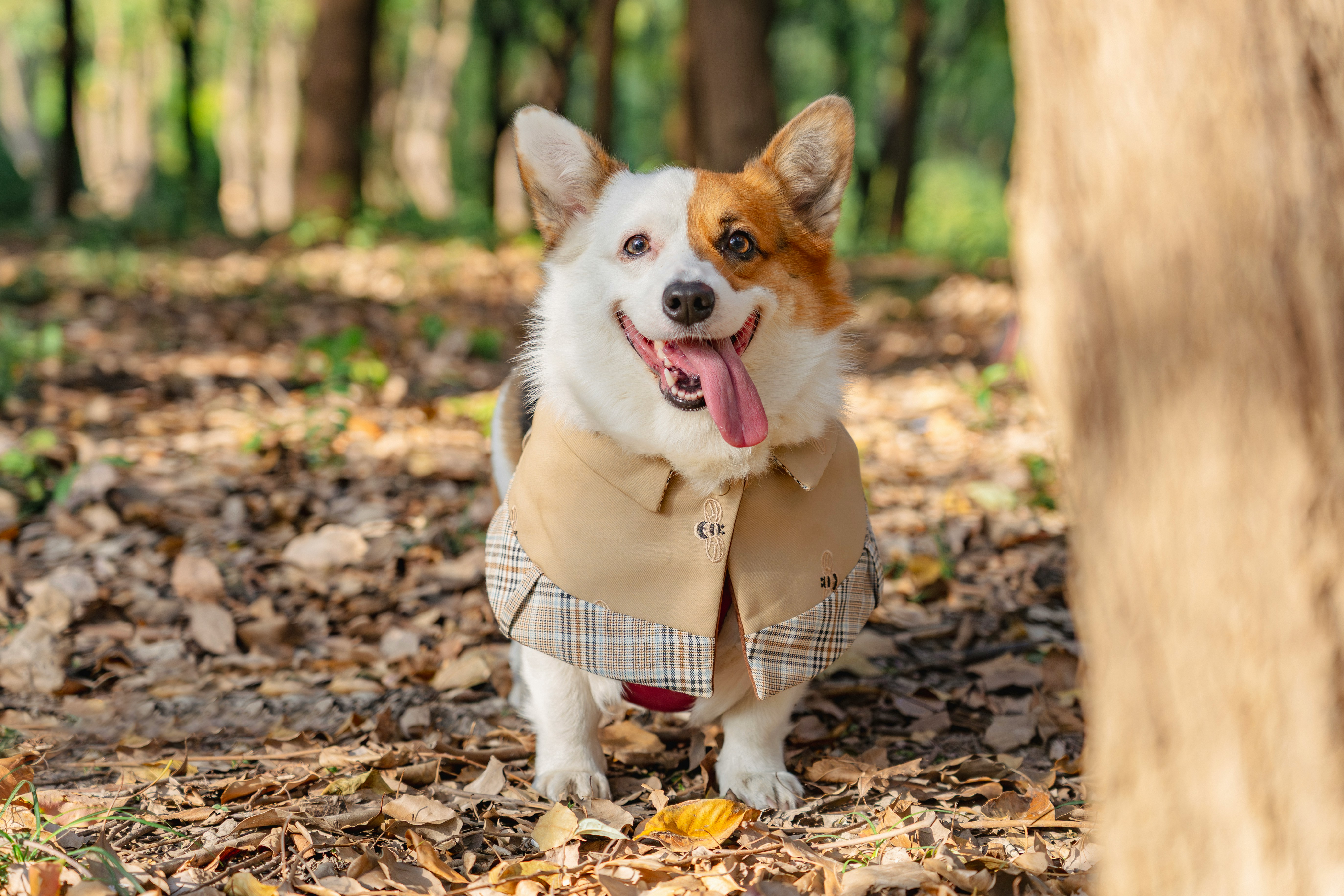
Between personal taste, affection and an animal’s everyday needs, dressing a pet raises a question fashion rarely has to answer: what does good design mean when the wearer cannot choose it?

A person pauses before leaving home, adjusting a collar, fastening a coat, choosing a colour that feels right for the morning. Beside them, a dog waits for the door to open. Both are dressed for the walk, but only one has decided what to wear.
In that small domestic scene lies the central tension of pet fashion. The purchase belongs to a person; the experience of wearing it belongs to an animal. A garment may express affection, taste or a sense of belonging, yet its success ultimately depends on a body that has no interest in the story attached to it.
This makes pet fashion a revealing subject. It brings together two powerful impulses: the wish to care for someone we love and the wish to shape the world around us according to our own preferences. Those impulses can coexist comfortably. They can also pull in different directions.
The question is how to recognise the difference.
Fashion offers people a language through which to present themselves. We choose clothes to communicate something, to participate in a culture, or simply to enjoy how a fabric feels against our skin. Even when our choices are influenced by expectations, we can usually adjust, refuse or remove what we wear.
An animal occupies a different position. The person selecting a knitted sweater may appreciate its texture, its silhouette or its resemblance to their own wardrobe. The dog encounters its weight, warmth and the sensation of fabric around its legs.
Neither perspective disappears because the object is beautiful.
A coordinated outfit can become a portrait of companionship. A carefully chosen accessory can give an ordinary walk a sense of occasion. There is pleasure in these gestures, and affection often sits behind them. But the meaning we assign to an object should remain open to the experience of the animal wearing it.
Calling something an expression of love does not, by itself, tell us whether it is comfortable.

There are practical reasons for dressing some dogs. Blue Cross notes that short-coated breeds, including greyhounds, can struggle with cold weather and may benefit from a coat. PDSA similarly identifies age, health and coat condition as factors that can affect a dog’s need for additional warmth. The relevant starting point is the individual animal and the conditions outside.
From there, aesthetics can become part of a thoughtful design process. A useful garment can also have considered proportions, an appealing colour and carefully finished seams. Function does not require visual indifference.
The difficulty begins when appearance sets the brief and the animal is expected to accommodate it.
Human clothing cannot simply be reduced in size and assumed to work for another species. The shape of a dog’s body, the way it moves and the activities that fill its day demand their own attention. A convincing photograph offers little evidence of what happens once the dog begins walking, sniffing or settling down.
PDSA advises that a coat should allow a dog to move freely and carry out its usual activities, including toileting. It also identifies biting or scratching at the garment, or rubbing against furniture, as signs that the fit may be irritating. These observations make comfort something to assess throughout use.
For the owner, this requires a particular kind of attention: the willingness to revise a choice that was made with enthusiasm.
The colour may be perfect. The photograph may be charming. The garment may have been expensive. None of those things should make it harder to take it off.
Photography adds another layer to the question. A dressed animal can become a miniature character, complete with an implied personality and a wardrobe to match. A bow suggests elegance; a tracksuit suggests humour; a tailored coat suggests a human social world translated into canine proportions.

These images can be affectionate and inventive. They can also encourage us to read an animal primarily through the role we have created for it.
A still photograph cannot establish whether a pet enjoyed being dressed. It records a moment, selected from everything that happened around it. When we describe that image as confident, sophisticated or proud, we are supplying an interpretation. The animal’s experience remains something we have to observe beyond the frame.
That distinction matters because affection can easily become projection. We may imagine that sharing our style means sharing our pleasure. Yet companionship also involves accepting differences: different interests, different sensations, different ways of enjoying a day.
A dog does not need to appreciate our wardrobe to belong beside us.
This is where pet fashion becomes a question of identity. The objects we choose for animals help construct an image of our household and, sometimes, of ourselves. An understated leather accessory, a vivid print or a coordinated coat can signal the kind of life we wish to inhabit.
Acknowledging that human pleasure makes the choice more honest. We can enjoy colour, craftsmanship and design while recognising that the animal has separate priorities.
It also gives designers a more demanding brief. The buyer’s attention may be won by an image, but the object must continue to make sense during repeated use. Fit, fastening, cleaning and the ease of putting a garment on all deserve the same care as its visual character.
For pet fashion, luxury could be judged through this everyday experience. A thoughtfully placed closure or a shape that accommodates movement may offer more lasting value than an elaborate decorative gesture. Beauty becomes more persuasive when the details support the life being lived inside the garment.
And sometimes, a considered choice will be to leave the garment behind.
The weather may not call for it. The dog may find it uncomfortable. The occasion may matter far more to the person than to the animal. Accepting those possibilities is part of the responsibility that comes with choosing on another being’s behalf.
Who, then, is pet fashion really for?
Its visual language is largely addressed to people. Its physical consequences belong to the animals who wear it. Responsible design has to hold both realities in view, allowing human enjoyment without making the wearer’s comfort negotiable.
The final measure of a beautiful pet garment arrives after the mirror, the purchase and the photograph. It arrives when the door opens and the animal can get on with its day.
By Olivia Laurent
QEditorial Magazine Fashion Culture Identity



Leave a Reply