
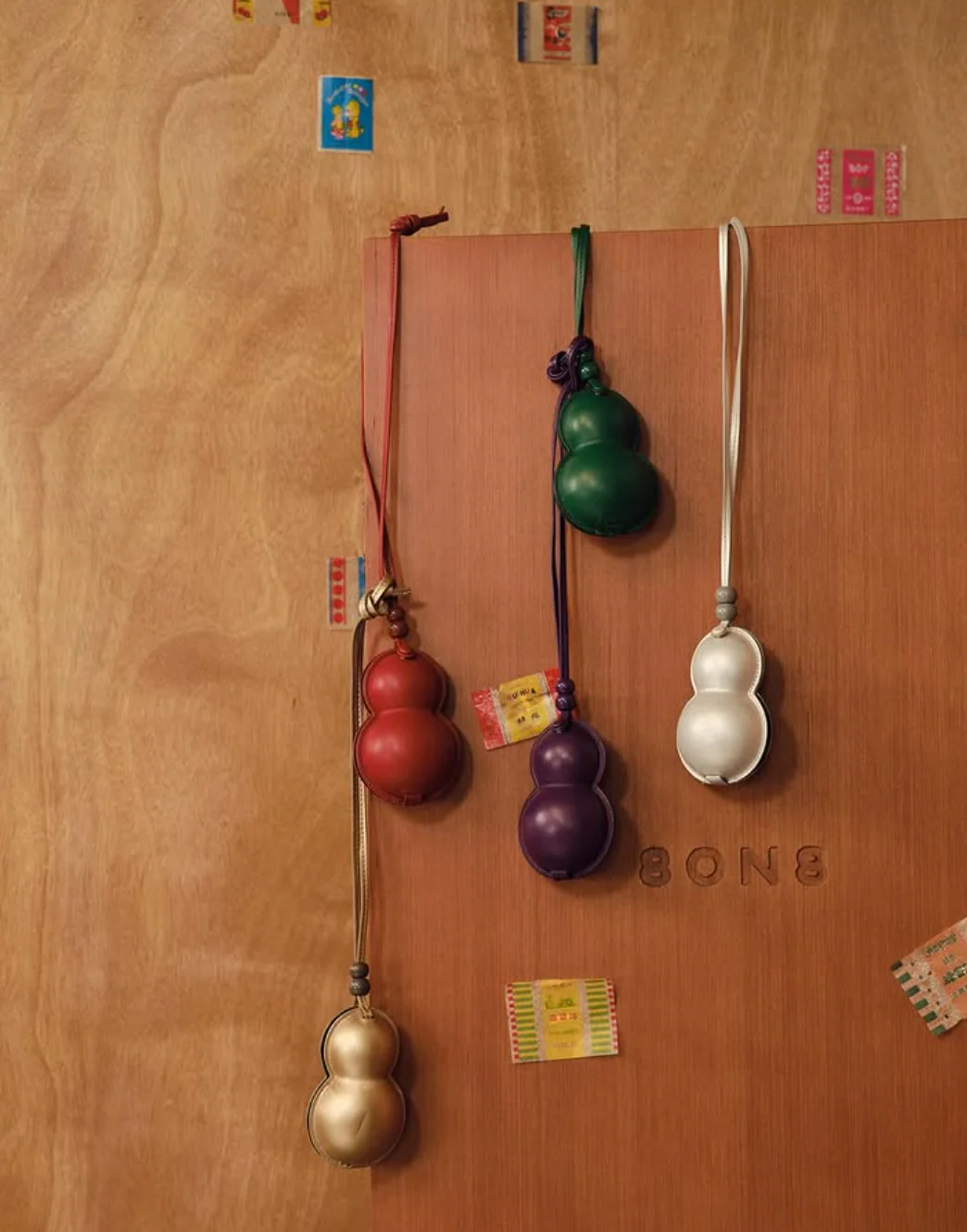
Fashion often looks forward by pretending to forget the past.

8ON8 does the opposite.
Founded by Chinese designer Li Gong, the menswear label builds its world through memory, city life, youth culture, tailoring, and an imagined future that feels strangely familiar. It is not futurism as cold technology. It is not nostalgia as repetition. It is something more unstable and more interesting: a vision of contemporary menswear where the past is not left behind, but reprogrammed.
Li Gong founded 8ON8 in 2017 after graduating from Central Saint Martins, using the brand as a space for his own vision of retrofuturism. That word matters, because it explains the emotional tension inside the clothes. 8ON8 is not simply designing garments for the present. It is imagining what the future might look like if it were built from fragments of memory, urban movement, vintage codes, and a cinematic sense of youth.
This is where the brand becomes compelling for QEditorial Magazine.
8ON8 is not only a menswear brand. It is a study of how contemporary identity is shaped by cities, subcultures, speed, and visual memory. Its language moves between sharp tailoring and sportswear, between elegance and play, between discipline and eccentricity. The clothes often feel as if they belong to characters from a city that does not fully exist yet — a city made of old photographs, future streets, neon reflections, classic menswear, and emotional dislocation.
In a fashion system often divided between heritage luxury and streetwear immediacy, 8ON8 occupies a more ambiguous territory. It does not reject tailoring, but it refuses to let tailoring remain static. It does not use sportswear only as utility, but as a cultural signal. It does not approach youth culture as trend, but as atmosphere.
The result is menswear that feels cinematic.
A jacket is not just a jacket. It becomes a trace of a character. A silhouette is not only a cut. It becomes a mood. A collection is not simply a seasonal offer. It becomes part of a larger fictional world.

The official London Fashion Week profile describes Li Gong’s vision as one that draws from past generations of city life and the energy of youth in a mature form. This description captures one of the strongest aspects of 8ON8: its ability to hold contradiction. The clothes can be playful without becoming childish. They can be refined without becoming conservative. They can be commercial without losing their imaginative charge.
That balance is rare.
Many young brands choose between fantasy and wearability. 8ON8 seems interested in the friction between the two. Its menswear is not detached from real life, but it also refuses to be reduced to functionality. It imagines clothing as part of an urban story — something worn by people who move through the city while carrying private mythologies, memories, and future versions of themselves.
This may explain why Li Gong’s work has been able to move across different fashion conversations. The designer has been recognized as one of Vogue Business’s 100 Innovators, with attention placed on his ability to balance creativity, commerciality, and collaborations with international brands. But what makes 8ON8 interesting is not only its external recognition. It is the clarity of its internal world.
The brand has a universe.
And in fashion, a universe is often more powerful than a product.
Contemporary menswear is currently searching for a new language. Streetwear changed the way men dress, but its dominance has softened. Traditional tailoring still carries authority, but authority alone is no longer enough. Luxury has become more casual, yet casualwear risks becoming anonymous. In this uncertain space, 8ON8 feels relevant because it does not simply choose one direction. It builds a hybrid grammar.
Tailoring becomes younger.
Sportswear becomes more intelligent.
Retro references become futuristic.
Menswear becomes less rigid, more narrative, more open to imagination.
There is also a broader cultural importance to the brand. 8ON8 belongs to a generation of Asian designers who are not waiting for Western fashion capitals to define them. Its roots move through London, Shanghai, and contemporary Chinese fashion, but the final language is not easily reduced to geography. It is global without becoming generic. It is Asian without being decorative. It is urban without being predictable.
That distinction matters.
In recent years, Chinese fashion has often been discussed through market size, consumer power, or commercial potential. 8ON8 asks for another reading. It asks to be seen as design culture: as authorship, as world-building, as a creative system capable of producing its own codes.
The brand’s presence on Shanghai Fashion Week reinforces this position within the contemporary Chinese fashion landscape. But again, 8ON8 is not interesting simply because it appears on important schedules. It is interesting because it understands that menswear today needs atmosphere as much as construction.
The best fashion brands do not only design clothes.
They design recognition.
They give people a way to see themselves before the world has fully named what they are becoming.
8ON8 does this through retrofuturism, but not as a decorative theme. In Li Gong’s hands, retrofuturism becomes a way to talk about time itself. The past is not behind us. The future is not ahead of us. Both exist in the same garment, the same silhouette, the same urban body.
That is why 8ON8 feels more mature than many brands built around youth culture. It does not worship youth as a market. It studies youth as a force — restless, performative, emotional, visual, contradictory. And it gives that force a wardrobe.
For QEditorial Magazine, this is where 8ON8 becomes more than a brand profile. It becomes a cultural subject. It speaks to the evolution of contemporary menswear, the rise of Chinese fashion authorship, and the growing importance of Asian designers in shaping global visual identity.
The future of menswear may not be minimal. It may not be purely classic. It may not be only streetwear, tailoring, or luxury sportswear.
It may be something closer to 8ON8: a city imagined twice, once through memory and once through desire.
And somewhere between those two visions, Li Gong has built a brand that feels ready for the next chapter of fashion.
Editorial Note
With 8ON8, contemporary menswear becomes a language of memory, youth culture, city life, and retrofuturist imagination. The brand does not simply follow the evolution of Chinese fashion; it contributes to the way a new generation of Asian designers is redefining global menswear through identity, storytelling, and urban emotion.
For QEditorial Magazine, 8ON8 represents one of the most compelling voices in the conversation around Chinese menswear, retrofuturist fashion, Asian contemporary fashion, and the new cultural direction of menswear after streetwear. Li Gong’s work shows how a brand can be commercially visible while still protecting a strong creative universe — one where tailoring, sportswear, youth culture, and future nostalgia become part of the same visual identity.
QEditorial Magazine — Fashion · Culture · Identity




Leave a Reply