

We live in an era of visual excess.
Images move faster than memory. Beauty has become instantaneous, endlessly reproducible, and increasingly synthetic. In this landscape — where reality is constantly filtered, reshaped, and algorithmically enhanced — contemporary artists are no longer simply documenting the world.
They are interpreting its emotional condition.
Among those exploring this new visual language stands Tim Tadder — an artist, photographer, and creative director whose work occupies a compelling space between fine art photography, digital experimentation, artificial intelligence, and emotional storytelling.
At first glance, his work feels cinematic, hyper-stylized, almost surreal.
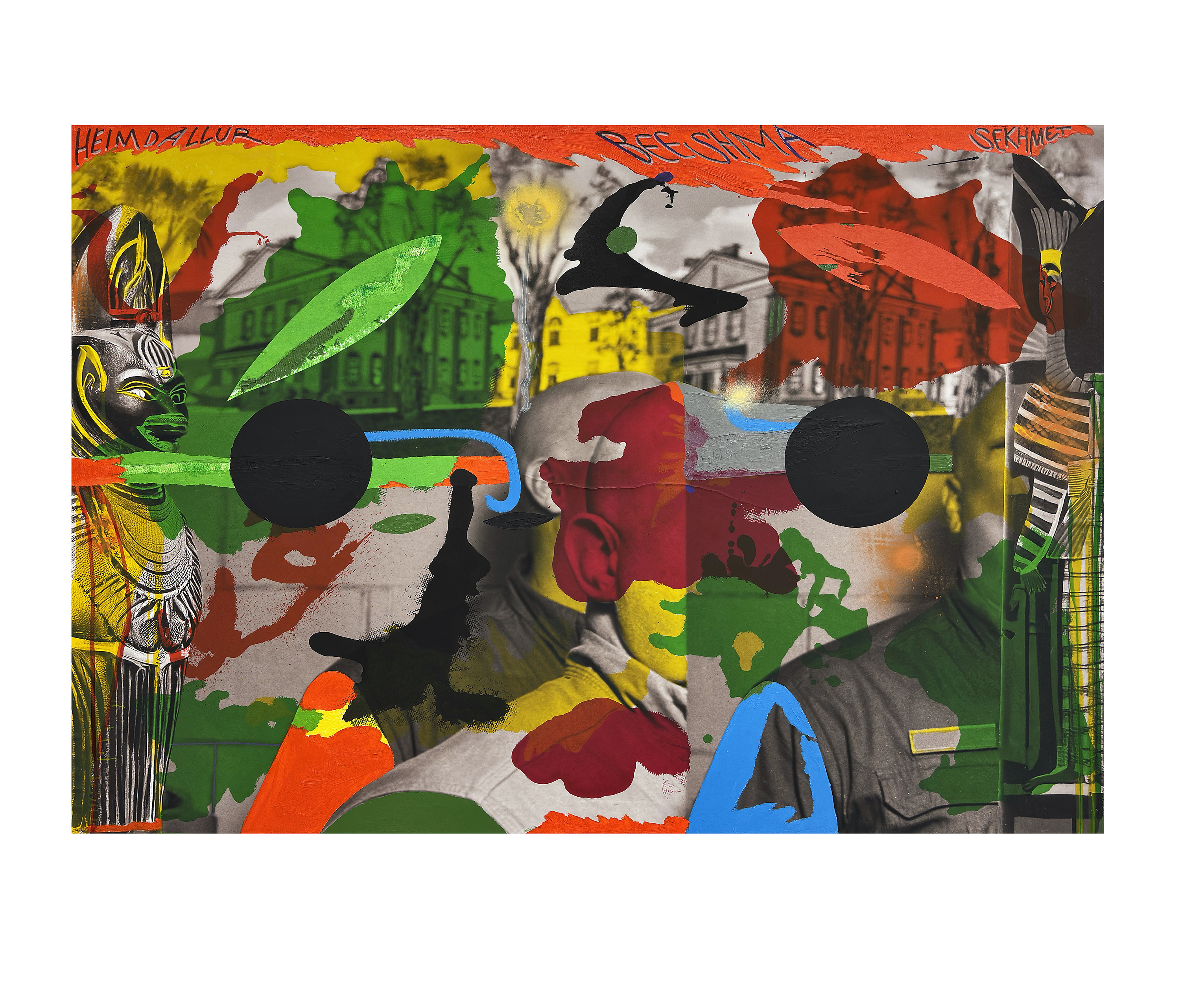
Faces dissolve into sculptural textures. Human figures appear transformed into symbols. Color becomes emotion rather than decoration.
But beneath the striking aesthetic lies something deeper:
A meditation on uncertainty.
Why Tim Tadder Feels So Relevant Today
Tim Tadder’s visual universe appears profoundly aligned with the emotional condition of the contemporary world.
According to the artist’s own statement, his work reflects themes of anxiety, uncertainty, disruption, hope, consumption, freedom, and social fragility during moments of global instability.
This matters.
Because increasingly, contemporary art is no longer about providing answers.
It is about reflecting tension.
In many ways, Tadder’s imagery speaks directly to the emotional contradiction of modern life:
We live surrounded by technological progress — yet remain emotionally uncertain.
We are hyperconnected — yet increasingly disconnected.
We consume more images than ever — while struggling to understand what still feels authentic.
His work captures this contradiction visually.
Not through realism.
But through emotional symbolism.
Beyond Photography: When the Human Body Becomes an Idea
For decades, photography functioned as evidence — a way of preserving reality.
Artists like Tim Tadder suggest something different.
Photography can now become speculative.
Psychological.
Even philosophical.
The human figure in his compositions often appears altered, fragmented, hidden, or transformed into something almost post-human. Faces become masks. Skin becomes texture. Identity becomes fluid.
Rather than portraying people exactly as they are, Tadder seems interested in exploring what human identity feels like under pressure.
This visual language places his work inside a larger contemporary conversation:
What happens when humanity itself becomes editable?
The question feels increasingly relevant in an era shaped by artificial intelligence, digital identities, filters, and synthetic imagery.
And perhaps this is precisely why his work resonates.
Because it feels familiar — yet slightly disturbing.
Beautiful — yet emotionally unresolved.
The Thin Line Between Contemporary Art, Fashion, and Technology
What makes Tim Tadder particularly interesting through a QEditorial lens is the way his work exists between multiple disciplines.
His visual direction often feels suspended between:
fashion imagery,
editorial photography,
fine art,
digital sculpture,
and speculative futures.
This multidisciplinary approach recalls artists and image-makers who have similarly blurred the line between fashion, technology, and emotional storytelling.
There are echoes of Nick Knight’s experimental approach to digital fashion imagery, where photography becomes something sculptural rather than documentary.
Moments of visual excess and saturated theatricality may remind viewers of David LaChapelle, though Tadder’s visual language often feels quieter — psychologically heavier.
Some of the emotional tension recalls the visual architecture of Erwin Olaf, whose work frequently explored silence, vulnerability, and carefully controlled discomfort.
And naturally, there are parallels with media artists like Refik Anadol, who continue expanding the relationship between data, technology, and artistic creation.
Even in certain moods and sculptural silhouettes, one can perceive a distant dialogue with the universe surrounding Rick Owens — where monumentality, darkness, elegance, and emotional discomfort often coexist.
Yet Tim Tadder remains distinctly his own.
His work feels less concerned with spectacle for spectacle’s sake.
Instead, it asks something more psychological:
How does uncertainty look?
When Artificial Intelligence Stops Being a Tool
Perhaps one of the most compelling aspects of Tim Tadder’s recent practice is how naturally it enters the conversation surrounding AI art, digital aesthetics, and the future of image-making.
Artificial intelligence has dramatically changed contemporary visual culture.
What once required teams, production budgets, sets, and months of post-production can increasingly emerge from a dialogue between imagination and machine.
This has sparked endless debates:
Will AI replace artists?
Can digitally generated images still carry emotional depth?
Does technology remove authenticity — or simply redefine it?
Artists working at the intersection of photography and digital experimentation suggest a more nuanced answer.
Technology alone does not create meaning.
Emotion still does.
Concept still does.
Vision still does.
And this is where Tim Tadder’s work feels particularly relevant.
Because beneath the technical sophistication lies emotional intention.
The images do not merely impress.
They linger.
The Psychology of Color and Emotional Architecture
One recurring characteristic throughout Tim Tadder’s work is the intentional use of color as emotional architecture.
Deep crimson tones evoke tension, power, intimacy, danger.
Cold metallic blues suggest distance or emotional suspension.
Surreal textures create emotional ambiguity.
Nothing feels accidental.
In contemporary visual storytelling — particularly within luxury fashion, contemporary art, and editorial photography — color increasingly functions as narrative rather than ornament.
The image no longer simply communicates information.
It generates feeling.
And perhaps this explains why Tim Tadder’s work feels difficult to scroll past.
In a world overwhelmed by disposable content, his imagery demands pause.
Interpretation.
Presence.
The Future of the Image
Perhaps the most important question Tim Tadder’s work leaves us with is not whether technology will redefine art.
That answer already seems obvious.
The real question may be:
Can emotionally truthful images still exist in an increasingly synthetic world?
In an era dominated by endless visual production, the most powerful images are often not the loudest.
They are the ones that quietly disturb us.
The ones that remain.
The ones that make us feel something difficult to explain.
Tim Tadder’s work exists precisely in this territory:
Between beauty and discomfort.
Between anxiety and hope.
Between technology and emotion.
Between the human and whatever comes next.
Editor’s Reflection
Perhaps the future of art will not be defined by whether an image was created by camera, hand, or machine.
Perhaps the future of art will be defined by something simpler:
Whether an image still has the power to emotionally interrupt us.
And in that sense, Tim Tadder’s work feels deeply contemporary.
Selected References
For readers interested in exploring the visual language surrounding contemporary photography, AI art, and digital image-making:
Tim Tadder — Official Website
https://www.timtadder.com
Nick Knight — SHOWstudio
https://showstudio.com/contributors/nick_knight
David LaChapelle — Official Website
https://www.davidlachapelle.com
Erwin Olaf — Official Archive
https://www.erwinolaf.com
Refik Anadol Studio
https://refikanadol.com

Leave a Reply