
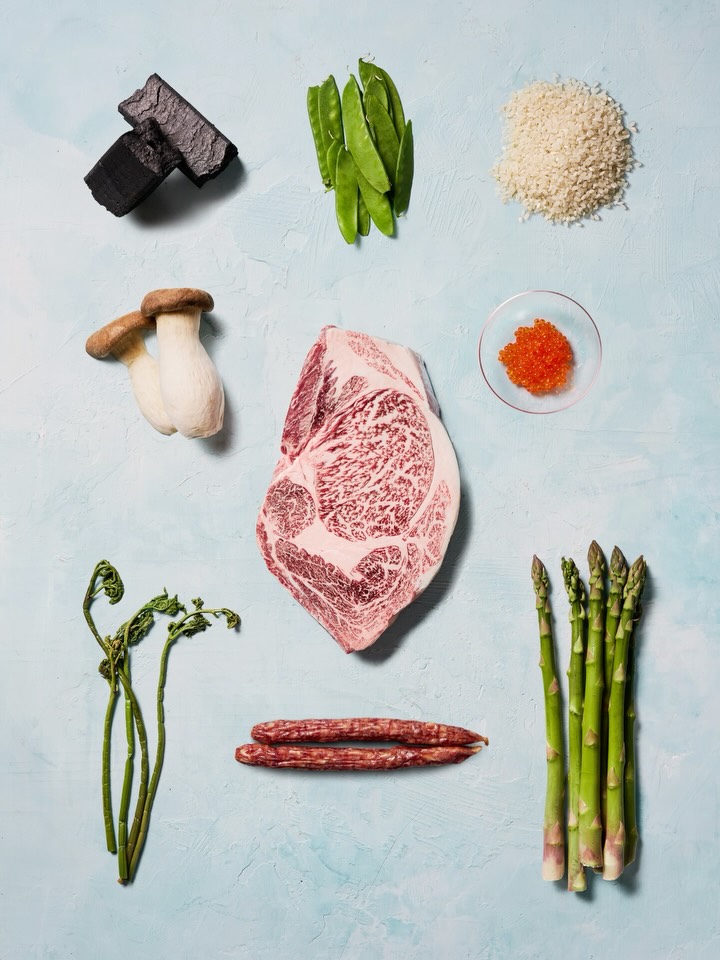
How Chef Cody Mao and Samuel Park are turning cultural memory, partnership, and fine dining discipline into one of NoMad’s most personal new restaurants.

There is a new kind of restaurant emerging in New York.
It does not announce itself through spectacle. It does not need chandeliers, theatrical excess, or the old language of luxury to prove its ambition. Instead, it begins with something quieter: memory, discipline, and the ability of two people to understand each other deeply enough to build a room where food, wine, hospitality, and identity can move as one.
28 Nomad, located at 816 Sixth Avenue in New York’s NoMad neighborhood, belongs to this new generation of dining. It is described as a contemporary Asian restaurant shaped by two partners who grew up between cultures: Chef Cody Mao, originally from China, and Director Samuel Park, originally from Korea. Both are young — Mao is 26, Park is 27 — but what makes the project compelling is not only their age. It is the clarity of their partnership.
They met while working at Atomix, one of New York’s most respected Korean fine dining restaurants and a two-Michelin-starred destination. That background matters, because Atomix is not simply a restaurant known for technique. It represents a very specific idea of modern hospitality: precision, storytelling, cultural confidence, and a belief that dining can be intellectual without becoming cold.
At 28 Nomad, that discipline seems to have been translated into something more intimate.
Chef Cody Mao leads the culinary language of the restaurant, bringing together Chinese, Korean, Japanese, and broader Asian references without forcing them into a single definition. The restaurant is not trying to be one thing. It is not interested in reducing identity to a category. Instead, the menu appears to follow a more personal instinct: seasonal ingredients, comfort foods reimagined through fine dining technique, and dishes that carry cultural memory without becoming nostalgic replicas.

Eater NY described 28 Nomad as an “eclectic contemporary Asian” restaurant and noted dishes such as scallop Wellington, Chinese sausage-stuffed chicken wings, wagyu with rice, seaweed and smoked trout roe, and a dessert built around caramel ice cream, Korean plum liqueur gel, pistachios, cashews, and pork floss. These are not dishes created to sit neatly inside one culinary label. They move between memory and invention, between comfort and control.
That is where the restaurant becomes interesting.
Because behind every strong kitchen, there must be a dining room capable of translating the food into experience. This is where Samuel Park’s role becomes essential. As Director, with a focus on wines and spirits, Park appears to shape the other half of the restaurant’s identity: rhythm, atmosphere, beverage, service, and emotional temperature. If Mao builds the language of the plate, Park helps build the language of the room.
This is what makes 28 Nomad feel editorially important for QEditorial Magazine.
The best hospitality partnerships are rarely about two people doing the same job. They are about contrast, trust, and separation of instinct. One partner must know how to push the concept forward; the other must know how to make people feel held by it. One creates the architecture of taste; the other creates the emotional architecture of the evening.
In Mao and Park, there is the sense of a young team working not through ego, but through balance.
The restaurant’s own identity speaks of two partners who grew up between cultures and chose not to define their work through a single cuisine. That idea feels deeply contemporary. In a city like New York, where identity is often layered, migratory, multilingual, and constantly evolving, 28 Nomad understands that the most honest form of modern cuisine may not be purity. It may be composition.
A restaurant like this does not ask where you are from in order to place you in a box. It asks what you remember, what you carry, what you learned, and what you are still becoming.
There is something very New York about that.
NoMad itself has long been a neighborhood of transition: commercial, elegant, fast-moving, architectural, and increasingly defined by restaurants that understand design and hospitality as cultural language. To open a 36-seat contemporary Asian restaurant here, shaped by two young partners who passed through one of the city’s most demanding fine dining environments, is to make a statement about the future of dining in New York.

That future may be smaller, more personal, more precise.
It may belong less to the empire restaurant and more to the partnership restaurant.
At 28 Nomad, the dining experience appears to be built around that intimacy. The restaurant’s website describes a seasonal menu that evolves throughout the year, alongside a focused wine list, cocktails, and beer. Even the language is restrained. There is no need for overstatement. The promise is simple: settle in, share a meal, and return.
That last word matters.
Return.
In hospitality, return is the highest compliment. A restaurant can impress once. It can surprise once. It can seduce once. But to make someone return, the restaurant must offer something deeper than novelty. It must create familiarity without becoming predictable. It must allow the guest to feel seen.
This is where the Korean idea of jeong — often understood as a deep emotional bond, warmth, and communal connection — becomes especially relevant when speaking about the kind of hospitality 28 Nomad seems to represent. It is not only about service. It is about emotional generosity. It is about the invisible feeling that turns a room into a place.
The Infatuation has already listed 28 Nomad among New York’s new restaurant openings, noting its seasonal contemporary Asian direction and dishes like scallop Wellington and Chinese sausage-stuffed chicken wings. Andrea Strong’s The Strong Buzz also pointed to it as an exciting new restaurant from Atomix alumni. These early references suggest that 28 Nomad is entering the city’s dining conversation at the right moment: not as another trend, but as part of a larger shift toward culturally personal, emotionally intelligent hospitality.
For QEditorial Magazine, the story of 28 Nomad is not only the story of a restaurant.
It is the story of two young professionals who understood that experience is built in layers. The food must have memory. The wine must have direction. The room must have rhythm. The service must have restraint. The partnership must have trust.
Chef Cody Mao and Samuel Park are building something that feels very much of this generation: refined but not rigid, cultural but not folkloric, ambitious but not loud. Their strength lies in the way their individual competences appear to complete each other. Mao brings the kitchen’s imagination and discipline. Park brings the dining room’s sensibility, beverage intelligence, and hospitality structure.
Together, they create the possibility of a restaurant that is not simply visited, but remembered.
And perhaps that is why 28 Nomad feels so right for New York now.

In a city overflowing with restaurants, the places that endure are rarely the ones that only serve good food. They are the ones that understand how to create belonging. They know that a meal is never just a meal. It is timing, atmosphere, memory, conversation, silence, light, wine, texture, and the feeling that someone has cared about every invisible detail before you arrived.
28 Nomad seems to understand that.
It is not just a contemporary Asian restaurant in NoMad.
It is a young, elegant, culturally layered expression of what hospitality can become when two people know their own roles, trust each other’s instincts, and build something personal enough to feel universal.
Editor’s Note
28 Nomad represents one of the most interesting directions in New York dining today: a smaller, more intimate, culturally fluid restaurant where fine dining discipline is softened by personal memory. Chef Cody Mao and Samuel Park remind us that the future of hospitality may not be defined by size, spectacle, or old luxury codes, but by partnership, emotional intelligence, and the courage to create a place that feels sincerely one’s own.
Restaurant Information
28 Nomad
816 6th Avenue, New York, NY 10001
Reservations: Resy
Instagram: @28nomadnyc
Contact: info@28nomad.com




Leave a Reply