

Inside the rise of canine couture, diamond collars, and why luxury hospitality is redefining pet culture.

Luxury has always found new ways to redefine desire.
There was a time when luxury lived exclusively in wardrobes, private clubs, handcrafted watches, rare automobiles, and suites overlooking cities that never truly slept. Then came wellness, private aviation, curated residences, personalized fragrance experiences, and bespoke hospitality. Today, another shift is quietly unfolding — one that says as much about culture as it does about wealth.
The dog has entered luxury not simply as companion, but as identity.
At New York’s legendary Baccarat Hotel, this evolution has taken on an unexpectedly refined form through what may be one of hospitality’s most symbolic gestures toward pet culture: a high-jewelry experience designed entirely around canine elegance.
The experience, known as the Canine Couture Diamond Experience, transforms what was once considered a simple pet accessory into something far more culturally revealing. Guests staying at the hotel can access a private consultation experience in partnership with luxury jeweler The D Diamond New York, creating bespoke collars and charms crafted in precious materials, including diamonds and 18-karat gold.

At first glance, the concept may feel excessive — even theatrical. Yet reducing it to extravagance alone would miss the larger cultural shift taking place.
Because this is not truly about diamonds.
It is about what dogs now represent.
Across luxury culture, the relationship between humans and pets has fundamentally changed. Dogs have increasingly moved beyond the category of ownership and entered something closer to emotional architecture. They sleep beside us, travel internationally, accompany us into luxury hotels, appear in fashion campaigns, and increasingly influence consumer behavior itself.
Luxury brands have noticed.

Over the last decade, the language of fashion and hospitality has steadily expanded to include pets not as novelty, but as legitimate participants in lifestyle. Hotels now offer curated pet menus, dog concierges, luxury bedding, wellness treatments, private transportation, and custom experiences designed around four-legged guests. The message is subtle but clear: true luxury no longer excludes the animal companion.
In this context, Baccarat’s decision feels less surprising than inevitable.
Few hotels embody the language of theatrical elegance quite like the Baccarat Hotel New York, where crystal, intimacy, and old-world glamour meet contemporary hospitality. Introducing jewelry-level personalization for dogs feels entirely coherent with a world already built around craftsmanship, exclusivity, and ceremonial luxury.

Yet what makes the initiative culturally interesting is not its price point.
It is symbolism.
Historically, jewelry has functioned as status, memory, love, lineage, and permanence. Translating that language into pet culture reveals something deeper about modern emotional values. Increasingly, luxury spending reflects emotional closeness rather than public performance. People are no longer purchasing only for themselves; they are extending their identity, rituals, and aesthetic values to those they love most — including their dogs.
In many ways, the dog collar has quietly become fashion language.
No longer only practical, collars today operate like accessories once reserved for human wardrobes: crafted leather, custom metals, artisanal finishes, monograms, precious hardware, and increasingly, jewelry-level personalization. The everyday object has become part function, part visual identity.
The result is a cultural landscape where canine luxury no longer feels niche.
It feels inevitable.
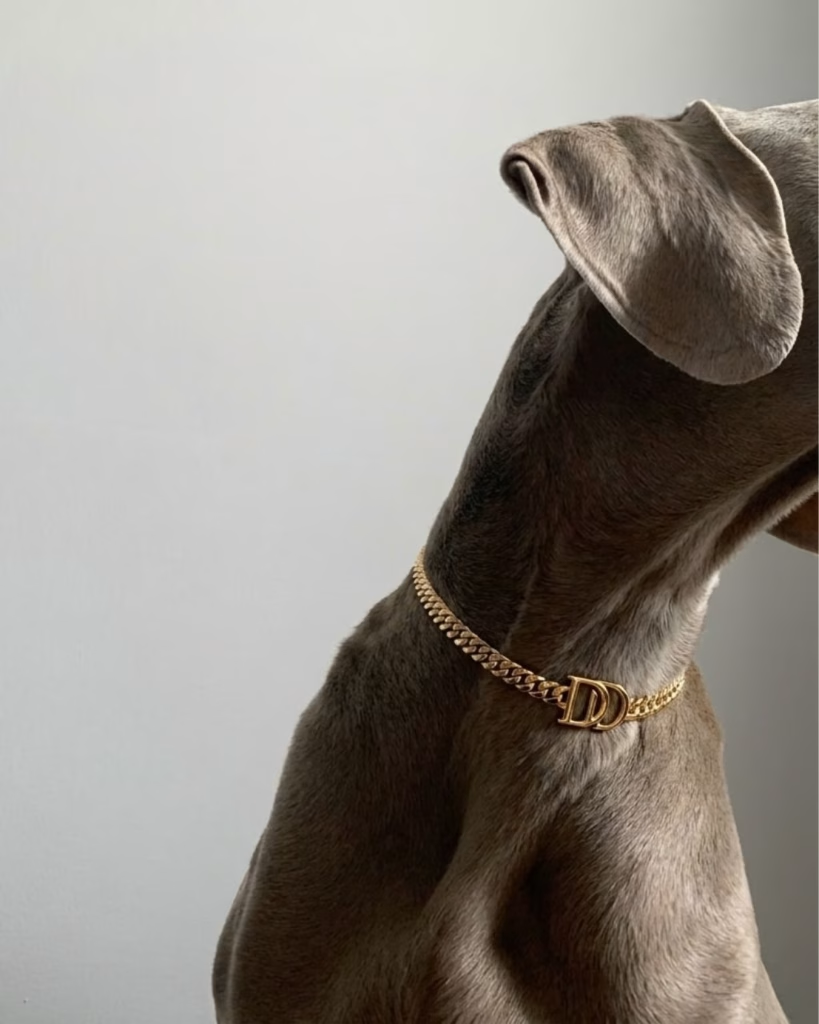
What Baccarat understands particularly well is that luxury succeeds when it transforms ordinary rituals into emotionally charged experiences. Feeding, sleeping, traveling, gifting, dressing — all become elevated through design and intention. Extending that philosophy to dogs may appear new, but culturally, it feels perfectly aligned with where luxury has already been heading.
Because perhaps the question is no longer whether dogs belong in luxury.
The real question is how far luxury is willing to go for them.
Editorial Note
When Dogs Entered the World of High Jewelry
Luxury has always reinvented itself through objects of desire. But increasingly, luxury is no longer only about what humans wear — it is becoming about those who live beside them.
At New York’s legendary Baccarat Hotel New York, that evolution has taken a particularly symbolic form through the newly launched Canine Couture Diamond Experience, developed in collaboration with luxury jewelry house The D Diamond New York. The concept offers guests private in-suite consultations to commission bespoke dog collars crafted in 18K gold, diamonds, and signature ruby details inspired by Baccarat’s iconic visual identity.
At first glance, the idea of diamond collars for dogs may seem extravagant. Yet culturally, the moment feels far more revealing than excessive. Increasingly, dogs have become emotional extensions of personal identity — accompanying owners through travel, hospitality, fashion, and everyday rituals of luxury. The language of status has quietly shifted into something more intimate: care, companionship, and personalization.
What Baccarat understands particularly well is that luxury rarely succeeds through objects alone. It succeeds through experience. The ritual of commissioning, the intimacy of customization, the craftsmanship behind an object — these are what transform purchase into meaning. Extending that philosophy to canine companions feels less like novelty and more like the natural next chapter of luxury hospitality.
As pet culture continues moving deeper into fashion, design, and luxury living, one thing becomes increasingly clear: the dog is no longer simply included in the luxury experience.
The dog is becoming part of the luxury narrative itself.
QEditorial Magazine Fashion Culture Identity – QEditorial.com


Leave a Reply