

How leather, outdoor minimalism and streetwear aesthetics are redefining the new pet wardrobe.
There was a time when the dog collar belonged almost entirely to utility.
It had one purpose: to hold a leash, identify the animal, and make the daily walk possible. The harness was even more functional, often treated as a technical object rather than a design decision. But in the last few years, pet accessories have moved into a different cultural space. They no longer speak only about control, safety or routine. They speak about taste.
The modern dog wardrobe is no longer built only around sweaters, coats or seasonal costumes. Its most important language is often found in the objects worn every day: the collar, the harness, the leash. These are the pieces seen on the street, in cafés, at hotel entrances, in elevators, in parks, and across social media. They are not occasional fashion gestures. They are part of daily visibility.
That is why the new generation of pet fashion cannot be understood only through clothing. It has to be understood through accessories.
A leather collar can suggest urban elegance. A soft, technical harness can speak to outdoor living and modern functionality. A graphic collar or printed mesh harness can translate sneaker culture, pop collaboration and streetwear attitude into the pet world. In this sense, dog fashion is beginning to mirror human fashion more closely: not because dogs need trends, but because owners increasingly use pet accessories as an extension of their own aesthetic universe.
In the leather category, Love Thy Beast represents one of the clearest examples of how a simple collar can move beyond utility and enter the vocabulary of urban lifestyle. Its leather collars, including pieces made with soft pebble genuine leather and nickel hardware, show how the everyday walk can become a small act of visual refinement. The point is not excess. It is polish. A leather collar works because it does not try too hard. It belongs to the city, to the café, to the polished pavement, to the owner who sees the dog not as an accessory, but as part of a shared style language.
 This is where pet fashion becomes interesting. The object is still practical, but its meaning changes. A collar is no longer only a collar. It becomes a sign of belonging to a certain rhythm of life: urban, composed, design-conscious. Love Thy Beast understands this well because its identity feels rooted in the life of the city. The brand does not need to overstate fashion. It allows the material, color and silhouette to do the work.
On the other side of the spectrum, Wild One speaks to a different but equally important evolution: the rise of minimalist functionality. Its harnesses are positioned around comfort, walking styles and adventure, while its collars are described through durability, adjustability and water-resistant materials. This is not fashion as decoration. It is fashion as better design.
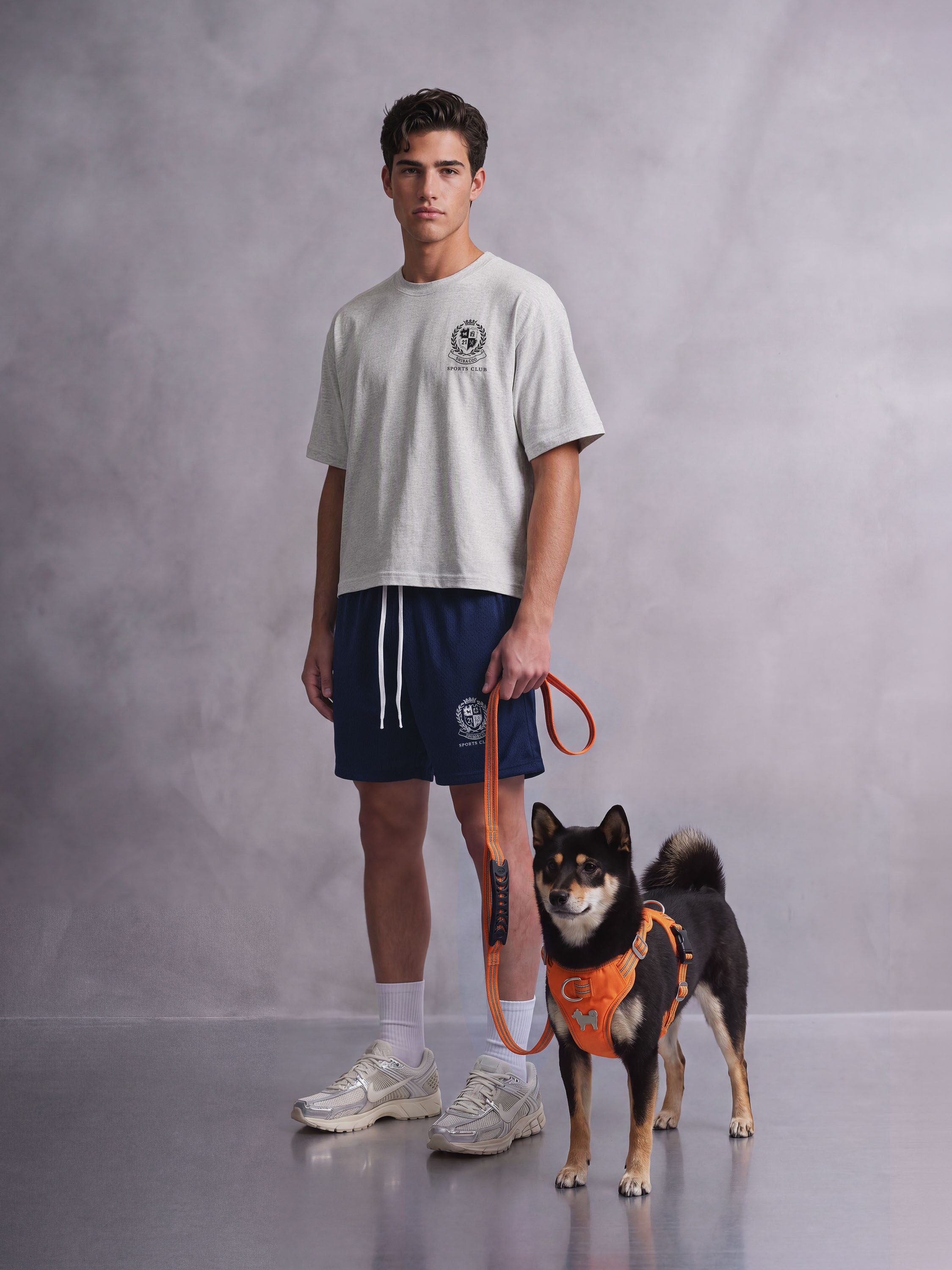
 Wild One is part of a broader shift in which pet products increasingly resemble modern direct-to-consumer lifestyle goods. Clean colors, simple forms, coordinated sets and technical language create a world where the harness is no longer hidden beneath the dog’s body. It becomes the central garment of the walk. For owners who live between city streets, parks, weekend escapes and travel, this kind of pet accessory carries a very contemporary message: function does not have to look careless.
The minimalist harness has become one of the most important objects in modern dog fashion because it sits exactly between care and image. It protects the dog, supports the body and allows movement, but it also frames the dog visually. In the same way a well-cut jacket shapes the human silhouette, a well-designed harness changes the way a dog is perceived in public space.
Then there is the streetwear side of the market, where Fresh Pawz brings a more graphic, pop-cultural energy into collars and harnesses. The brand’s world is not built around quiet refinement. It is built around visibility, print, collaboration and attitude. Its mesh harnesses are described as lightweight, vibrant and waterproof, while its collar category emphasizes creativity, quality, safety and comfort. But what makes Fresh Pawz editorially relevant is not only the product. It is the cultural code behind it.
 Fresh Pawz understands that pet fashion can now borrow from the same systems that shape human fashion: sneaker culture, sports identity, music, animation, nostalgia and limited-edition visual worlds. A dog collar can carry the same visual logic as a graphic hoodie. A mesh harness can feel closer to streetwear than to traditional pet equipment. In this context, the dog becomes part of a shared aesthetic performance between owner, city and culture.
This does not mean every pet brand needs to become a fashion house. But it does mean the market has changed. The most interesting pet brands today are not simply asking, “What does a dog need?” They are also asking, “What does this object communicate?”
That question matters because the pet industry has become emotionally and visually sophisticated. The modern dog is not only cared for; it is styled, photographed, traveled with, included, narrated. The collar and the harness are often the first signs of that relationship. They reveal whether the owner thinks in terms of convenience, elegance, sport, streetwear, luxury or play.
This is why leather, outdoor design and streetwear graphics are not separate categories anymore. They are different expressions of the same transformation. Pet accessories are becoming cultural objects. They sit at the intersection of fashion, identity, lifestyle and emotional design.
Love Thy Beast shows how leather can bring the dog collar into the world of urban elegance. Wild One shows how functional minimalism can make the harness feel like part of a modern lifestyle system. Fresh Pawz shows how streetwear and sneaker culture can move into pet accessories without losing their graphic energy.
Together, these brands suggest something larger: the future of pet fashion will not be defined only by novelty. It will be defined by clarity. The brands that matter will be the ones able to give even the simplest object — a collar, a harness, a leash — a reason to exist beyond function.
Because in contemporary pet fashion, the walk is no longer just a walk.
It is a runway of daily life.
Nota Editoriale
In contemporary pet fashion, the most revealing object is often not the coat, the sweater or the seasonal piece, but the accessory worn every day.
The collar, the harness and the leash have become part of a new visual language — one where function is no longer separated from identity. A leather collar can speak of urban elegance. A minimalist harness can suggest movement, comfort and outdoor living. A graphic accessory can carry the energy of streetwear, sneaker culture and social media aesthetics.
This article looks at that evolution through three different directions in the modern pet market: Love Thy Beast and the refinement of the leather collar, Wild One and the rise of functional minimalism, and Fresh Pawz and the translation of streetwear culture into dog accessories.
What emerges is not simply a trend, but a cultural shift. Pet fashion is no longer only about dressing the dog. It is about how everyday objects — once considered purely practical — are becoming part of a broader conversation around lifestyle, taste, design and emotional identity.
QEditorial Magazine — Fashion · Culture · Identity



Leave a Reply