
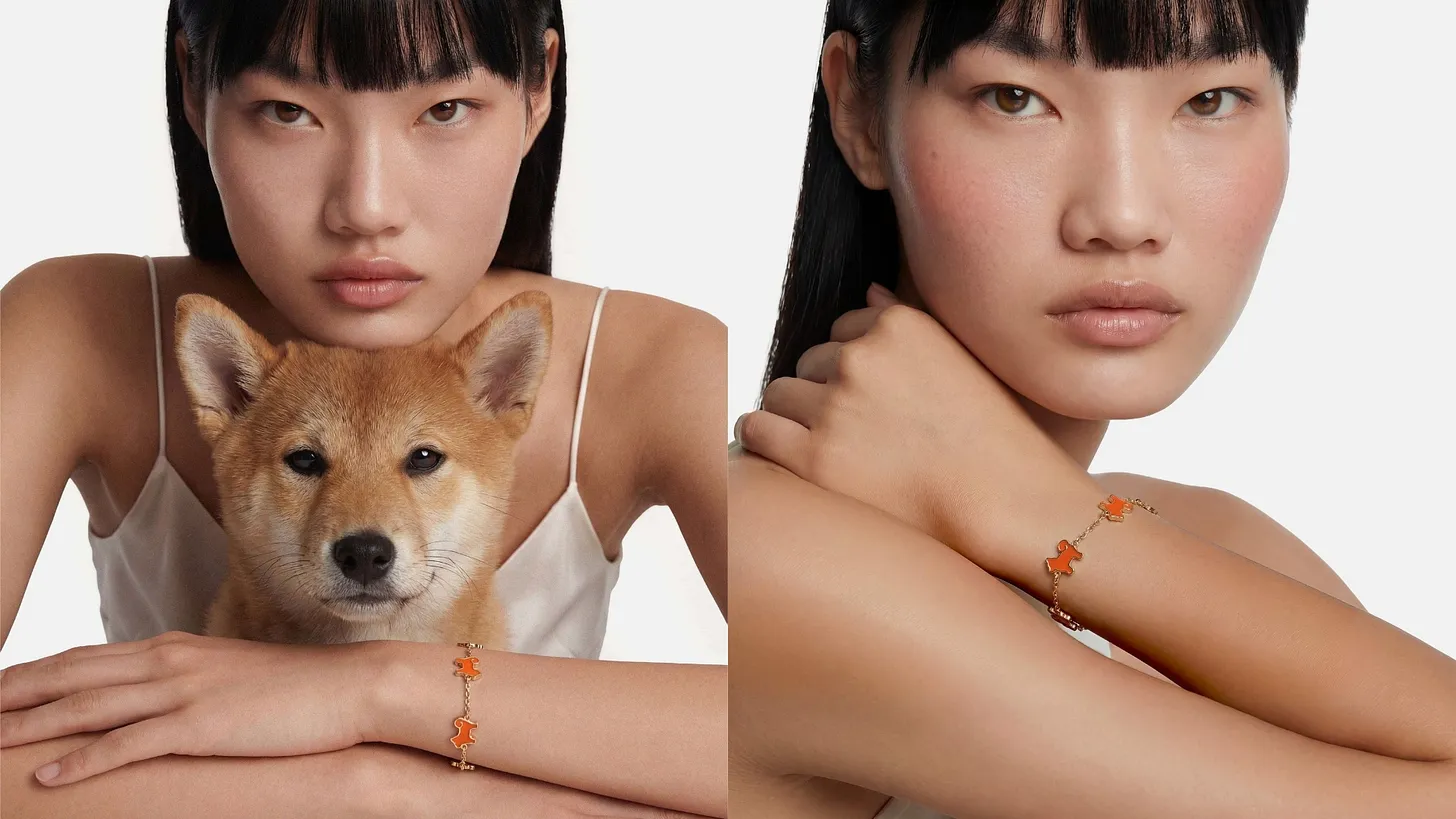

There are brands that enter a market, and brands that correct it.
Shiba&Co. belongs to the second category. With one line — “I’m not a fox, I’m Shiba&Co.” — the brand did more than create a slogan. It identified a recurring misunderstanding, turned it into language, and transformed that language into position. What the market often reduces to a vague animal image, Shiba&Co. made exact. What others leave generic, it made unmistakable. That is not just branding. It is authorship.
And perhaps that is why the brand has drawn attention well beyond niche pet retail. As Forbes framed it, Shiba&Co. emerged as a new lifestyle brand built around the Shiba Inu, while the brand’s own press archive cites a Vogue feature describing it as “Shiba and Co. New York pioneers a new era in pet fashion…”. Whether read as fashion language, market differentiation, or cultural specificity, the point is the same: the brand was not simply selling pet products. It was defining a visual and emotional territory of its own.
That phrase — pioneers a new era in pet fashion — matters because it points to something luxury still too often misunderstands. Luxury has long known how to borrow symbols, soften identities, and aestheticize almost anything. But aestheticization is not the same as recognition. A symbol can be beautiful and still be empty. A market can look refined and still be imprecise. What Shiba&Co. understood early is that identity becomes powerful when it is treated with discipline, not decoration.
This is what makes the brand more interesting than a simple pet-fashion label. Shiba&Co. did not build itself around the generic image of “the dog” as a lifestyle accessory. It built itself around the Shiba Inu as a specific code: a breed with a distinct silhouette, posture, character, and cultural resonance. In a market crowded with generalized cuteness, that kind of precision becomes a form of luxury.
The line “I’m not a fox, I’m Shiba&Co.” works because it does several things at once. It is witty, but it is also corrective. It is memorable, but it is also strategic. It understands that when people misrecognize the Shiba Inu, they are not only misnaming a dog — they are flattening identity into approximation. Shiba&Co. takes that moment of confusion and turns it into a statement of clarity. The result is a brand voice that feels immediate, but also remarkably controlled.

This is where the work of Qi Jiatai becomes especially relevant to the larger story of the brand. In coverage such as PARK Magazine NY, the brand’s marketing strength is explicitly tied to Jiatai, who is described there as central to its communication vision. That matters because Shiba&Co.’s rise has never been only about product. It has also been about framing — about understanding how a niche becomes a language, and how a language becomes a market advantage.
Other coverage reinforces this same point from different angles. The brand’s press archive lists features in Vogue, New York Weekly, BuzzFeed, NY Daily News, and PARK Magazine NY, while the main site presents Shiba&Co. as “as seen in Forbes, Vogue Magazine, New York Weekly and more.” These mentions matter not only as proof of exposure, but as evidence that the brand’s identity is legible across different editorial contexts: fashion, lifestyle, gift culture, and independent media.
But press alone is not the real story. The deeper story is that Shiba&Co. recognized something many luxury brands still fail to grasp: specificity scales better than vagueness. Consumers no longer respond only to polished surfaces. They respond to brands that know exactly what they are, what they represent, and why their world deserves to exist. The future of luxury does not belong only to heritage, price, or finish. It belongs to brands capable of turning identity into form.

That is why Shiba&Co. feels contemporary. Not because it follows fashion, but because it understands a newer logic of value. Today, people remember brands that give shape to a precise point of view. They remember brands that do not dilute themselves for broader acceptance. They remember brands that can take a simple sentence and make it function as cultural recognition.
And that may be the mistake luxury keeps making. It still believes that image is enough. Shiba&Co. suggests something more exact: that image becomes powerful only when it is backed by knowledge, character, and authorship.
In that sense, “I’m not a fox, I’m Shiba&Co.” is more than a slogan. It is a correction, a manifesto, and a market lesson in one line.

Editor’s Reflection
What makes Shiba&Co. compelling is not only the product, but the precision behind it. “I’m not a fox, I’m Shiba&Co.” is memorable because it turns a small misunderstanding into a statement of identity. And in a market where so much is made to look desirable, that kind of clarity still feels rare.
Selected by the Editor
Where luxury is designed for Shiba Inus and their people.

For selected advertising and editorial partnerships, contact: contact@qeditorial.com.
This article explores how Shiba&Co. positioned itself beyond generic pet retail by building a precise visual and cultural identity around the Shiba Inu. Through its slogan “I’m not a fox, I’m Shiba&Co.”, the brand turns misrecognition into authorship, using specificity as a form of modern luxury branding.



Leave a Reply