
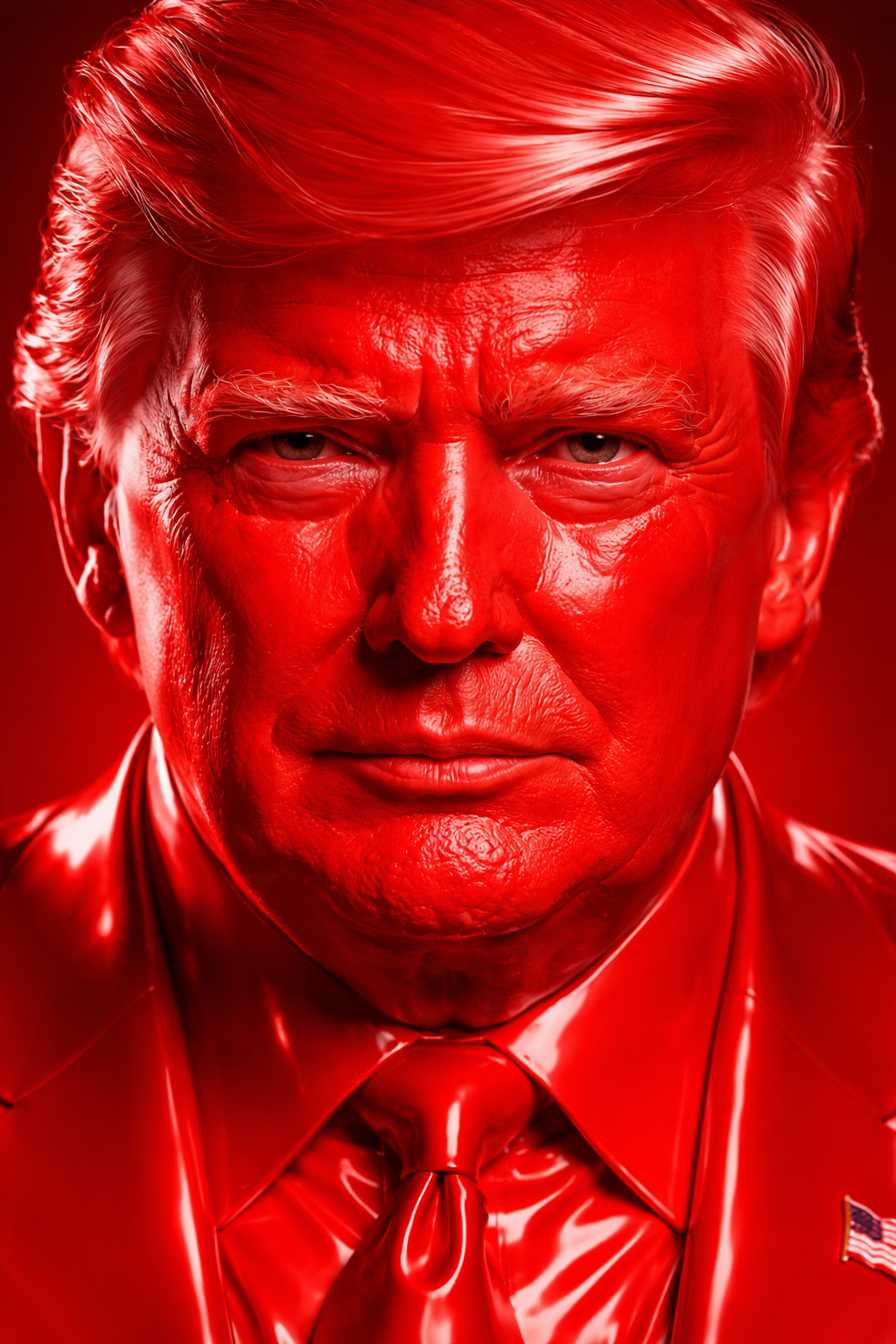
Between Iran, global crisis, and Trump’s plan: who will rewrite the world order?

For more than half a century, the world has lived within a recognisable order: oil as the centre of gravity, the dollar as the language of power, and the United States as the architect of global balance. It was never only about economics. It was a geopolitical structure. A system of influence. The very form of Western dominance.
Today, that structure is beginning to crack.
The crisis surrounding Iran is not simply a regional conflict, nor merely another episode in the long instability of the Middle East. It is something more profound: a stress point within the global system itself.
Geography alone explains why. A narrow stretch of sea can become a lever strong enough to unsettle the energy security of entire continents. If oil flows were disrupted, Europe would be exposed with dramatic speed. And with it, the markets, industry, currencies, and public confidence that depend on fragile equilibrium.
This is not only a military problem. It is a systemic one.
When energy enters crisis, everything follows. Costs rise. Markets recoil. Debt becomes heavier. Fragile economies bend first. In such a landscape, war is no longer measured only on the battlefield, but in a nation’s ability to absorb the economic and symbolic shock of disorder.
And it is here that the American question returns to the centre.
Many observers read this moment as evidence of US decline. In that view, Washington has already entered a politically losing war: if it fights, it overextends itself; if it negotiates, it appears weakened; if it retreats, it confirms the erosion of its primacy. Either way, it loses. This is the dominant interpretation: America no longer writes the rules as it once did, and the world knows it.
But there is another reading — colder, sharper, and perhaps more disturbing.
What if Donald Trump is not trying to preserve the old order, but to shatter it completely? What if chaos is not an accident, but a method?
In a collapsing world, those who control resources, production, military force, and financial infrastructure do not necessarily fall with the system. They may emerge stronger from its ruins. It is a brutal logic, but not a new one in history. To destroy one balance has often been the fastest way to impose another.
From that perspective, collapse would not represent America’s defeat, but the terrain on which to rebuild its centrality.
If the Gulf becomes unstable, if Europe is forced into an urgent search for new energy sources, if Asia must redraw routes and suppliers, then the United States could return to the centre of the table — not as guarantor of order, but as the power most capable of surviving disorder.
That would not be a diplomatic victory. It would be a victory by attrition. A victory built on the exhaustion of others.
This is where the analysis becomes more uncomfortable.
Perhaps we are still reading the present through categories that belong to the past: stable alliances, limited conflicts, linear hegemonies. Yet the contemporary world seems to operate differently. Wars are no longer fought only to seize territory. They are used to shift dependencies, redraw supply chains, destabilise rival economies, test the resilience of democracies, and manipulate political time itself.
Within this framework, Israel’s role inevitably enters the debate.
For some, the current escalation cannot be understood without acknowledging Israel’s strategic weight in the region and its capacity to pull the West into a broader confrontation. For others, to assign such a design to Israel is to oversimplify a far more complex game, one in which every major power moves according to its own logic of survival.
Yet the fact that this question even arises reveals something essential: the crisis of trust in the international order has become profound.
And then there is China.
Silent. Patient. Disciplined.
While the West fractures, Beijing watches. It has no need for theatrical intervention. It can simply wait for the existing balances to erode. Its strength lies not in urgency, but in duration. If the United States is playing a strategy of shock, China continues to play a strategy of sedimentation.
Two opposing visions. Two radically different understandings of power.
The question, then, is not only who will prevail in this crisis. The deeper question is what kind of world will emerge from it.
A world still centred on the United States, but harder, more unstable, and more openly shaped by force? A multipolar order in which no one truly dominates and all must coexist in permanent suspicion? Or a world in which chaos itself becomes the new geopolitical currency — the instrument through which powers negotiate their place in the order to come?
Perhaps it is too early for definitive answers.
But that is precisely the point. We have entered an era in which definitive answers matter less than the ability to recognise signals.
The petrodollar is not yet dead, but it is no longer untouchable. America has not yet fallen, but it is no longer unassailable. Europe remains economically central, but strategically vulnerable. China advances without haste. Israel operates within an increasingly decisive theatre. And Iran, even under pressure, remains a variable capable of destabilising the entire system.
Perhaps we are not witnessing only a war.
Perhaps we are witnessing a civilisational transition in geopolitics.
And in every epochal transition, there comes a moment when chaos no longer appears as the end of the system, but as the language through which the next system begins to speak.
by Nicolò Di Stefano
Selected by the Editor
A project from a world where fashion meets animal identity.



Leave a Reply