
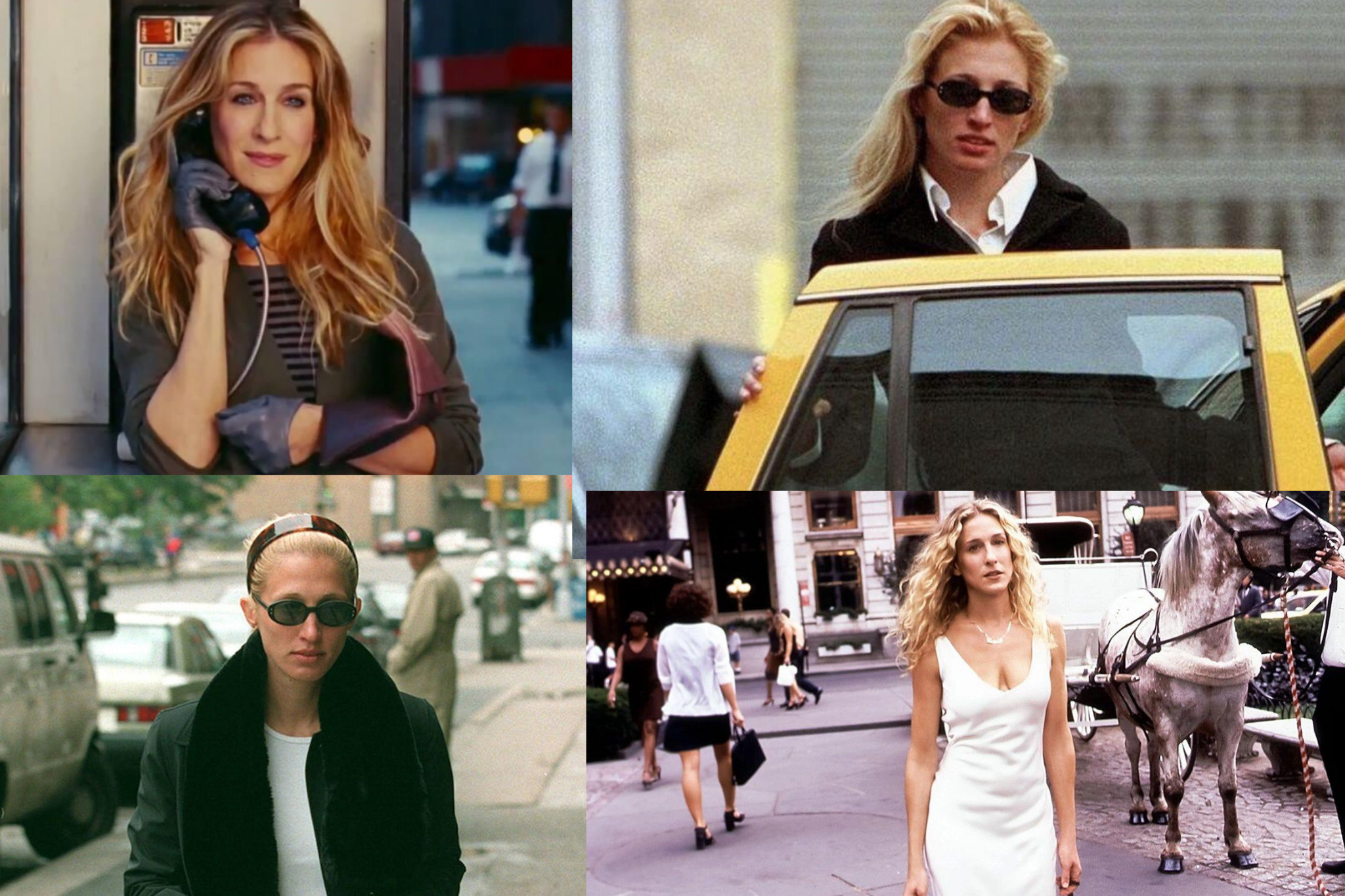
From Carrie Bradshaw to Carolyn Bessette-Kennedy, clothing becomes a language of identity, memory, vulnerability, and the way we choose to be seen.

Anna Kofitsas explores how Carrie Bradshaw and Carolyn Bessette-Kennedy turned clothing, shoes, and repetition into a language of identity and memory.
The fabric hid her body. Clothing can reveal or conceal the person wearing it. Once in a while, when the clothing separates from the body, shape and silhouette appear. In those rare moments when the body is uncovered, vulnerability emerges. What is chosen to put on the body establishes how we want to be seen, but when those choices evaporate, we see the body beneath all the layers.
When the layers disappear, there is less between the viewer and the person. The body becomes something shared rather than something constructed.
Clothing is powerful. Fabrics and colors and shapes can invite you in, yet also keep you out. Clothing can do what you want it to do. The person who wears the clothes has agency over how visible they want to be.
A Shoe As Identity
To some, a shoe is just a shoe. But to others, a shoe is identity. It is style. It is personal. It is how we see ourselves. It is how we present ourselves to the world. The distinction lies at the heart of Sex and the City, when a fight between Carrie Bradshaw and Aidan Shaw shows how they assign very different meanings to shoes. In Season Four, Episode Thirteen, “The Good Fight,” the couple argues after Aidan’s dog chews on a pair of Carrie’s shoes.
For Aidan, it is simply a damaged possession. For Carrie, the shoes represent something far more significant: a part of herself. The dog is not only destroying heels, but threatening an extension of her identity. Carrie’s clothing and shoes are an integral part of the persona she created for herself. Fashion, in this sense, is a way that people assert control over identity.
While Carrie Bradshaw became a fictional symbol of fashion in the late 1990s and early 2000s, Carolyn Bessette-Kennedy emerged as a real-life icon and inspiration.
She defined the clothes — not the other way around.

Bessette-Kennedy cultivated a recognizable identity through repetition, restraint, and intentional dressing. Her dark-wash jeans paired with flip-flops. The headbands from C.O. Bigelow. The leopard coat with a slicked-back hairstyle. Those black Prada loafers. Her consistent looks transformed ordinary objects into markers of identity. At times when there are no words to be said, style speaks for you and reveals just enough.
“Carolyn proved that I didn’t have to look obvious to be sexy and that I could wear classic styles but make them my own,” RoseMarie Terenzio writes of Carolyn Bessette-Kennedy in Fairy Tale Interrupted: A Memoir of Life, Love, and Loss [Gallery Books, 2012].
While it can be the fabric that physically keeps clothing intact for years, it is the person who wears it that makes it endure. During a shopping trip, Bessette-Kennedy picked out an Ann Demeulemeester leather skirt from Barneys for Terenzio, convinced it would give her confidence. When Terenzio hesitated at the $800 price tag, she tried to choose just one item instead. Bessette-Kennedy handed her credit card to the salesperson, refusing to let her say no. In that moment, style became less about price tags or chasing trends and more about confidence in what one chooses to wear (Terenzio, Chapter 4).
Style is about wearing clothes with intention and confidence.
Through Carrie Bradshaw, we have learned that her style was never about chasing the latest trend. At times, she wore popular fabrics or accessories, but her clothes were always an explanation of who she was, personally. In Season Two, Episode Eighteen, Bradshaw is dressed in a bias-cut white Dior slip as she sees Big engaged to another woman. A white dress could symbolize marriage, or the lack of it. Wearing white as a “revenge dress” has viewers remembering the emotion Carrie felt.
The heartache was attached to the dress.
“We keep dresses we’ll never wear, but throw away our ex-boyfriends,” Carrie says in that Season Two episode. The “Carrie necklace” makes its subtle appearance in every season of Sex and the City. Typically when Carrie finds herself at a crossroads with a boyfriend. The choice to place that necklace on Sarah Jessica Parker became significant within the visual language of the character. The necklace stood as a reminder of Carrie’s identity.
Whether something is worn once or multiple times, it marks a moment in time. Maybe something doesn’t need to be worn just once to be memorable.
The oval sunglasses became a trademark of Bessette-Kennedy. Repetition creates memory, and remembering an item worn on one particular person creates an identity for them.
She chose that accessory the same way Carrie Bradshaw chose her gold monogram necklace.
An Evolution of Style in the Age of Algorithms
As identities continue to be crafted online, beauty and artistry are often eclipsed by a need for visibility.
In the past, we searched for a garment. Now the garment seems to find us. The ability to shop online has become so prominent that ads appear across social media, tailored to our preferences. Personal style can still exist even as algorithms influence the way fashion reaches us. Younger generations may not have witnessed cultural fashion moments from CBK or Carrie Bradshaw as they happened, but TikTok and Instagram offer constant inspiration from the past.
With people’s lives documented online, privacy doesn’t always seem as sacred anymore. While documenting a moment helps it become a strong memory, sometimes the moment needs time before it becomes etched into your past. Keeping something private determines how meaningful it can be. There is a moment of reflection that comes before something turns into a trend.
Social media has become a way to explain ourselves to others. Oftentimes, it seems we have confused being seen with being known. Perhaps the need to be understood gets mistaken for everyday validation. Carolyn didn’t seem concerned with what would make her visible. She knew her style, and that is what led her when things were uncertain.
Take this story, for example.
There is a sixty-one-year relationship between a 95-year-old and an 85-year-old. They have done everything together. One car, two hearts, and always on the same team. The 95-year-old has gone through a lot recently. His wife has basically never had to sleep separately from him until now. But when she goes to visit him, she wears eyeliner, blush, and lipstick. She picks out colorful garments.
Finding styles that become your own through lived experiences can show who you are, even as your surroundings are ever-changing.
Fashion has become more than just trends. When a pair of vintage Stuart Weitzman heels are worn, they highlight who is wearing them and what their story is.
Shoes are not just for one person. A pair of heels has history. Woman after woman, life after life, shoes carry the legacy of who came before.
Anna Kofitsas
Fashion often reveals itself in the space between what is worn and what is remembered. In Anna Kofitsas’s latest piece for Q Voice: Fashion Runway, clothing becomes a language of identity, control, vulnerability, and memory.
Through Carrie Bradshaw and Carolyn Bessette-Kennedy, Anna examines two very different forms of personal style. One was constructed within fiction, the other lived under the scrutiny of public attention. Both demonstrate how repetition, instinct, and attachment can give an object meaning far beyond its material value.
Shoes, dresses, sunglasses, headbands, and familiar silhouettes become markers of self. They carry emotion, history, and recognition. In Anna’s reading, style is at its most compelling when it feels personal enough to endure beyond the moment in which it was worn.
This article also considers what happens to identity in an age shaped by algorithms and constant visibility. As fashion moves increasingly through screens, personal style remains one of the most intimate ways we decide what to reveal, what to protect, and what we allow others to remember.
 Anna Kofitsas
Q Voice — Fashion Runway
Thank you for reading. Join Q Letter to stay connected with QEditorial’s latest stories and become part of a growing community supporting independent fashion and cultural journalism.
QEditorial Magazine — Fashion · Culture · Identity

Image Credits & Editorial Use Notice
Image collages created by QEditorial Magazine for editorial purposes. The photographs featured within the collages are used solely in connection with cultural commentary, criticism, reporting, and discussion of fashion, identity, Sex and the City, Carrie Bradshaw, and Carolyn Bessette-Kennedy. All rights to the original photographs remain with their respective photographers, copyright holders, agencies, studios, and licensors. QEditorial Magazine claims no ownership of the underlying third-party imagery. Rights holders may contact QEditorial Magazine at contact@qeditorial.com regarding attribution, corrections, licensing information, or removal requests.



Leave a Reply