
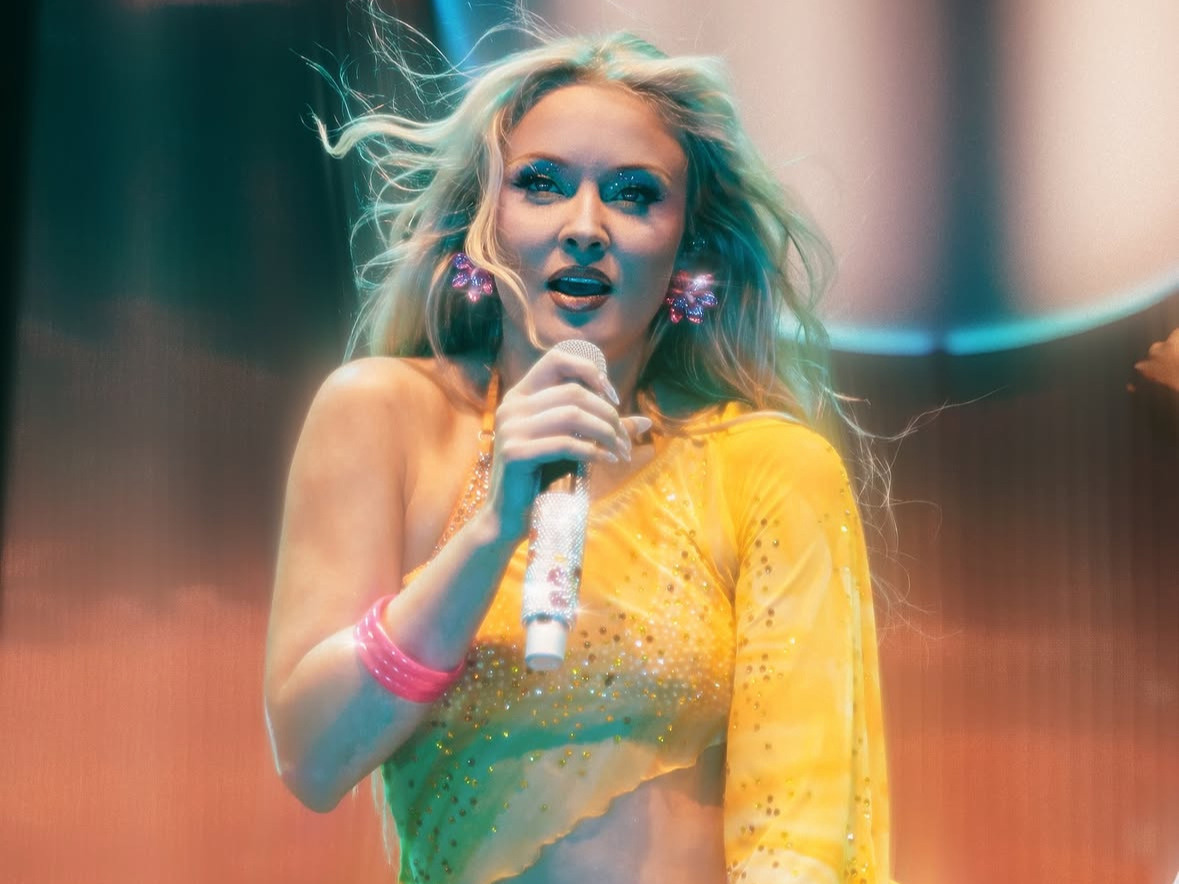
Through the growing relationship between fashion and pop culture, the codes of Power Dressing have expanded in 2026. Bold makeup, expressive colour combinations and individuality now shape a broader idea of how clothing can communicate confidence.
By the end of 2025, listeners were embracing Zara Larsson’s Midnight Sun, released that September, by recreating her makeup, drawing inspiration from her styling choices and adopting the album’s exuberant visual language ahead of the following summer.
From the start, Larsson’s public persona felt refreshingly direct. Vocal about her principles, she developed a connection with her audience that contrasted with the carefully managed distance of much celebrity culture.
In the months that followed, Larsson became an increasingly visible presence in contemporary pop culture. The visual language surrounding Midnight Sun spread across social media, live performances and fan-created styling, contributing to a broader conversation about how power dressing can look in 2026.

The Spring/Summer 2026 Season: Vibrant Designs Meet Minimalist Silhouettes
Despite developing independently from one another, the Spring/Summer 2026 runway collections and Larsson’s growing cultural visibility both reflected the renewed prominence of colour across fashion and music.
The season brought together established creative voices and several closely watched debuts. Nicolas Ghesquière continued his work at Louis Vuitton, while Miuccia Prada and Raf Simons presented their latest collection for Prada. Elsewhere, newly appointed creative directors Matthieu Blazy, Jonathan Anderson and Louise Trotter introduced new chapters at Chanel, Dior and Bottega Veneta, respectively.
Across the season, vibrant shades and tactile fabrics offered a broader vocabulary for individual expression.
As this tendency spread, conversations about taste emerged across social media. These discussions challenged the idea that assembling a Pinterest board is enough to develop a personal aesthetic, suggesting instead that taste requires time, cultural exposure and experimentation.
The return of colour within formal and informal settings also encourages a reassessment of power dressing—one that extends beyond the shoulder-padded tailoring and corporate wardrobe associated with the 1980s. Its contemporary meaning is broader: clothing used deliberately to project confidence, authority and self-possession.
Power dressing became especially visible during the 1980s, as increasing numbers of women entered corporate and political environments historically structured around male authority. Its visual language was bold and assertive. In 2026, confidence is performed across a wider range of professional, creative and public settings, allowing these codes to evolve beyond the traditional office wardrobe.
Trends change, yet colour can remain part of an individual visual language long after new collections reach the runway.
Minimalist Silhouettes Share the Spotlight with Bold Contrasts
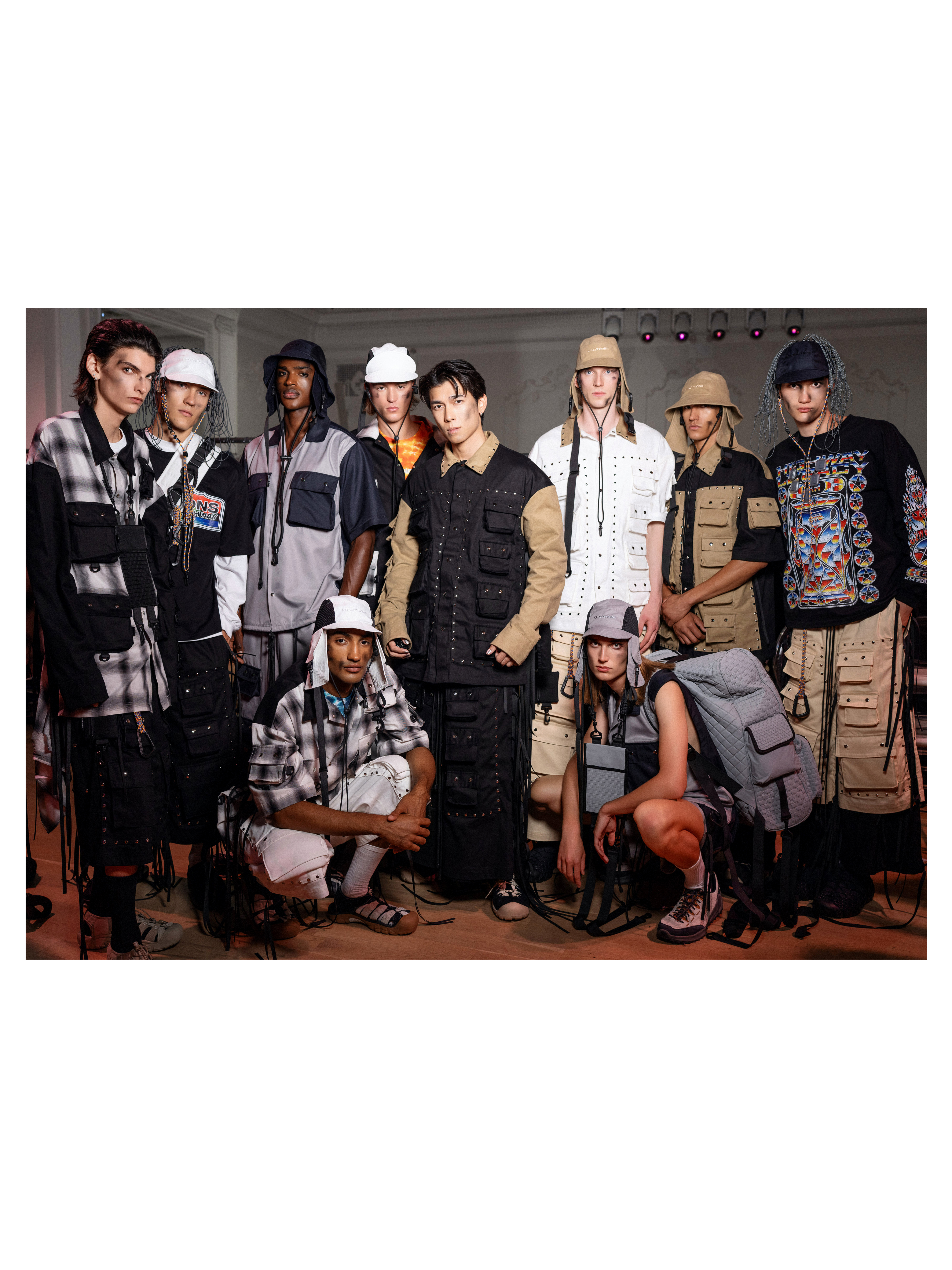
The Spring/Summer 2026 season paired the enduring appeal of minimalism with bold contrasts and unconventional colour combinations.
“Color takes center stage. Think electric blue, bold red, aqua green, lemon yellow and vibrant orange. Warm neutrals such as buttery white and sandy beige build the foundation of a modern wardrobe.”
The neutral codes that dominated recent seasons began to coexist with less conventional combinations, turning ideas once described as “strange” into expressions of individuality and cultivated taste.
At Bottega Veneta, saturated yellow animated an oversized textured coat; Prada paired acid green with lilac gloves; and Louis Vuitton applied tactile trim to a dusty-rose midi dress. Across these collections, idiosyncratic choices gave personality a more visible role.
The Continuing Reliability of Minimalism
By contrast, searches for office inspiration across digital platforms continue to return looks shaped by minimalist aesthetics, including the “office siren” and “quiet luxury” categories. Their codes are familiar: neutral palettes, adaptable garments and materials selected for long-lasting wear.
During periods of economic uncertainty, consumers often become more deliberate about discretionary purchases. In fashion, this caution can increase the appeal of versatile wardrobe essentials and garments perceived as durable investments.
Global Banking & Finance Review has connected the renewed appeal of quiet luxury and minimalism with cost-consciousness, durability and changing attitudes towards status and sustainability. Consumers are increasingly encouraged to purchase fewer pieces while seeking higher-quality garments with greater longevity.
The appeal of these trends lies in their promise of reliability, versatility and continued relevance beyond a single season.
Natural fabrics and refined embroidery remain visible across many luxury collections, yet the popularity of neutral palettes extends beyond construction. White, black, beige and dark brown offer familiarity and ease: they adapt readily to different garments, moods and settings.
Classic wardrobe essentials provide a blank canvas when personal direction feels uncertain, although they may not fully express an already developed sense of style.
The Return of Colour Signals a More Personal Approach to Taste
The return of colour may suggest that consumers are taking more time to understand and articulate their individual preferences.
Quiet luxury gained relevance during a period in which many consumers were seeking simplicity, versatility and a sense of permanence. In 2026, the search for sustainable, accessible and long-lasting garments continues, while colour offers another route towards personal expression. Consumers appear increasingly willing to experiment beyond the surface-level codes of a single aesthetic.
A similar desire for personal expression has emerged in interior design, often independently of a space’s “Instagrammability.”
Speaking to Vogue, interior designer Sarah Lederman observed that clients are choosing objects that feel “stranger, more personal” and more individual. Her observation reflects a broader resistance to algorithmically generated sameness and a renewed desire for environments that reveal something meaningful about the people who inhabit them.
The same principle can be applied to fashion. An observer unfamiliar with Schiaparelli may consider one of the house’s sculptural bags kitsch, while someone who understands its surrealist vocabulary may interpret the same piece as a precise expression of personal taste.
Beyond the Trend Cycle
Across social media, creators and commentators have increasingly examined how taste develops and how it can be expressed. Yet the answer cannot be reduced to styling tips or fashion advice.
Taste develops through self-knowledge, cultural exposure and experimentation. Colour, therefore, need not function as a temporary trend; particular shades can become lasting elements of an individual visual identity.
Larsson’s Midnight Sun era resonates with the tendencies of Spring/Summer 2026. Together, these pop and fashion phenomena suggest that established conventions are no longer the only visual language available for expressing power.
Saturated palettes, bold prints and unconventional fabrics do not establish maximalism as a permanent direction; rather, they highlight the role of self-discovery in developing a distinctive personal style.
Q Voice
Written by Rebecca Krizman
Editorial Note with Integrated Keywords
Through Zara Larsson’s Midnight Sun visual identity and the Spring/Summer 2026 collections, this article examines power dressing in 2026, contemporary colour trends, quiet luxury, minimalist silhouettes and the growing influence of personal taste across fashion and pop culture.
Thank you for reading. Join Q Letter to stay connected with QEditorial’s latest stories and become part of a growing community supporting independent fashion and cultural journalism.
QEditorial Magazine — Fashion · Culture · Identity – QEditorial.com



Leave a Reply