

As Paris Haute Couture Week returns from July 6 to July 9, 2026, couture remains one of fashion’s last rituals of time, craft, imagination, and reverence.

Paris Haute Couture Week returns from July 6 to July 9, 2026, according to the official calendar of the Fédération de la Haute Couture et de la Mode. (fhcm.paris) But couture has never been important simply because it appears on a calendar. It matters because it remains one of the last places in fashion where clothing is allowed to exist beyond urgency, beyond commercial speed, and beyond the logic of immediate consumption.
In a system increasingly shaped by repetition, algorithms, and accelerated visibility, haute couture still insists on another rhythm. It is not merely about luxury, nor only about expense. It is about concentration. About the human hand as a form of intelligence. About time, patience, discipline, and imagination becoming visible through fabric. Couture is the moment when fashion stops asking what will sell fastest and begins asking what can still be created at the highest possible level.
This is part of why Paris couture week continues to carry such symbolic force. Recent coverage has reinforced the idea that couture is not a nostalgic appendix to fashion, but one of the clearest places where the industry tests its emotional and artistic relevance. In Vogue’s recent reflection on the season, the week was described through themes of innovation, tribute, and reflection—evidence that couture remains not frozen in tradition, but fully engaged with the present. See 3 Key Takeaways From Haute Couture SS26. (vogue.com)
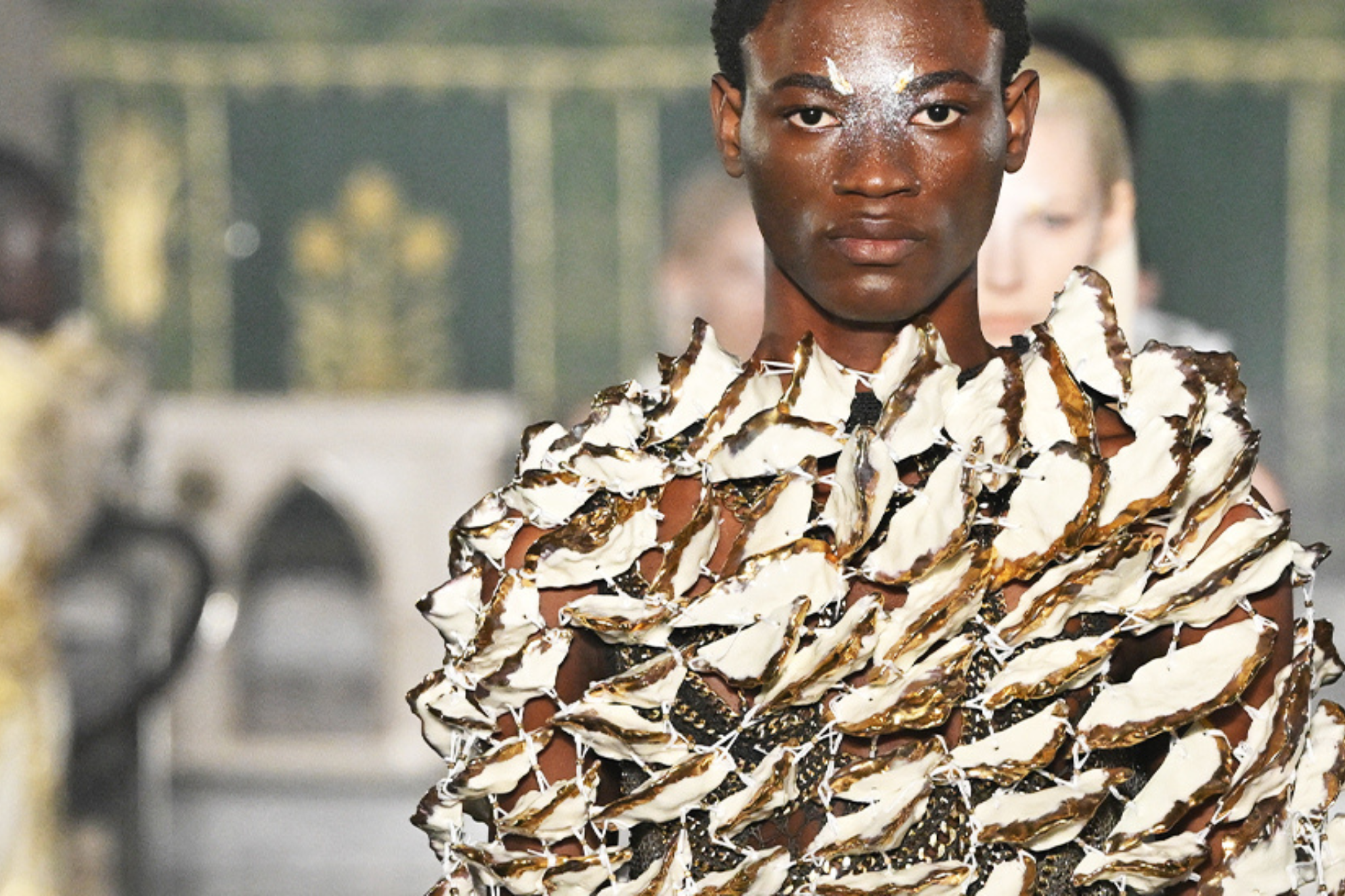
What couture protects, above all, is the idea that fashion can still produce wonder without becoming superficial. It is one of the few remaining territories where excess can still mean refinement rather than noise, and where spectacle, at its best, is inseparable from technique. A dress in couture is never just an image. It is labor, architecture, memory, and gesture. It carries the trace of the atelier inside it. That is why couture still matters even to those who will never wear it: because it preserves fashion’s highest grammar.
This question of relevance has been addressed directly by The Business of Fashion, which argued that couture has entered a new era, not because it has abandoned its foundations, but because those foundations now serve new meanings, new audiences, and new forms of desirability. See Couture Has Entered a New Era. What Does It Mean?. The larger argument is important: couture survives not by resisting time, but by proving that time itself can still be embedded in beauty. (businessoffashion.com)
And yet couture is not only an artistic act. It is also a language of brand identity. It defines aspiration at its highest point. Vogue has noted before that couture continues to create a kind of emotional and visual authority that extends far beyond its direct clientele, while BoF has also explored why fashion still needs haute couture at all—as a laboratory of craft, image, and meaning. See Why the Haute Couture Shows Are (Still) Worth Applauding and Why Does Fashion Need Haute Couture?. (vogue.com) (businessoffashion.com)
There is also something more profound at stake. Couture is perhaps the last part of fashion that openly refuses democracy of scale. It is not made for everyone, and that exclusivity can be uncomfortable. But culturally, its role is not to be common. Its role is to set the outer edge of what fashion can still mean when freed from compromise. This is what makes couture important editorially: it reminds us that fashion is not only industry, not only product, not only trend. It is also ceremony. It is also devotion.
Even when reviewed through images and not in person, couture communicates a different order of value. WWD’s seasonal coverage, including its couture sketches and reviews, continues to show how these collections are received not simply as garments, but as statements of authorship and atelier identity. See Designer Sketches From Paris Couture Week Spring 2026. (wwd.com)
To watch couture, then, is to watch fashion remembering itself. Not as commerce alone, but as craft elevated into expression. Not as endless novelty, but as the disciplined pursuit of something rare. In a world that rewards speed, couture rewards precision. In a visual culture built on instant reaction, couture still asks for contemplation. And in that difference lies its power.
Paris in July does not simply present beautiful clothes. It stages the continuing argument that fashion, at its highest level, is still capable of dream, rigor, and belief. Couture endures because it offers something the rest of the system often forgets how to produce: not just desire, but reverence.
Editor’s Reflection
Haute couture remains essential because it refuses reduction. It does not simplify fashion into trend or product. It restores complexity, ritual, and devotion to the act of making. And perhaps that is why couture still moves us: because in a world obsessed with speed, it continues to prove that beauty becomes more powerful when it takes time.
— Nicolò Di Stefano
QEditorial Magazine


Leave a Reply