
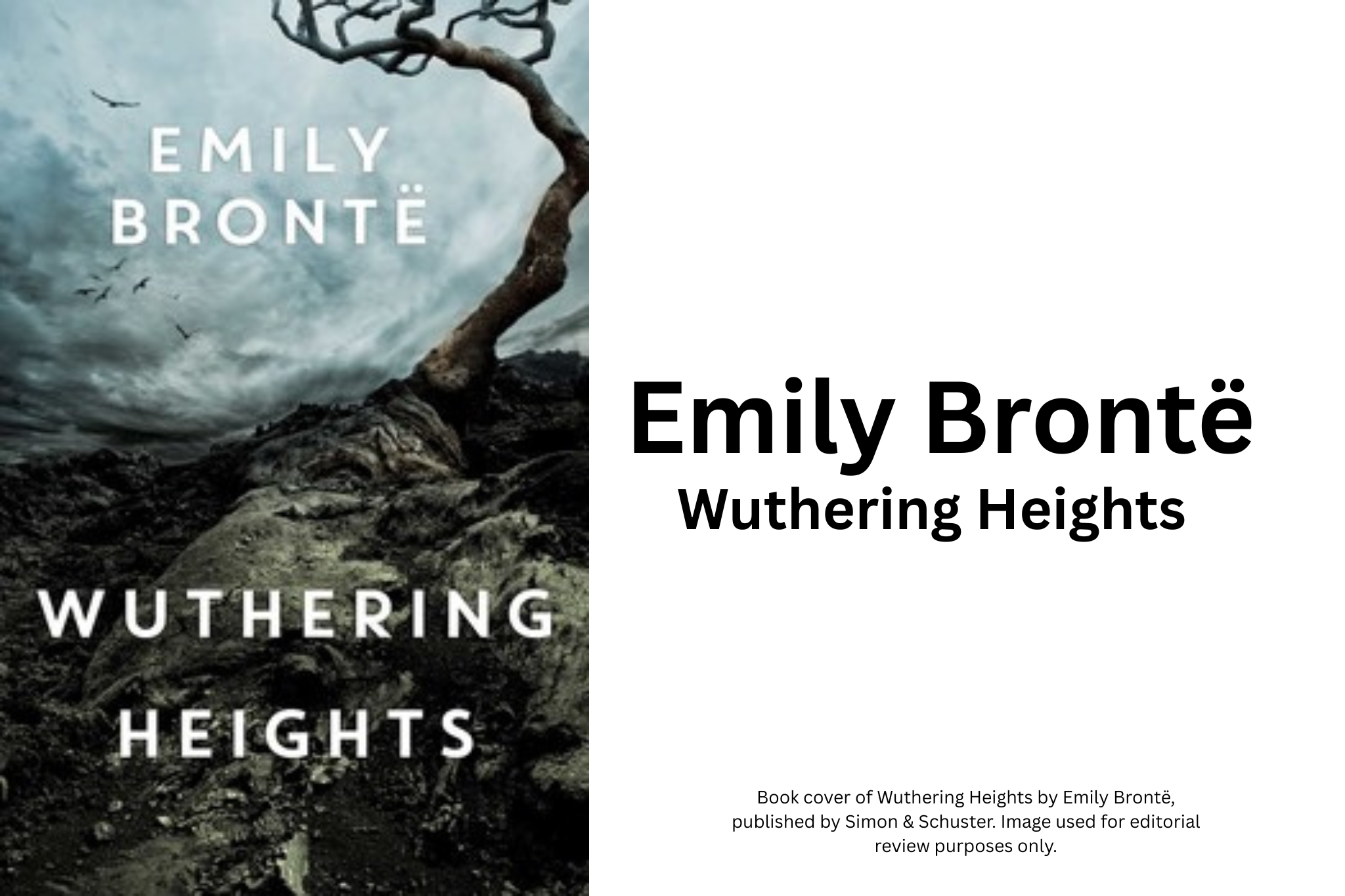
Emily Brontë’s only novel is not simply a tragic love story, but a psychological study of obsession, identity, social constraint, and the possibility of breaking inherited wounds.

Written by Marina Khamuko, Books & Culture Editor, QEditorial Magazine
Contemporary conversations often return to emotional codependency, toxic relationships, and the difference between genuine affection and unhealthy attachment. Although these ideas may seem distinctly modern, they are not new. More than 175 years ago, Emily Brontë explored many of these themes in her only novel, Wuthering Heights. Through its complex characters and emotionally charged narrative, the novel offers a striking examination of obsession, identity, revenge, social constraint, and the destructive consequences of unchecked passion.
Often described as a Gothic masterpiece, Wuthering Heights is dark, intense, and psychologically complex. Although it is frequently approached as a love story, the novel has surprisingly little to do with healthy or mature love. Instead, Brontë depicts a bond shaped by emotional dependency, possessiveness, pride, and self-destruction.
The enduring fascination with Wuthering Heights is also reflected in its many screen adaptations. Among the most notable is the 2009 two-part television adaptation directed by Coky Giedroyc, starring Tom Hardy as Heathcliff and Charlotte Riley as Catherine Earnshaw. Its extended format allows more space for the novel’s emotional complexity, social conflicts, and psychological tension. More recently, Emerald Fennell’s cinematic reimagining, starring Margot Robbie as Catherine and Jacob Elordi as Heathcliff, has introduced Brontë’s Gothic world to a new generation of viewers. Each adaptation, whether more traditional or more contemporary in tone, confirms the lasting cultural power of the novel.
What continues to make Wuthering Heights relevant is not only its dramatic love story, but its exploration of love, class, belonging, exclusion, and the search for personal identity. These themes transcend the novel’s nineteenth-century setting and continue to speak to contemporary questions about how social expectations, cultural norms, and individual desire shape human relationships.
The relationship between Catherine Earnshaw and Heathcliff illustrates the danger of losing one’s individuality within a romantic attachment. Rather than developing as independent individuals, the two become emotionally fused, defining themselves through one another. Their connection is marked less by mutual respect and personal growth than by possession, intensity, and obsession. What may initially appear to be profound love gradually becomes resentment, suffering, and destruction.
Brontë challenges readers to consider the difference between love and possession. Genuine love seeks the well-being, happiness, and freedom of the other person. Possessive attachment, by contrast, often manifests through jealousy, manipulation, emotional instability, and the desire for control. Throughout the novel, Catherine and Heathcliff repeatedly inflict psychological and emotional pain on one another, revealing the destructive nature of their bond. Their relationship raises questions that remain deeply relevant: Why do people so often confuse obsession with love? Why do destructive relationships continue to attract, consume, and define those involved in them?
The immaturity of Catherine and Heathcliff also contributes to the tragedy. Their relationship develops during adolescence, a period marked by emotional intensity and an incomplete understanding of mature partnership. Their inability to distinguish between passion and genuine affection becomes one of the central forces driving the novel’s conflict.
Brontë also shows how deeply a person can be shaped by the world that raises, excludes, or rejects them. Heathcliff’s childhood is marked by humiliation, abuse, and social exclusion. As an adopted child perceived as an outsider, he is subjected to both physical and emotional mistreatment. These experiences contribute to his isolation, emotional withdrawal, and growing resentment toward those around him. Whether his violence is innate or acquired, Heathcliff’s temper and lack of moral restraint become increasingly dangerous as the narrative unfolds.
For much of his youth, Catherine is the only person capable of softening Heathcliff’s darker impulses. Yet when she chooses to marry Edgar Linton, a wealthy and socially respectable neighbor, Heathcliff experiences her decision as a profound betrayal. Her choice reawakens years of insecurity and humiliation connected to his lower social position. From that moment, revenge becomes the defining force of his adult life.
Yet Brontë makes clear that revenge offers no true satisfaction. Although Heathcliff may initially experience a sense of power, his relentless pursuit of vengeance ultimately deepens his own suffering. The more pain he inflicts on others, the more consumed he becomes by bitterness and emotional torment. In this sense, Heathcliff is not merely a villain. He is also a tragic figure whose inability to overcome his past leads to his moral and psychological decline.
Catherine is equally flawed. She is proud, impulsive, selfish, and emotionally unstable. Like Heathcliff, she possesses a strong will, a tendency toward manipulation, and a capacity for cruelty. Her decision to marry Edgar is motivated not only by affection, but also by comfort, ambition, and social status. Despite her declarations of love for Heathcliff, Catherine repeatedly fails to place the well-being of others above her own desires. As a result, she contributes significantly to the tragedy that follows.
The novel also offers a broader reflection on human fulfillment. Brontë suggests that individuals cannot achieve lasting happiness by making another person the sole purpose of their existence. Nor can they thrive when guided only by emotion, without reason, self-awareness, or moral responsibility. In the same way, relationships built primarily on wealth, status, or social advantage are unlikely to produce meaningful happiness.
Cultural Identity and the Search for Belonging

One of the most compelling aspects of Wuthering Heights is its exploration of identity and belonging. Brontë presents identity as something shaped by environment, class, education, emotional experience, and social perception. The contrasting settings of Wuthering Heights and Thrushcross Grange symbolize two very different cultural worlds. Wuthering Heights represents passion, instinct, wildness, and emotional force. Thrushcross Grange embodies refinement, social order, comfort, and established cultural expectations.
Catherine’s internal conflict between Heathcliff and Edgar mirrors a broader struggle between personal authenticity and social aspiration. Heathcliff represents the untamed part of her identity, while Edgar offers security, refinement, and social legitimacy. Her inability to reconcile these competing desires contributes significantly to the tragedy of the novel.
At the same time, Brontë suggests that identity is not entirely fixed. Characters are shaped by the conditions into which they are born, but they are also changed by suffering, experience, education, and human connection. This idea becomes especially important in the development of young Catherine and Hareton Earnshaw.
Perhaps the most hopeful element of Wuthering Heights is Brontë’s decision to resolve the central conflict through the younger generation. After showing the destructive consequences of obsession, revenge, and emotional dependency through Catherine and Heathcliff, Brontë turns to their heirs. In doing so, she suggests that individuals are not always destined to repeat the mistakes of those who came before them.
The relationship between young Catherine Linton and Hareton Earnshaw offers a powerful contrast to the toxic attachment of the earlier generation. Their connection is not immediate, perfect, or free from conflict. However, it gradually develops through patience, education, humility, and mutual recognition. Unlike Catherine and Heathcliff, they do not build their relationship on possession or revenge. Instead, their bond becomes a possibility for growth.
This transformation is closely connected to social and cultural identity. Hareton, despite being the rightful heir to Wuthering Heights, is deliberately deprived of education and refinement by Heathcliff, whose revenge extends across generations. As a result, Hareton’s identity is shaped by exclusion, neglect, and limited opportunity. Young Catherine, by contrast, has been raised with the education and cultural values associated with Thrushcross Grange. Their relationship brings together two individuals formed by very different environments.
Through their gradual understanding of one another, young Catherine and Hareton overcome inherited prejudice and social division. Their story suggests that identity is not determined solely by class, upbringing, or family history. It can evolve through empathy, education, and emotional maturity.
In this sense, Brontë offers a more hopeful vision of belonging. While the older generation remains trapped by pride, resentment, and destructive attachment, the younger generation opens the possibility of reconciliation. Their union symbolizes the healing of long-standing family conflicts and the integration of the two opposing worlds represented by Wuthering Heights and Thrushcross Grange.
For this reason, Wuthering Heights should not be viewed simply as a tragic love story. It is a psychological and social novel about trauma, class, identity, emotional dependency, and the possibility of breaking destructive cycles. Through Catherine and Heathcliff, Brontë reveals the devastation caused by obsession and revenge. Through young Catherine and Hareton, she suggests that another future is possible.
The novel’s lasting power lies in this tension between destruction and renewal. It shows how love can become dangerous when it is confused with possession, and how identity can be distorted by exclusion and social pressure. Yet it also leaves space for healing. More than a century and a half after its publication, Wuthering Heights continues to resonate because it asks questions that remain deeply human: how we love, how we belong, and whether we can free ourselves from the wounds we inherit.
By Marina Khamuko
Books & Culture Editor, QEditorial Magazine





Leave a Reply