
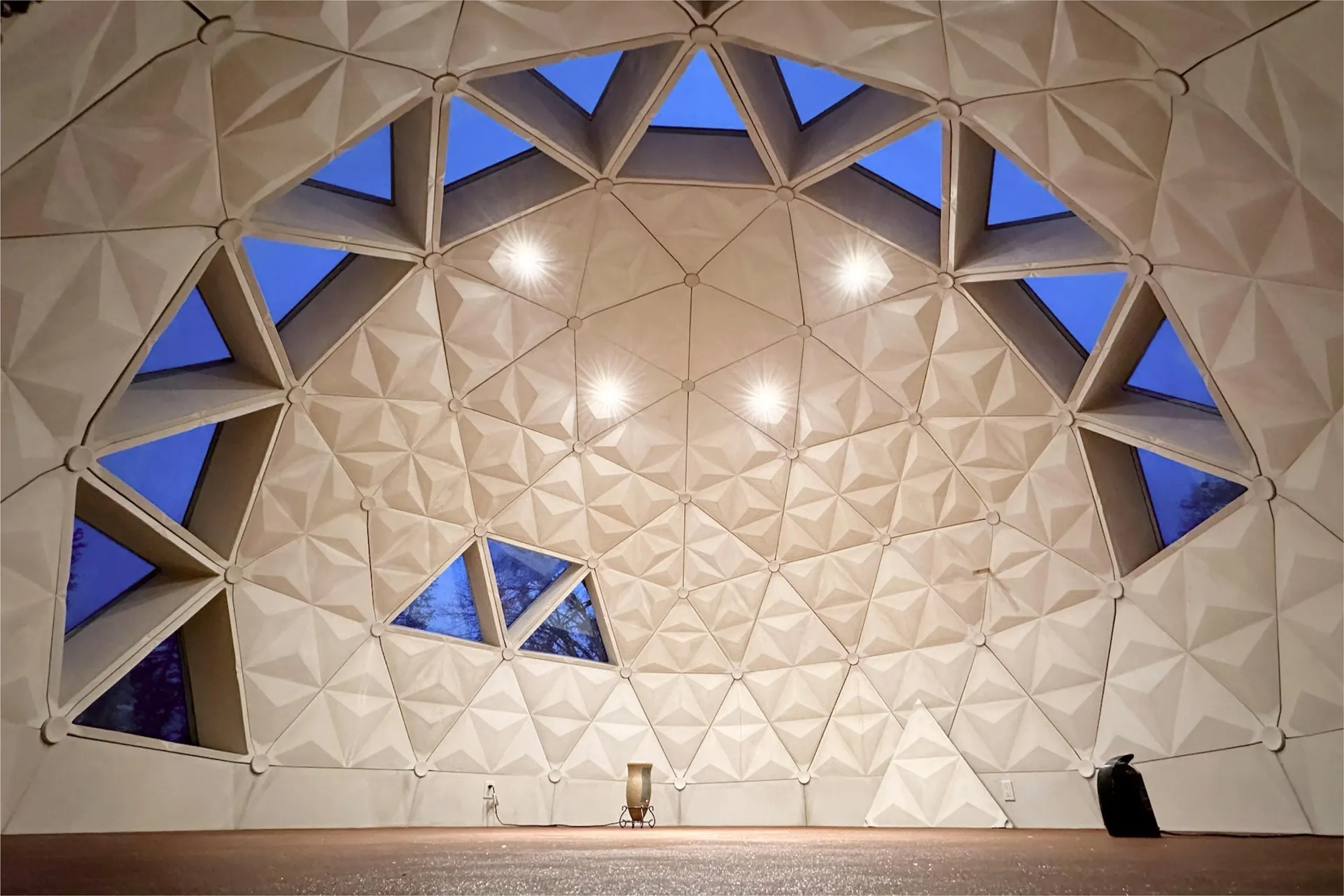
Through bioceramic materials, geodesic structure and a softer vision of domestic space, Geoship imagines the home as a living field of protection, resilience and regenerative energy.

There is something quietly radical about a house that refuses the box.
For more than a century, domestic architecture has been shaped by straight lines, flat walls and the logic of containment. The modern home has often been imagined as an efficient rectangle: practical, repeatable, measurable. But in an age marked by climate anxiety, housing instability and a growing desire for healthier ways of living, the future of home may not be linear at all. It may be circular.
Geoship’s bioceramic geodesic domes propose a different relationship between body, shelter and earth. Officially described by the company as non-toxic, mold-resistant and fire-resilient bioceramic dome homes, they belong to a new architectural language where structure, material and emotion are no longer separate categories. The dome is not simply a roof over the head. It is a complete spatial gesture: protective, continuous, almost womb-like.
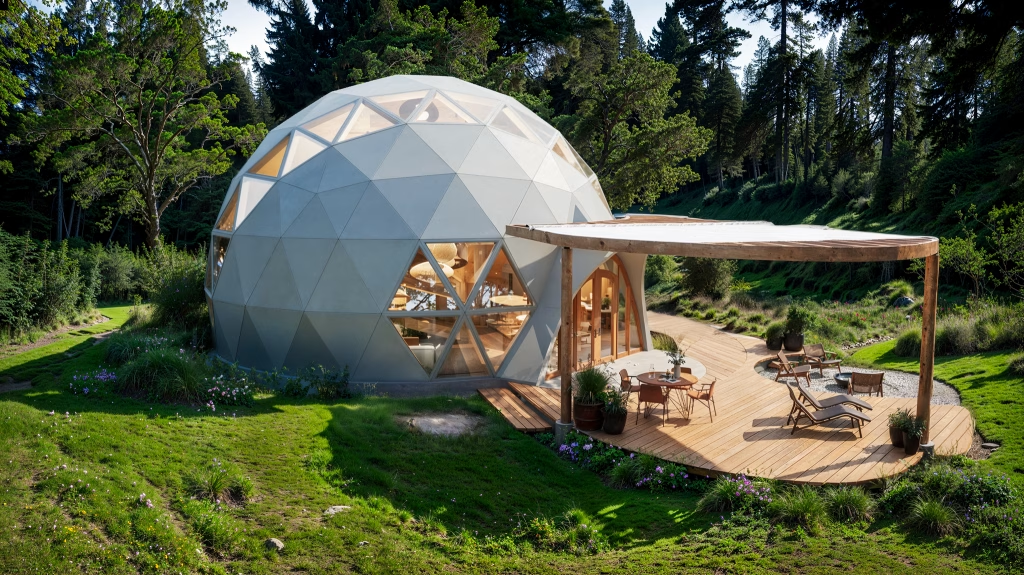
The power of the form lies in its refusal of fragmentation. A geodesic dome distributes tension through geometry, creating an architecture that feels less like an object placed on land and more like an organism emerging from it. Inside, the absence of conventional corners changes the psychology of the room. Light moves differently. Sound softens. The body does not confront the space; it is held by it.
This is where Geoship becomes more than a sustainable housing company. It becomes an editorial case study in how the meaning of luxury is shifting. The new domestic ideal is not only about marble, glass or square footage. It is about resilience, health, low toxicity, material intelligence and energetic coherence. A home becomes luxurious when it protects without isolating, when it connects the human body to natural rhythms rather than separating it from them.
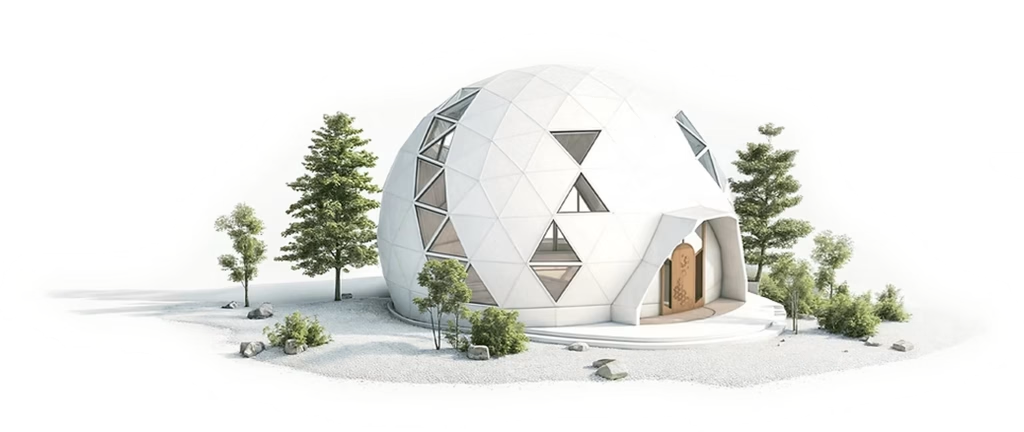
The company’s Amma model, presented as a 1,643-square-foot bioceramic geodesic home with two bedrooms, two bathrooms and a dedicated office, gives this vision a concrete form. Its shell, materiality and rounded structure suggest a kind of future living that is both technological and primordial. It looks forward by returning to one of humanity’s oldest spatial instincts: the circle.
In an editorial world increasingly drawn to alternative futures, Geoship opens a compelling conversation. What if the next revolution in design is not about making homes smarter, taller or more spectacular, but making them softer, stronger and more alive? What if architecture could be read not only as shelter, but as energy — a field of protection, relation and renewal?
The dome, in this sense, becomes more than a building. It becomes a new image of domestic consciousness.
Editor’s Note
This article explores Geoship as an editorial case study in the future of domestic space, regenerative architecture and the cultural meaning of circular living. Geoship’s bioceramic geodesic domes are presented not only as an alternative housing model, but as a new visual and emotional language for the home: resilient, non-toxic, materially intelligent and deeply connected to landscape, body and energy.
The editorial focus is on form, structure, materiality and atmosphere. The dome becomes more than architecture; it becomes a symbol of protection, continuity and renewal — a softer, more organic response to a world increasingly shaped by climate anxiety, housing instability and the search for healthier ways of living.
For more information about Geoship, visit: geoship.is
Contact and FAQ: geoship.is/contact
QEditorial Magazine — Fashion · Culture · Identity → qeditorial.com



Leave a Reply