

From coordinated sweaters to matching bandanas, pet fashion is becoming a new language of family, identity, and everyday affection.

There was a time when dressing a dog was considered a playful exception: something reserved for rainy walks, Christmas cards, or the occasional family photograph. Today, the gesture has become more intentional, more stylish, and more revealing. Dog parents are no longer simply dressing their dogs. They are dressing with them.
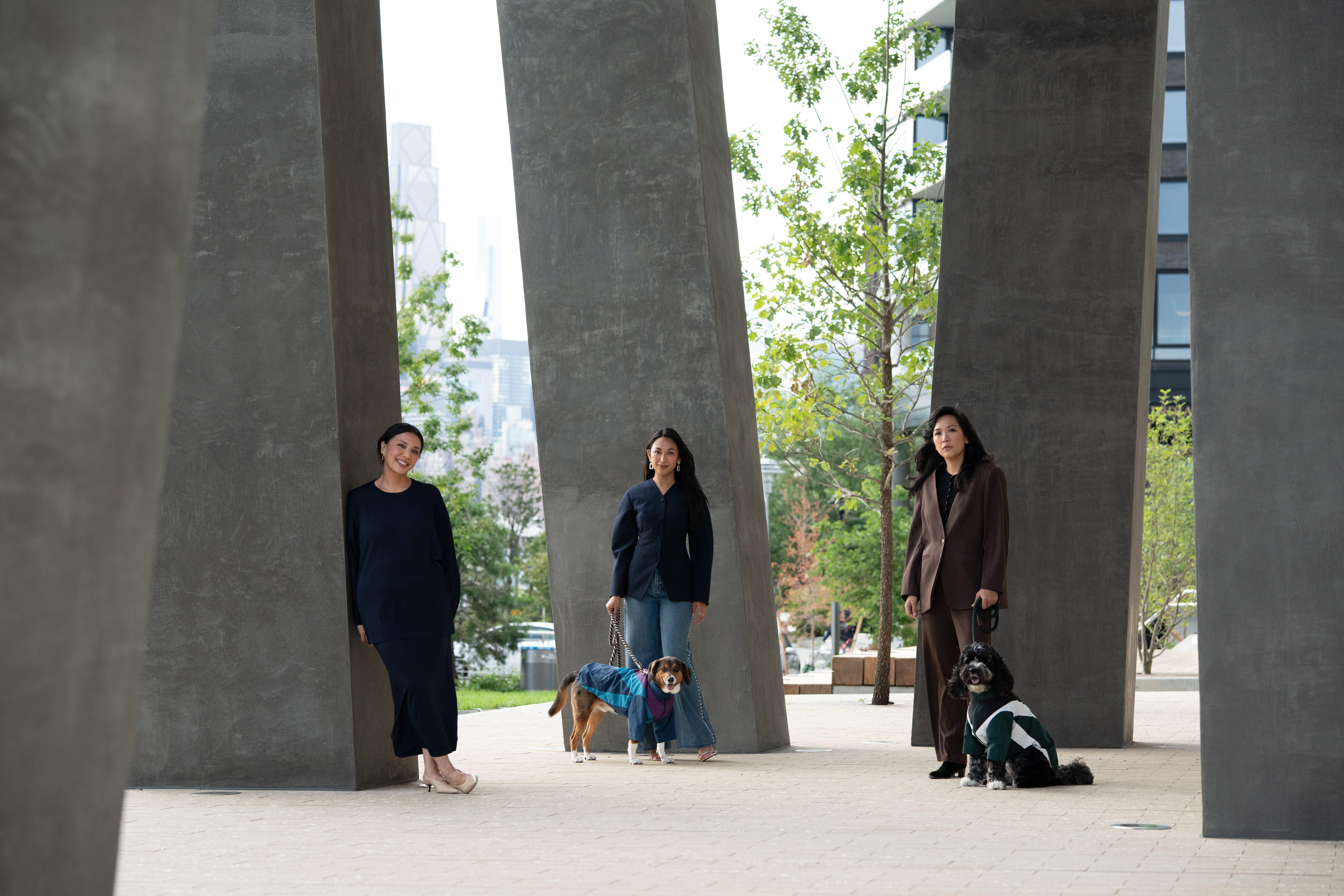
A matching sweater, a coordinated bandana, a shared color palette for the morning walk: these small choices say something larger about the way pets now live inside our emotional and aesthetic worlds. The dog is not only beside us. The dog is part of the family portrait, part of the everyday image, part of the style language through which affection becomes visible.
The correct term is “matching outfits,” often described more playfully as “matchy-matchy,” “twinning with your dog,” or “dog-and-owner matching outfits.” In fashion language, it also belongs to the broader world of “mini-me” dressing: the idea of translating a human look into a smaller, companion version. But in pet culture, this is not simply about resemblance. It is about belonging.

Vogue has already recognized the fashion presence of dogs through its Dogue universe and its street-style coverage, writing that “our community’s most stylish canines” have become part of the visual rhythm of fashion culture. In another Vogue piece about Justin Bieber and his dog Oscar wearing matching Hawaiian shirts from Dog Threads, the magazine called the line “the ultimate in fashion for pet parents.” That phrase captures the heart of the phenomenon: matching with a dog is not only a cute Instagram moment. It is a declaration of modern pet parenthood.
The rise of dog-and-owner matching outfits also reflects a larger cultural shift. Pets are no longer treated as accessories to domestic life; they are members of the household, emotional companions, travel partners, and often protagonists of the family’s visual identity. The Guardian has connected the rise of pet clothing to the wider “humanisation” of animals, while The Strategist has shown how natural the trend has become by asking stylish dog owners to share the coats they wear in coordination with their dogs. In that article, one owner describes matching as “a fun, special way for us to connect even more,” a sentence that explains why the trend keeps growing: fashion becomes a love language.
What makes the trend interesting is that it exists between emotion and image. Some dog parents love the full matching look: identical hoodies, the same fleece, coordinated holiday pajamas, or a dog-sized version of a human puffer. Others prefer a quieter approach: a bandana that echoes the owner’s scarf, a leash that matches a coat, a harness in the same tone as a handbag, or a small accessory that makes the relationship visually harmonious without becoming costume-like.

This is where the new generation of pet lifestyle brands becomes important. Good Thomas, formerly connected to Dog Threads, offers matching dog and human clothes including Hawaiian shirts, pajamas, hoodies, sweaters, and seasonal pieces designed specifically for pet parents. Spark Paws has built a strong visual world around matching human and dog apparel, especially hoodies and cozy sets made for everyday comfort. Canada Pooch offers a more practical version of the trend through matching dog and owner outfits, sweaters, hoodies, and accessories designed for walks, colder weather, and urban pet life.
The Foggy Dog represents the softer, more understated side of matching. Instead of identical garments, the brand’s world often revolves around bandanas, collars, leashes, and accessories that allow the human and the dog to coordinate without looking overly styled. This version may be the most elegant expression of the trend: not “we are wearing the same thing,” but “we belong to the same visual story.”
The Spruce Pets has also treated the topic as a real shopping category, highlighting brands such as Good Thomas, Little Beast, Spark Paws, The Foggy Dog, Staud, and PupLid in its guide to matching dog and human clothes. The list is useful because it shows how wide the category has become. Matching fashion now includes streetwear, knitwear, luxury sweaters, custom sweatshirts, sports apparel, hats, pajamas, and accessories. It is no longer a novelty corner of pet retail. It is a lifestyle segment.
Luxury fashion has noticed too. The Times has written about designer outfits for people and their dogs, pointing to names such as Gucci, Polo Ralph Lauren, Barbour, Moncler, Prada, Loro Piana, and SKIMS. The presence of these brands matters because it shows that pet dressing has moved beyond costume and into the codes of fashion: fabrication, silhouette, status, coordination, and seasonal desire.
Still, the most sophisticated interpretation of matching pet fashion is not about turning the dog into a miniature person. It is about respecting the dog’s comfort while acknowledging its place in the family’s visual identity. A sweater should fit properly. A bandana should not restrict movement. A coat should serve warmth or protection before it serves the camera. The best matching looks are the ones that allow both human and dog to feel natural.

That is perhaps why the bandana has become such a powerful object in pet style. It is simple, light, expressive, and emotionally clear. A dog in a bandana can match a human’s scarf, hair accessory, tote bag, or color palette without being forced into a full outfit. It is the gentlest form of coordination: a small sign of intimacy rather than a performance.
The same can be said of sweaters. When chosen well, a matching sweater is not just a garment; it is a family uniform. Not formal, not imposed, but affectionate. It belongs to morning coffee walks, winter weekends, city errands, country escapes, and the ritual of being photographed together. It tells the world that this relationship has its own style.
The growing love for dog-and-owner matching outfits reveals something beautiful about contemporary pet culture. We are no longer asking whether dogs belong in our homes. We are asking how they belong in our lives, our routines, our wardrobes, our memories, and our sense of self.
A matching bandana may look like a small thing.
But in the language of modern pet parenthood, it says everything.
QEditorial Magazine — Fashion · Culture · Identity
QEditorial.com



Leave a Reply