
From temple cloths to couture runways, Kalamkari’s history reveals how fashion and storytelling have long been intertwined.

In the age of slow fashion and growing consciousness around what we wear and where it comes from, traditional textiles have found their way back into contemporary wardrobes. Sonam Kapoor was recently seen in a pastel pink Kalamkari saree, and she is not alone. The presence of handmade, storied textiles on red carpets and runways has moved steadily back into view.
Kalamkari traces back nearly 3,000 years to Andhra Pradesh, though its name carries another history — from the Persian kalam (pen) and kari (craftsmanship). Every Kalamkari piece passes through 23 painstaking stages before the cloth is considered complete. Dyed entirely with natural pigments, Kalamkari cloth changes subtly with every wash — the background softens while the design grows sharper. Over time, Kalamkari evolved into two distinct traditions — the freehand narrative style of Srikalahasti and the intricate block-printing of Machilipatnam.
But what makes Kalamkari distinct from other handmade textiles is where it began. Centuries ago, wandering painters and storytellers known as *Chitrakattis* carried hand-painted cloth between villages, unrolling it to illustrate the sacred verses they told. Fabric was the medium because it could travel, could be seen, and could survive. Stories from the Ramayana and the Mahabharata travelled across cloth panels hung inside temples for people who had no other way to access them.It was never meant to be worn. It was a way of carrying a story.

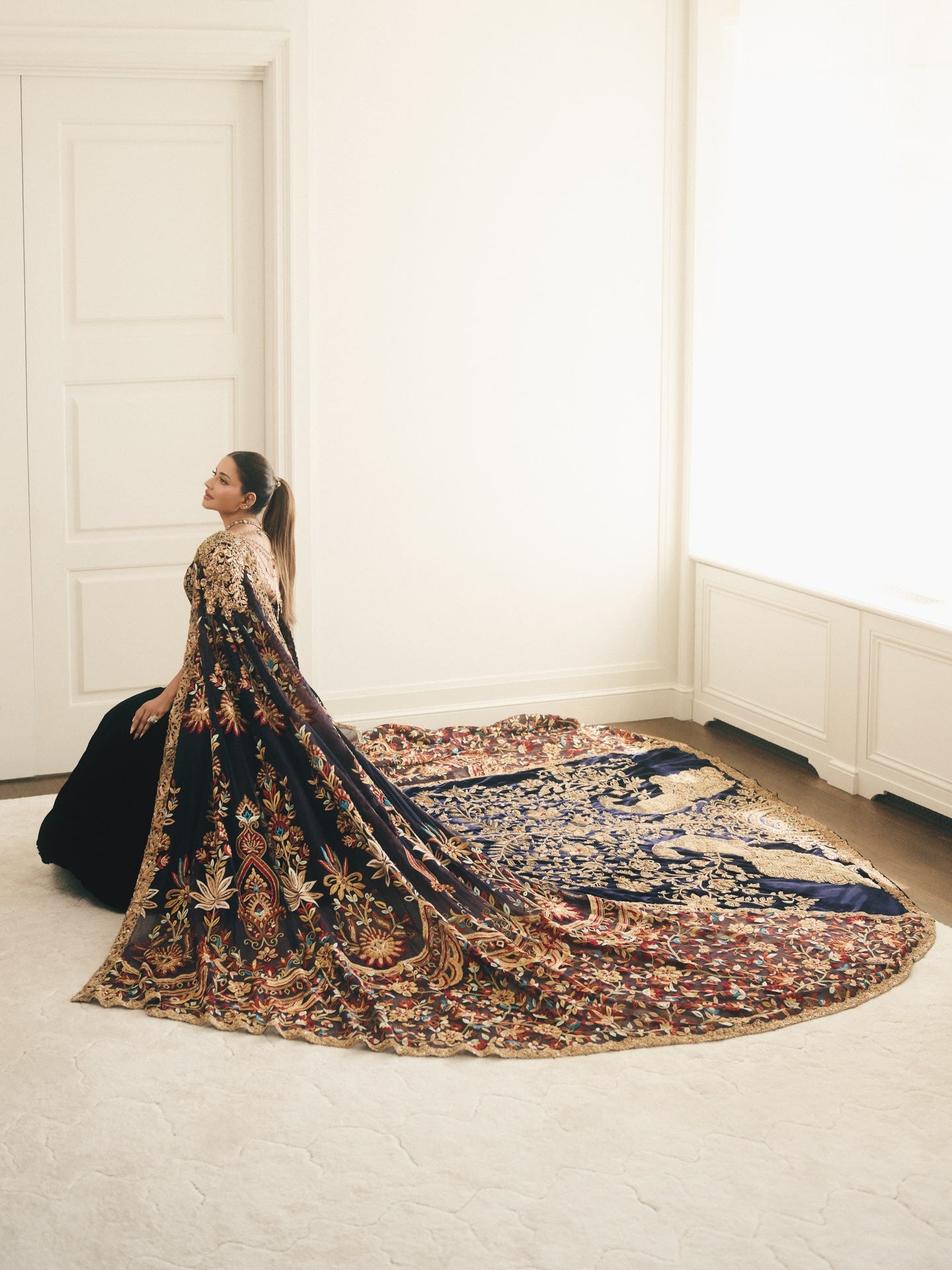
That thread of cloth as storytelling is what makes Sudha Reddy’s Met Gala 2026 look worth looking at beyond spectacle. She walked in a custom Manish Malhotra gown rooted in the Machilipatnam style of Kalamkari, built around a Tree of Life motif drawn from her own state’s visual tradition. The medium had changed, the stage had changed, but the impulse was the same one the Chitrakattis had — to put a story on cloth and let it be seen.
Few textiles exist simultaneously as museum objects and living craft traditions. Kalamkari panels from the 17th century sit in the collections of the Victoria and Albert Museum in London and the Metropolitan Museum of Art in New York. The same craft is still being made and worn today. That gap between museum glass and a living textile is smaller than it looks.

As fashion moves toward intentionality, older textiles no longer feel separate from modern dressing. Fashion is returning to techniques once dismissed as merely traditional not as nostalgia, but because fashion is once again drawn to process, irregularity, and the presence of the human hand.
QEditorial Magazine
Q Voices Edition

Written by Aditi Dhapola
QEditorial Magazine Contributor


Leave a Reply