
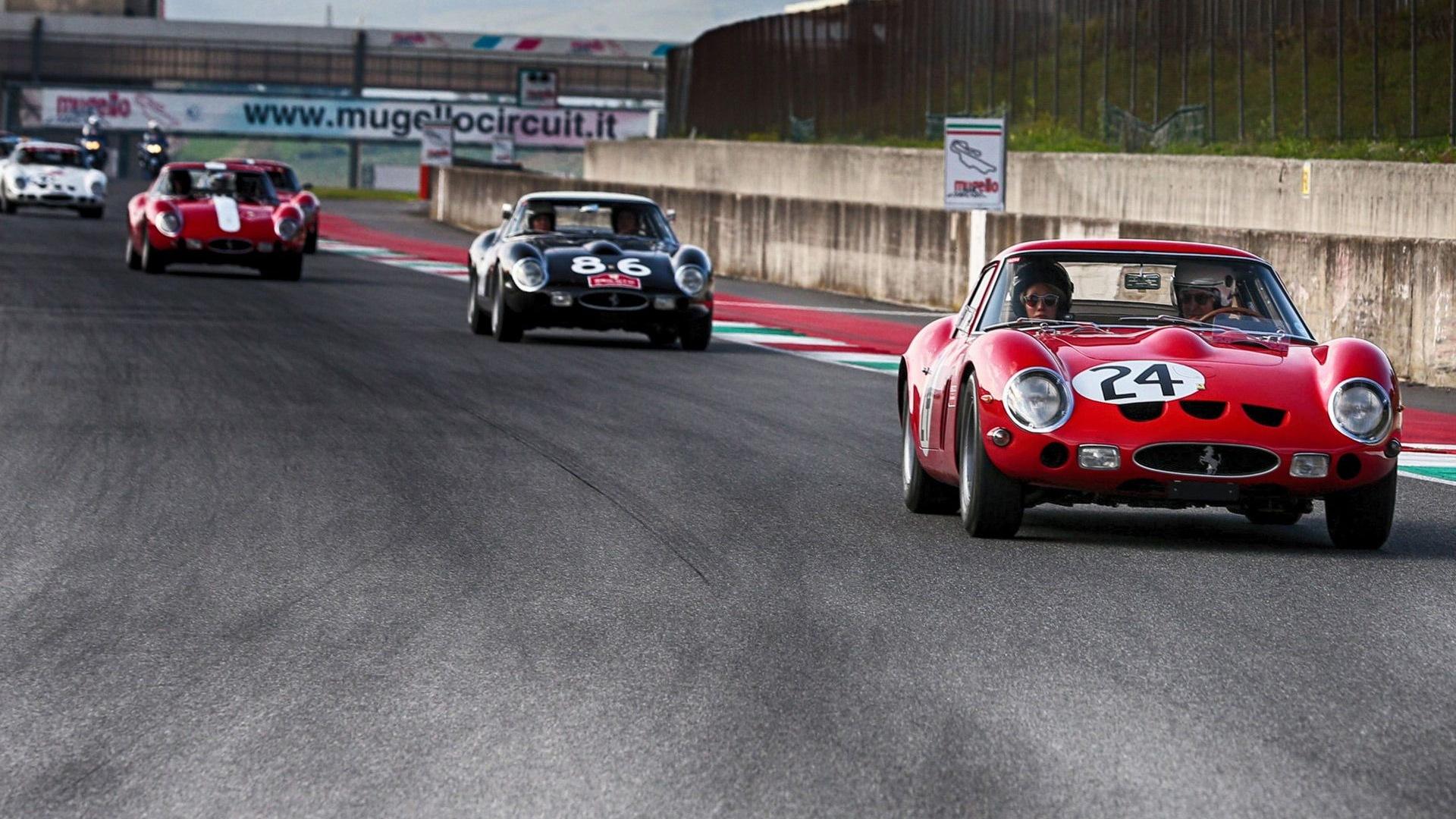
There are luxury cars, there are collector’s cars, and then there is the Ferrari 250 GTO.
Few objects in modern culture have reached the mythical status of this extraordinary machine. It is not simply a vintage automobile, nor merely a rare Ferrari. The Ferrari 250 GTO has become something larger: an object of cultural obsession, investment, design history, and Italian identity.
In a world where luxury increasingly depends on visibility, technology, and digital spectacle, the Ferrari 250 GTO represents something quieter — and infinitely rarer: permanence.

When Automotive Design Became Sculpture
Produced between 1962 and 1964, only 36 examples of the Ferrari 250 GTO were ever built.
Designed for racing homologation, the car emerged from an era when performance and beauty were inseparable. Unlike many contemporary hypercars, the Ferrari 250 GTO was never designed to be excessive. Every line existed for aerodynamic necessity — yet the final result felt almost sculptural.
Its elongated front, muscular curves, sensual proportions, and restrained aggression transformed it into something closer to Italian couture than industrial engineering.
Like the great tailoring houses of Italy, Ferrari understood that luxury was never about decoration alone. Luxury was precision.
The result is a car whose silhouette remains instantly recognizable more than sixty years later.
The Luxury of Rarity
Scarcity creates mythology.
With only 36 units produced, ownership of a Ferrari 250 GTO has become nearly unattainable, even among billionaires and elite collectors. Over time, the car evolved from racing machine into one of the world’s most valuable collectible assets.
In recent private transactions and auction circles, Ferrari 250 GTO values have reportedly surpassed $70 million, placing it among the most expensive automobiles ever sold.
Yet what makes the GTO extraordinary is that its value does not feel speculative alone. It carries emotional and historical weight. Buyers are not purchasing transportation; they are acquiring a fragment of cultural memory.
This is where Ferrari differs from many luxury brands: it sells mythology.

Ferrari and the Language of Italian Desire
There is something deeply Italian about the Ferrari 250 GTO.
Not merely because it was born in Maranello, but because it expresses an Italian philosophy of beauty — emotional, sensual, disciplined, and crafted.
Its proportions feel architectural.
Its curves feel cinematic.
Its presence feels emotional rather than mechanical.
In many ways, the Ferrari 250 GTO may be one of Italy’s greatest luxury exports — standing beside fashion, architecture, and fine craftsmanship as a symbol of national cultural identity.
The famous Ferrari red itself became a visual language of aspiration, power, and desire.
Much like a perfectly cut suit or a timeless piece of jewelry, the Ferrari 250 GTO never truly ages.
It becomes more desirable.

Why the Ferrari 250 GTO Still Matters Today
In an age dominated by electric innovation, artificial intelligence, and digital experiences, the Ferrari 250 GTO reminds us that luxury can still be physical, tactile, and profoundly human.
Collectors continue to pursue it not simply because it is rare, but because it represents an era where objects were built with soul.
Perhaps that is the real secret of the Ferrari 250 GTO:
It does not merely move.
It lingers in cultural memory.
And that may be the highest form of luxury.
Editorial Note
The Ferrari 250 GTO is not only a car of extraordinary value. It is one of the rare objects that transcends industry entirely — becoming fashion, architecture, history, and desire at once.
For QEditorial, it represents a question worth asking:
When does an object stop being functional and begin becoming cultural?



Leave a Reply