
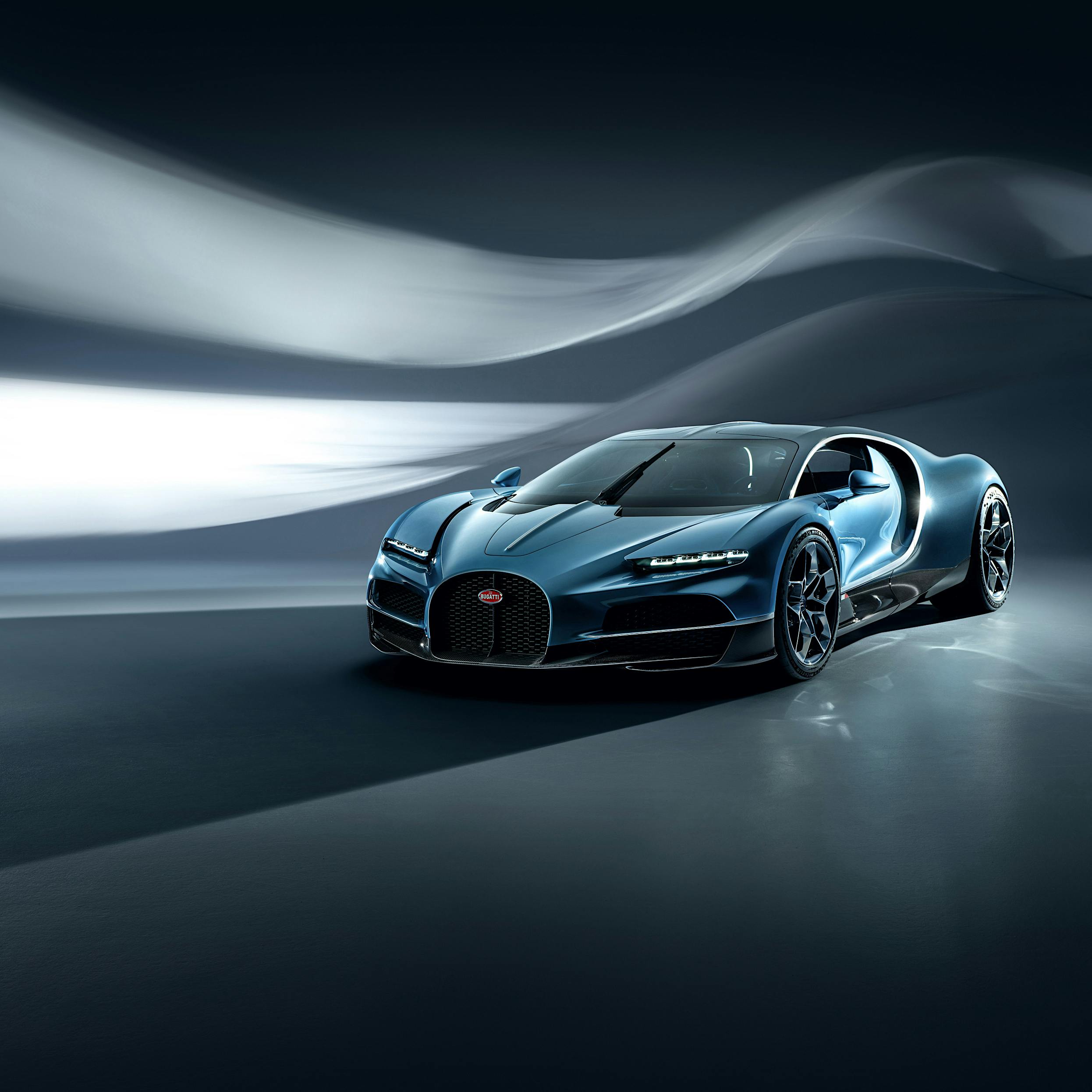
How Bugatti transformed speed, mechanical beauty, and electrified power into an object designed not only for performance, but for eternity.

There are cars made to be driven, cars made to be collected, and cars made to become symbols before they even touch the road.
The Bugatti Tourbillon belongs to the third category.
It is not simply the successor to the Chiron, nor only another chapter in the mythology of speed. It is a manifesto of how luxury can survive in an age of electrification without losing emotion, sound, ritual, or mechanical soul. In a world where many performance cars are becoming quieter, more digital, and more anonymous, Bugatti has chosen a more complex path: to build a hybrid hypercar that feels closer to a mechanical watch than to a machine of transportation.
The name itself explains the ambition. In haute horlogerie, a tourbillon is one of the most refined and intricate mechanical complications, designed to counter the effects of gravity and elevate precision into art. By naming its new hyper sports car Tourbillon, Bugatti is not only referencing speed. It is referencing time, permanence, craftsmanship, and the obsessive beauty of visible mechanism.
This is where the car becomes interesting for QEditorial.
The Tourbillon is powered by a naturally aspirated V16 engine supported by electric motors, a combination that places it between the emotional memory of combustion and the unavoidable future of electrification. Bugatti describes the model as a union between the immediate torque of electric motors and the emotional character of a naturally aspirated V16 engine, positioning the car not as a denial of the electric future, but as a more theatrical interpretation of it.

That distinction matters.
For many luxury brands, electrification has become a question of adaptation. For Bugatti, it becomes a question of drama. The Tourbillon does not try to make performance invisible. It makes it ceremonial. The engine, the hybrid system, the cockpit, the materials, the instrument cluster, and the very name of the car all suggest that speed is no longer enough. Luxury now requires meaning.
Inside, the Tourbillon moves away from the purely digital language that dominates contemporary automotive interiors. Its instrument cluster is inspired by watchmaking and designed as a permanent mechanical object rather than a disposable screen. This choice feels almost rebellious. At a time when dashboards often resemble tablets, Bugatti returns to needles, precision, depth, and physical beauty.
The interior becomes a small cathedral of engineering.
This is perhaps the most important aspect of the Tourbillon: it does not present technology as cold modernity. It presents technology as craftsmanship. The car is modern, but not sterile. Electrified, but not silent in spirit. Futuristic, but deeply connected to the old-world fantasy of machines built by hand, in limited numbers, for people who see rarity as a form of language.

Only 250 units are planned, which immediately places the Tourbillon inside the world of collectible objects rather than ordinary automobiles. Its price, reportedly beginning around 3.8 million euros before taxes, confirms that this is not a car created for access. It is created for mythology.
But rarity alone is not what makes the Tourbillon powerful.
What makes it powerful is the way it understands luxury as continuity. Bugatti does not abandon its past. It translates it. The horseshoe grille, the sculptural body, the obsessive aerodynamics, the sense of theatrical proportion, and the idea of speed as identity all remain present. Yet the car also accepts that the future of performance cannot ignore electric power.
The result is a machine that feels suspended between two eras.
It is not fully nostalgic. It is not fully futuristic. It is a bridge between combustion and electricity, between the mechanical and the digital, between car design and watchmaking, between motion and time.

This is why the Bugatti Tourbillon should not be read only as a hypercar. It should be read as a cultural object. It tells us something about where luxury is going. The new luxury is not only louder, faster, or more expensive. It is more symbolic. It must justify itself through story, detail, rarity, and emotion.
In that sense, the Tourbillon is not trying to be the car of the future.
It is trying to be the car that the future will remember.
Bugatti has always existed in a space between engineering and fantasy. With the Tourbillon, that fantasy becomes more precise, more mechanical, and more philosophical. It is a car about performance, certainly. But it is also a car about time: the time it takes to build something extraordinary, the time a brand needs to preserve its identity, and the time an object needs before it becomes legend.
The Bugatti Tourbillon is not merely a machine.
It is an argument for permanence in a world obsessed with replacement.
And perhaps that is the rarest luxury of all.
Editor’s Note
Images used in connection with this article are intended solely for editorial, cultural, commentary, review, reporting, and educational purposes. All image rights remain with their respective owners, brands, photographers, and copyright holders. QEditorial Magazine does not claim ownership of any third-party visual material. Rights holders may contact QEditorial for corrections, credits, or removal requests.
QEditorial Magazine — Fashion · Culture · Identity
QEditorial.com


Leave a Reply