
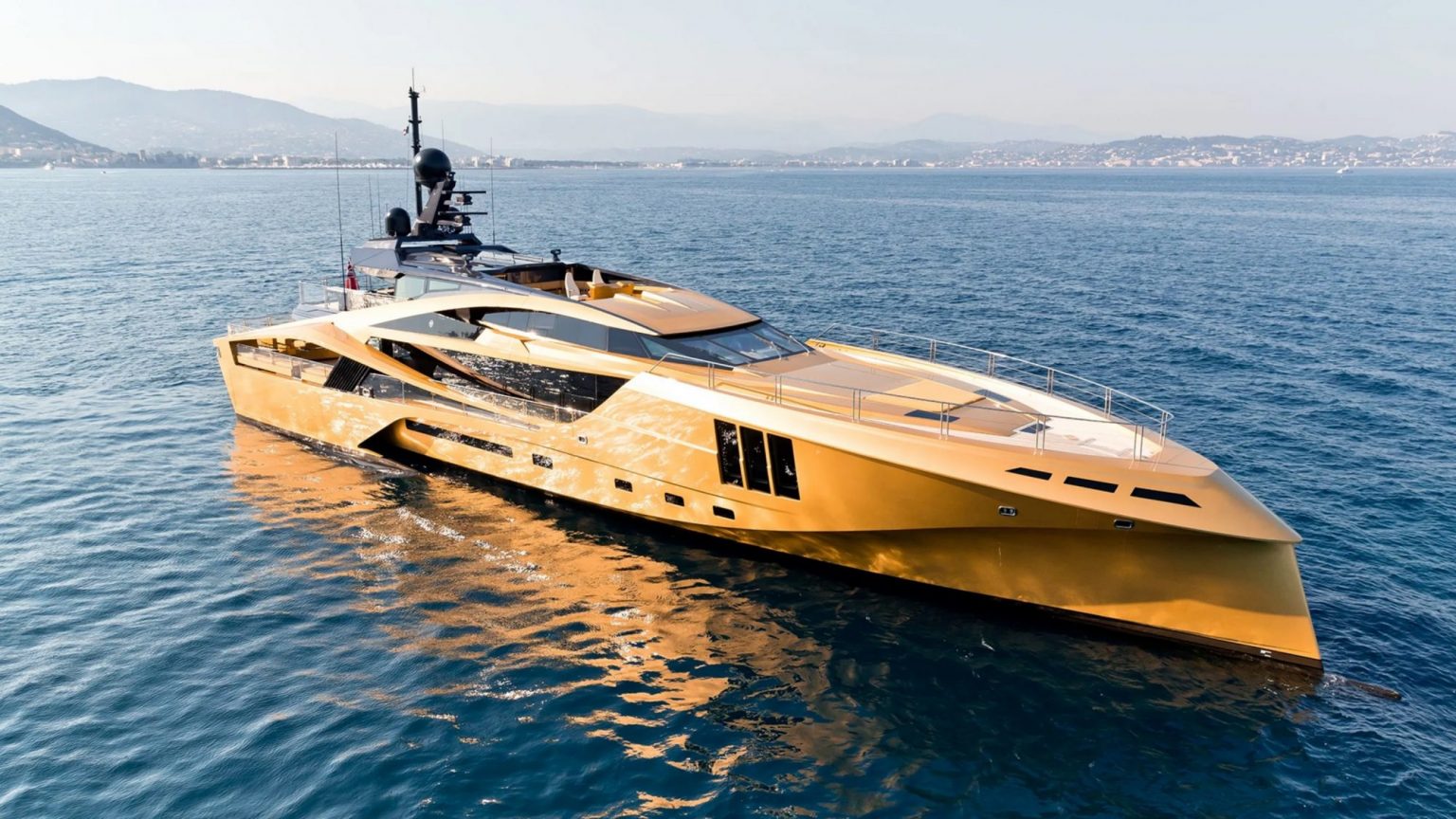
There was a time when the luxury yacht existed primarily as spectacle.
Larger. Louder. More visible.
For decades, the superyacht represented a language of status — a floating monument to financial success, often measured through size, extravagance, and visibility. Gold details, excessive interiors, and grand displays of wealth defined a world where luxury meant being seen.
But something has quietly changed.
Today, a new generation of yacht owners, designers, and luxury travelers is moving away from spectacle toward something more intimate: privacy, identity, architecture, silence, and emotional space. In many ways, the modern yacht is no longer simply a possession.
It has become a personal philosophy.
And perhaps, one of the most fascinating reflections of how luxury itself is evolving.

Why the Yacht Is No Longer About Showing Wealth
The modern luxury consumer is increasingly less interested in public recognition and more invested in personal meaning.
Across fashion, hospitality, interior design, and even travel, the language of luxury is shifting toward discretion. The rise of what culture now describes as quiet luxury — understated refinement without overt logos or visible excess — has transformed everything from tailoring to real estate.
The sea has not remained untouched.
Today’s luxury yacht no longer necessarily seeks attention. Instead, it offers distance from attention.
Privacy has become more valuable than visibility.
The ability to disappear — even temporarily — has become one of the rarest luxuries available in a world defined by hyperconnectivity, social exposure, and constant digital presence.
According to industry observations published by
SuperYachts.com, the contemporary superyacht market increasingly prioritizes wellness, personalization, sustainability, and architectural interiors over traditional extravagance.
The question is no longer:
“How large is the yacht?”
But rather:
“What kind of life does it allow you to live?”
When Interior Design Replaces Excess
Perhaps nowhere is this transformation more visible than inside the yacht itself.
Many contemporary yacht interiors increasingly resemble sophisticated private residences rather than traditional marine environments.
Warm natural woods.
Muted textures.
Soft architectural lighting.
Neutral palettes.
Open spaces designed around emotional comfort rather than visual excess.
In many cases, yacht interiors now draw inspiration from the same visual language found in high-end residential design and luxury fashion houses — where tactile materials, silence, and restraint often speak louder than ornament.
Publications such as
YATCO – Yacht Interior Design Trends
have highlighted how yacht interiors are increasingly moving toward wellness-centered environments, spa-inspired areas, and residential sophistication.
The visual language feels closer to the world of
Loro Piana, architectural minimalism, or carefully curated private hospitality than to traditional ideas of maritime luxury.
The goal is no longer to impress.
The goal is to belong.
To create a space that reflects the owner’s inner world.
In this sense, the yacht becomes deeply personal — almost autobiographical.

Why Privacy Became the Ultimate Luxury
Luxury today is increasingly invisible.
The greatest privilege may no longer be public access, but selective absence.
Modern yacht culture reflects this shift perfectly.
A private chef replacing crowded restaurants.
Morning wellness overlooking open water.
A floating office disconnected from urban noise.
An intimate dinner under silence rather than spectacle.
For many high-profile individuals, entrepreneurs, creatives, and cultural figures, the yacht is becoming less a symbol of status and more a temporary sanctuary — a place where time moves differently.
Ironically, in a world obsessed with visibility, true luxury may now be measured by invisibility.
The ability to disconnect without disappearing.
To remain present, yet unreachable.
When Hospitality Moves to the Sea
Luxury hospitality is increasingly embracing this transformation.
The line between private residence, boutique hotel, and yacht experience is becoming increasingly blurred.
One of the clearest examples is
The Ritz-Carlton Yacht Collection, where hospitality brands are reimagining what luxury travel can feel like beyond traditional hotels.
The future of luxury may not always be stationary.
It may move.
Slowly.
Quietly.
Across the sea.
Here, luxury hospitality is no longer about abundance alone, but about intimacy.
Fewer guests.
More privacy.
More personalization.
More silence.
The language of luxury is becoming smaller— and somehow more meaningful.
When a Yacht Becomes an Expression of Identity
Fashion has long reflected personality.
Architecture has long reflected philosophy.
Perhaps the modern yacht now sits somewhere between the two.
No longer simply transportation.
No longer merely leisure.
But identity made physical.
A floating home that speaks — quietly — about how someone wishes to experience the world.
Minimal or expressive.
Architectural or warm.
Social or private.
Rooted in entertainment or reflection.
In many ways, the yacht has become one of luxury culture’s most intimate mirrors.
Not because it is seen.
But because it is lived.

The New Language of Luxury
Perhaps the future of luxury is not larger.
Not louder.
Not brighter.
Perhaps luxury is becoming quieter.
More architectural.
More emotional.
More personal.
And perhaps, somewhere between the horizon and silence, the yacht is no longer simply crossing the sea.
It is quietly redefining what it means to belong to oneself.
Editor’s Reflection
Luxury often changes long before we notice it.
What once appeared aspirational slowly becomes outdated, replaced by new desires that feel less visible, yet somehow more profound.
The modern yacht may no longer represent excess.
Perhaps it represents something far more contemporary:
space, silence, privacy, and the freedom to disconnect without disappearing.

Leave a Reply