
The Japanese artist transforming clay into explosion, imperfection and collectible luxury

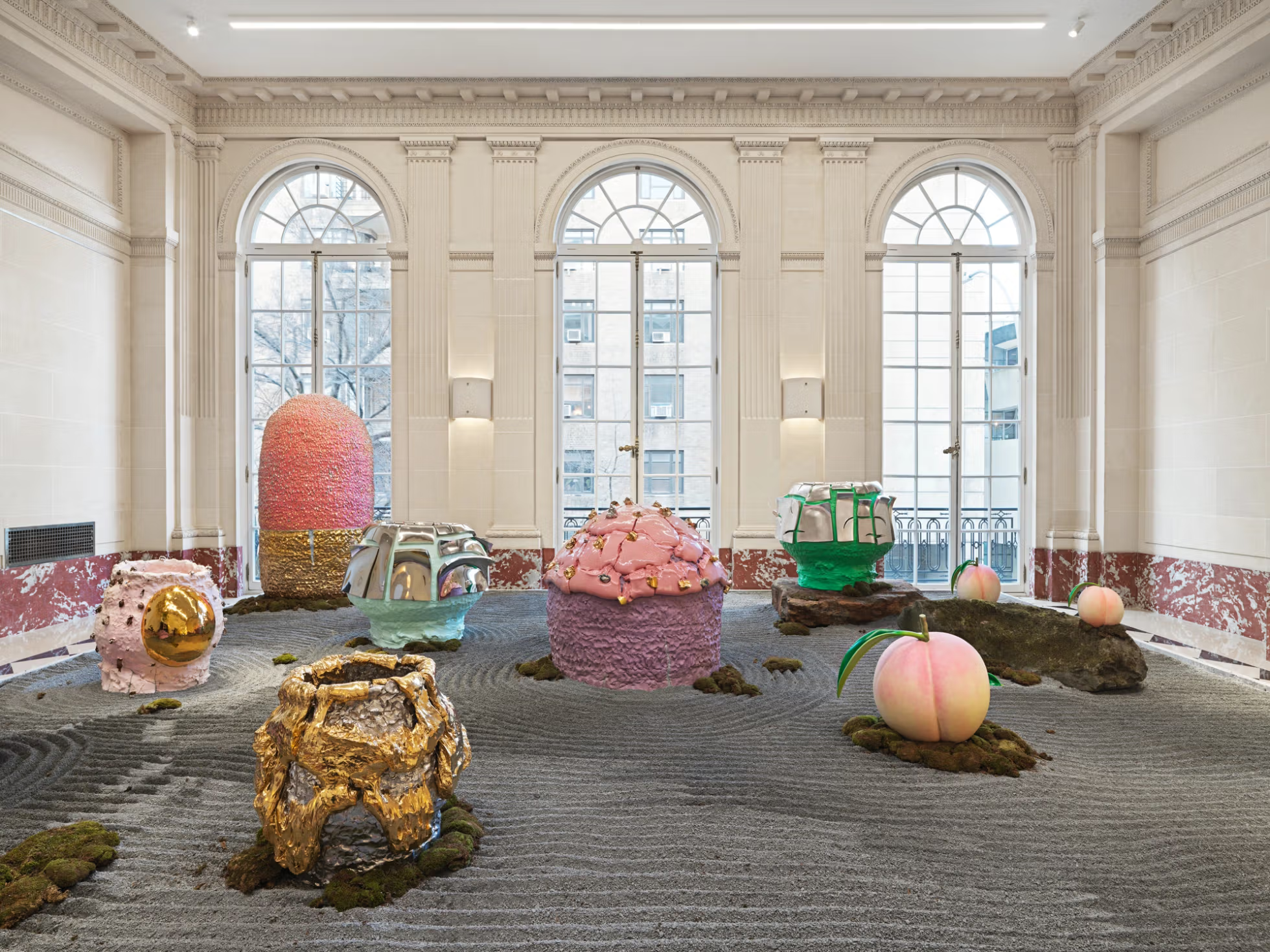
There are objects that decorate a room, and then there are objects that disturb it. Takuro Kuwata belongs to the second category. His ceramics do not simply sit in space; they erupt into it. They crack, swell, drip, shine, collapse and reappear as if the kiln had not finished firing them, but had instead released them mid-transformation.
Born in Hiroshima Prefecture in 1981 and now based in Gifu, Japan, Kuwata works from one of the most historically significant regions for Japanese ceramics. His studio is situated in the Mino region, an area deeply connected to traditional ceramic knowledge, yet his work seems to push that inheritance toward a radical contemporary language. Salon 94 describes Kuwata as an artist who has expanded the possibilities of ceramic art since 2010, while his practice remains rooted in techniques such as kairagi and ishihaze. beauty
What makes Kuwata extraordinary is not only his use of color, metal or distortion. It is the way he turns imperfection into luxury. His vessels often appear almost unstable: surfaces rupture, glazes accumulate like molten skin, metallic layers seem to peel away from the body of the object. The result is a form of beauty that does not ask to be polite.
In a world where luxury is often associated with smoothness, control and perfection, Kuwata introduces another idea: luxury as risk. His ceramics feel precious not because they are flawless, but because they preserve the evidence of fire, accident and transformation. The object does not hide its process. It exposes it.
This is where his work becomes especially relevant for collectible design. Kuwata’s pieces are not merely functional vessels, even when they retain the memory of the tea bowl. They exist between sculpture, craft, design object and contemporary art. Alison Jacques notes that Kuwata is known for combining traditional ceramic techniques with experimental sculptural processes, creating fractured forms, vivid glazes, metallic embellishments and droplets that gather on the surface of his vessels. ny to punk gesture
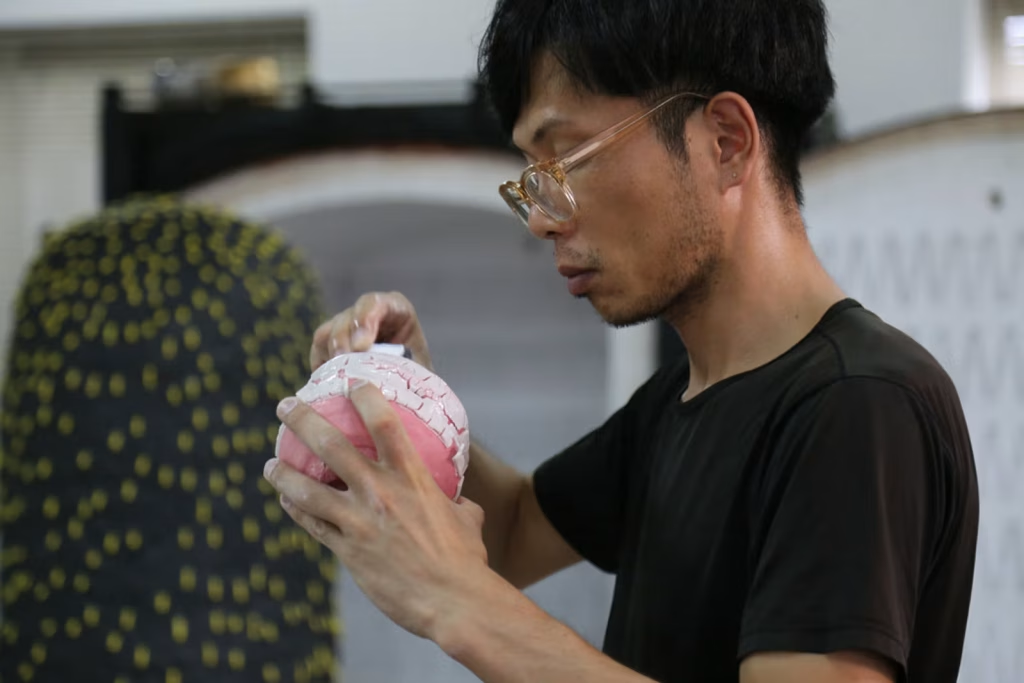
Kuwata’s work is often connected to Chanoyu, the Japanese tea ceremony. Yet he does not treat tradition as something frozen. He exaggerates it, electrifies it, almost destabilizes it. Asymmetry, cracking, dripping and the spirit of kintsugi become enlarged, intensified and pushed toward what Salon 94 calls “punk extremes.” is hands, becomes less a quiet object of contemplation and more a site of collision. It carries the memory of ritual, but also the energy of rebellion. The vessel is still there, but it has been invaded by color, by metallic shine, by geological force. It is as if Kuwata has taken the discipline of Japanese ceramic history and asked what would happen if the object were allowed to misbehave.
This tension is essential. Kuwata is not rejecting tradition. He is proving that tradition survives when it is strong enough to be transformed.

The luxury of the unstable object
In contemporary interiors, collectible design increasingly occupies a space once reserved for painting or sculpture. The object on the table, the vessel on the pedestal, the ceramic form in the room are no longer secondary decorative presences. They become cultural statements.
This is why Kuwata’s ceramics speak so clearly to a luxury audience. They are tactile, rare, visually immediate and deeply rooted in craft knowledge. Their surfaces appear almost volcanic: gold, platinum-like shine, saturated color, cracked glaze, rough clay, swollen forms. They feel ancient and futuristic at the same time.
Architectural Digest, in a 2014 profile, described Kuwata’s work as combining centuries-old techniques with bold experimentation, including vessels that burst during firing and forms covered in precious metals that clump and ooze in the kiln. The same profile noted the growing attention around his practice among critics and collectors. kiln

Kuwata’s presence in exhibitions such as Strange Clay: Ceramics in Contemporary Art at London’s Hayward Gallery confirms how contemporary ceramics have moved far beyond the old hierarchy between art and craft. The exhibition, shown from October 2022 to January 2023, explored how artists use clay in unexpected ways, from small abstract forms to large-scale installations. Kuwata’s inclusion placed his work within a larger international conversation about the physical, conceptual and sculptural power of ceramics today. 2025 exhibition Together Shiyoze! (Let’s Get Together!) at Salon 94 presented Kuwata’s language at a monumental and playful scale, with installation views that show ceramic forms becoming almost architectural presences. The exhibition text described his clay works through verbs: shine, pop, droop, crack, burst, shimmer, sag and flake. ta matters now
Takuro Kuwata matters because he understands that craft is not nostalgia. Craft can be radical. It can be excessive, physical, unpredictable and contemporary. His ceramics speak to a moment in which luxury is no longer only about polish, but about presence. The object must have a voice. It must carry evidence of time, hand, matter and risk.

His work also arrives at a cultural moment in which imperfection has become more interesting than perfection. But Kuwata does not offer imperfection as a soft philosophy. He turns it into spectacle. His cracks are not delicate. His glazes are not discreet. His colors do not whisper. They declare themselves.
In this sense, Kuwata’s ceramics are not simply beautiful objects. They are rebellions in clay.


Editor’s Reflection
What fascinates me about Takuro Kuwata is that his work seems to contain both discipline and disobedience. He knows the rules of ceramic history deeply enough to break them with intelligence. His objects are not chaotic because they lack control; they are powerful because control and accident are allowed to exist together.
There is something profoundly contemporary in this. The luxury object of today does not always need to be silent, polished or perfect. Sometimes it needs to look as though it has survived fire. Sometimes it needs to carry the wound of its own creation. In Kuwata’s world, clay is not humble. Clay is alive.
QEditorial Magazine Fashion · Culture · Identity → qeditorial.com




Leave a Reply