
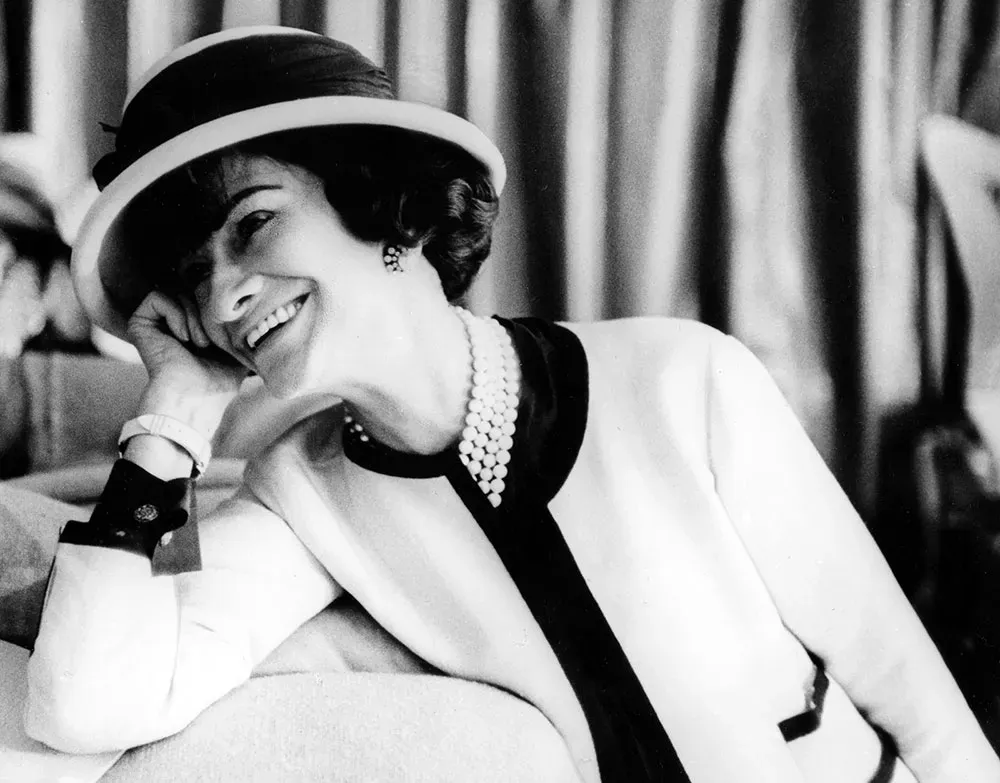

War does not make fashion disappear. It strips it of innocence.
The Second World War did not end the language of luxury; it forced that language into an unbearable proximity to power. In occupied Paris, ateliers remained open, garments were still made, and elegance continued to circulate even as Europe was collapsing morally and politically. Fashion did not stand outside history. It moved through it, and in doing so revealed something unsettling about itself: beauty is never entirely neutral.
During the Occupation, Paris remained the symbolic heart of couture, even as German authorities considered shifting the center of European fashion toward Berlin or Vienna. Lucien Lelong, who led the Chambre Syndicale, fought to keep haute couture in Paris, arguing that to remove it from its ecosystem would mean destroying it altogether. His position has often been remembered as an act of cultural defense, and in part it was. But like so much of fashion history during wartime, it was also ethically complicated. To preserve couture meant allowing it to continue existing within the structure of occupation.
That is what makes this chapter of fashion history so difficult, and so important. Survival and compromise are rarely far apart. A house that stayed open could claim it was protecting artisans, seamstresses, embroiderers, suppliers, and an entire cultural economy. Yet remaining open also meant continuing to serve a privileged world while violence and deprivation shaped the broader reality outside the salon. Couture survived the war, but survival itself was not morally pure.

No figure embodies this discomfort more famously than Coco Chanel. Her wartime life has remained one of the most controversial stories in twentieth-century fashion. Multiple widely cited historical accounts describe her relationship with Hans Günther von Dincklage, a German intelligence-linked figure, and Reuters reported on archival claims that she may have acted as an agent for the Abwehr, German military intelligence. Chanel’s house disputed parts of those allegations, which is precisely why the subject should be handled with precision rather than myth. What can be said with confidence is that Chanel’s wartime conduct remains deeply compromised in the historical record, and that her legend cannot be separated from that shadow.
If Chanel represents personal and intimate compromise, Louis Vuitton raises the question of institutional opportunism. A 2004 investigation in The Guardian, based on the book Louis Vuitton, A French Saga, reported allegations that members of the Vuitton family and the company benefited from ties to the Vichy regime. This does not mean that Louis Vuitton should be reduced to the simplistic phrase “the house that dressed the Nazis.” That wording is neither precise nor historically responsible. But it does mean that the wartime history of the house has been marked by serious accusations of collaboration and political proximity to Vichy power during one of the darkest periods in modern French history.

Balenciaga belongs to a different category. He is not remembered primarily as a maker for the Nazi regime, nor as a direct symbol of political collaboration in the way Hugo Boss later became. Instead, Balenciaga appears within the history of wartime couture as part of the larger effort to preserve the continuity and prestige of Paris fashion under conditions of scarcity, censorship, and occupation. That continuity itself is morally ambiguous. It speaks to resilience, certainly, but also to the determination of luxury to preserve its own aura even in moments when the world had lost its balance.
Hermès offers yet another wartime image: less scandal, more transformation through necessity. One of the most interesting details in the history of the house is that the now-iconic orange Hermès box is often linked to wartime packaging shortages, when earlier materials and colors were no longer available. What began as a practical adaptation became, over time, one of the most recognizable visual codes in luxury. It is a small but revealing detail. War did not only reshape consciences and political loyalties; it also altered the material symbols through which prestige was later remembered.
And then there is the direct question many readers ask first: which fashion house actually clothed the Nazi regime?
The name most strongly associated with that role is Hugo Boss. Reuters reported that the company publicly expressed regret in 2011 after research into its wartime past detailed the use of forced labor at a factory producing uniforms during the Third Reich. Hugo Ferdinand Boss joined the Nazi Party in 1931, and his factory manufactured uniforms for Nazi organizations. One point, however, must be stated carefully: Hugo Boss did not design the famous black SS uniform, but the company did manufacture uniforms for the regime. That distinction matters, not to soften the truth, but to tell it accurately.
This is perhaps the deepest lesson of fashion during the Second World War: luxury was not merely surviving history. It was negotiating with it.
Some houses defended craft and national identity. Some moved dangerously close to power. Some emerged from the war and rebuilt their image so successfully that later generations inherited the myth more easily than the facts. The postwar era did not simply restore elegance; it also restored narrative. French fashion returned to the world as refinement, grace, civilization, and cultural supremacy. But beneath that polished return remained silences, omissions, and unresolved moral memory.
That is why this history still matters. Not because it gives us a reason to flatten every great maison into guilt, but because it reminds us that fashion has never existed outside structures of power. Every time luxury aligns itself too comfortably with authority, exploitation, or political violence, the same question returns: can beauty ever claim innocence while flourishing inside moral crisis?
History suggests that it cannot.

Editor’s Closing Note
Elegance Under Occupation examines one of the most uncomfortable chapters in fashion history: the relationship between luxury, survival, compromise, and power during the Second World War. From occupied Paris and the preservation of haute couture to the wartime shadows surrounding Coco Chanel, Louis Vuitton, Hermès, Balenciaga, and Hugo Boss, the article explores how fashion continued to exist inside moral crisis — and why beauty can never be entirely neutral.
Selected by the Editor
A project from a world where fashion meets animal identity.

QEditorial Magazine — Fashion · Culture · Identity – qeditorial.com


Leave a Reply