
Luxury has spent the last several years learning how to whisper.
Muted tailoring. Quiet interiors. Invisible logos. Wealth increasingly expressed through restraint.
Yet not all luxury wishes to disappear.
Some luxury still wants to arrive.
To interrupt silence.
To be remembered.
And few brands understand this better than Lamborghini.
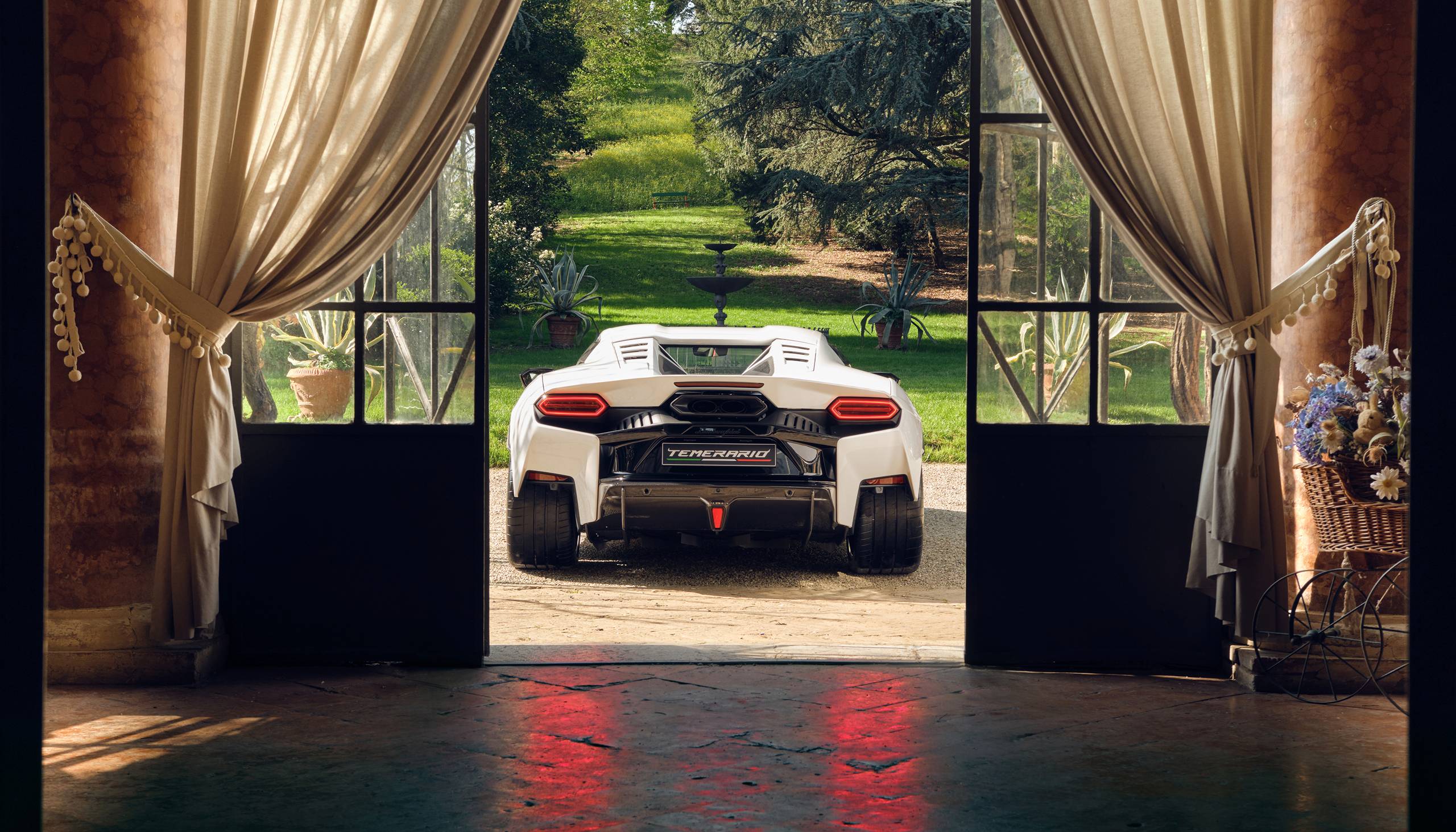
With the arrival of the new Lamborghini Temerario — the latest evolution in the Italian house’s supercar philosophy — Lamborghini continues to defend something increasingly rare in contemporary culture: excess without apology.
Not luxury that blends in.
Luxury that insists on being seen.
The Temerario, which replaces the Huracán and introduces a new hybrid era for the brand, feels less like a car and more like a visual declaration. As noted by Car and Driver, the model combines a twin-turbo V8 hybrid powertrain with nearly 900 horsepower, proving Lamborghini has entered a technological future without abandoning its theatrical DNA.
But Lamborghini has never truly been about engineering alone.
It has always been about image.
When a Supercar Starts Dressing Like Couture
The relationship between luxury fashion and Lamborghini has never been accidental.
Fashion houses sell aspiration.
Lamborghini sells mythology.
Both operate through desire.
The newest Temerario demonstrates how automotive design increasingly behaves like couture. The exaggerated proportions, sculptural surfaces, aggressive geometry, and dramatic aerodynamic cuts feel less industrial and more editorial — almost as if the car were styled rather than engineered.
In many ways, Lamborghini does not design vehicles.
It designs reactions.
The sharp front architecture, angular rear bodywork, and unmistakable silhouette turn the car into a performance object — something created not simply to function, but to provoke visual emotion.
This may explain why publications such as Architectural Digest increasingly frame luxury through atmosphere and visual identity, rather than pure material excess. The Temerario exists exactly within that cultural shift: luxury not simply as ownership, but as image.
A Lamborghini is rarely subtle.
And perhaps that is precisely the point.

The Architecture of Aggression
There is something almost architectural about Lamborghini’s newest design language.
Where many luxury brands pursue softness, Lamborghini continues to embrace tension.
The body feels carved rather than assembled.
Its geometry appears almost brutalist in moments — sharp, dramatic, intentional.
The hexagonal lighting signatures, sculpted air intakes, and exaggerated proportions transform the Temerario into something visually closer to contemporary architecture than traditional automotive nostalgia.
Even Top Gear described the new Lamborghini as an evolution designed to preserve emotional drama while entering a new technological era.
And emotion matters.
Because luxury today is increasingly cultural.
Cars no longer exist only in garages.
They exist in photography.
In fashion campaigns.
In social media mythology.
In visual memory.
Lamborghini understands this perhaps better than any other automotive house.
Its vehicles are not simply driven.
They are performed.

Lamborghini vs Quiet Luxury
The rise of quiet luxury has reshaped the aesthetics of fashion and design.
Cashmere over logos.
Understatement over performance.
Discretion over spectacle.
Yet culture moves in cycles.
And Lamborghini may represent the emotional opposite of this movement.
Not silent luxury.
Declared luxury.
Luxury that refuses invisibility.
Where brands like Bentley communicate heritage and restraint, and Rolls-Royce embodies quiet presence, Lamborghini embraces visual confrontation.
It wants attention.
Not accidentally.
Deliberately.
This does not make Lamborghini less sophisticated.
Only differently sophisticated.
Because excess itself can become a language.
And Lamborghini speaks it fluently.

Why Lamborghini Still Matters in 2026
The greatest luxury houses understand something simple:
People do not remember restraint as easily as emotion.
And Lamborghini has always understood emotion.
The newest Temerario proves that even in an age obsessed with sustainability, technology, and minimalism, desire still matters.
Spectacle still matters.
Fantasy still matters.
The car becomes image.
The image becomes status.
The status becomes identity.
And identity, increasingly, may be the most powerful luxury product of all.
Lamborghini’s newest chapter is therefore not simply about performance.
It is about cultural visibility.
About designing desire in an era that increasingly pretends desire should remain discreet.
Perhaps Lamborghini understands something contemporary luxury often forgets:
Sometimes excess is not the opposite of elegance.
Sometimes excess is elegance.



Leave a Reply