

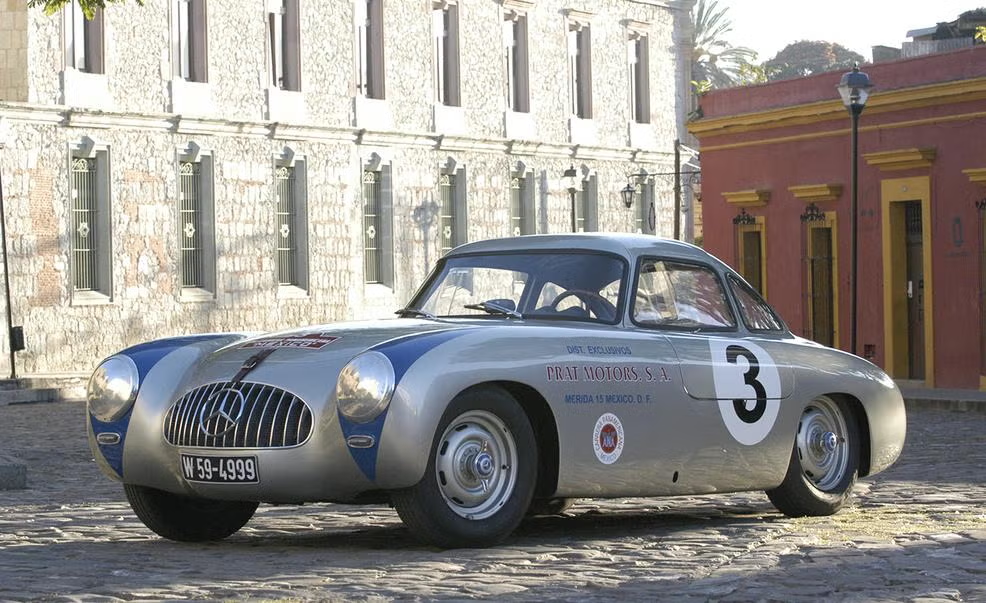
There are luxury cars, and then there are cultural objects that transcend time. The Mercedes-Benz 300 SL Gullwing belongs to the second category.
With its iconic gullwing doors, sculptural proportions, and restrained elegance, the 300 SL remains one of the most desirable automobiles ever created — not because it screams for attention, but because it never had to.
In an era obsessed with excess, visibility, and performative luxury, the Gullwing represents something increasingly rare: quiet confidence. Old money before old money became a social media aesthetic.
Why the 300 SL Gullwing Still Defines Luxury
Introduced in 1954, the 300 SL was revolutionary. It was not simply a beautiful car; it was engineering ambition transformed into visual identity.
Derived from racing technology, the Gullwing became the fastest production car of its era, capable of exceeding 160 mph — extraordinary for the 1950s. Yet unlike modern supercars, its power never overshadowed its sophistication.
Luxury, in the language of the 300 SL, was never loud.
The long hood, minimalist body lines, chrome details, and impossibly elegant proportions created a silhouette that still feels contemporary today. It is one of the few automobiles capable of appearing equally natural outside a grand hotel in the 1950s or a private villa in 2026.
This is precisely why collectors continue to view the Gullwing not simply as a classic car, but as an object of cultural permanence.

The Meaning of “Gullwing”
The nickname Gullwing comes from its legendary upward-opening doors — perhaps among the most recognizable automotive design elements ever created.
But what made them iconic was not theatricality alone.
The doors existed because of necessity. The car’s racing-derived tubular frame made traditional doors impossible. Constraint became beauty. Engineering became design language.
And perhaps that is what separates timeless luxury from trend-driven luxury: when form emerges from purpose rather than spectacle.
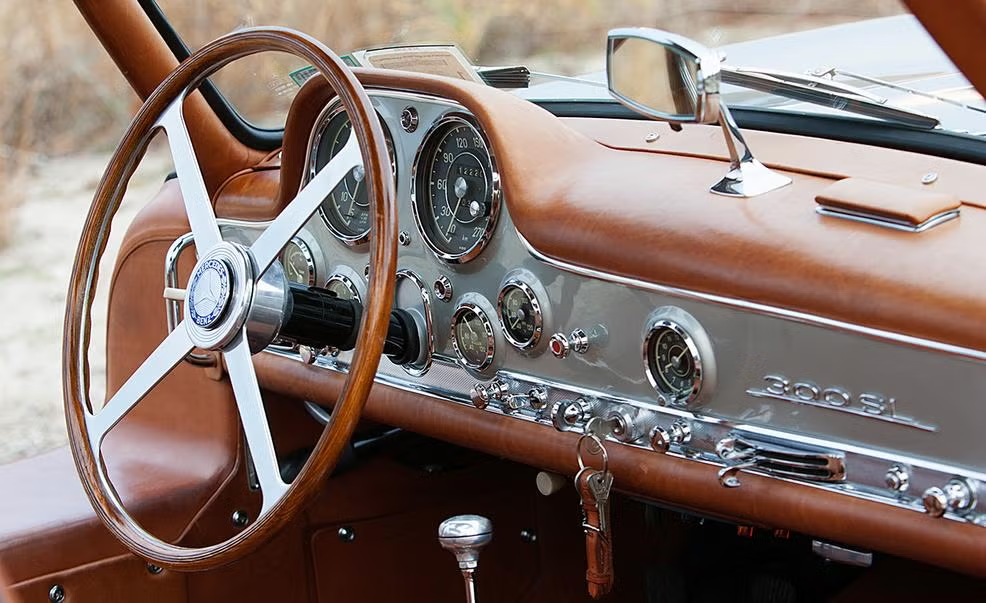
Old Money on Four Wheels
If one car perfectly embodies the modern fascination with old money aesthetics, it is the 300 SL.
Not a hypercar. Not a car for visibility.
The Gullwing communicates heritage, taste, restraint, and cultural literacy. It suggests that the owner understands history — that luxury is not consumption, but discernment.
Unlike modern status vehicles that often prioritize visibility, the 300 SL speaks softly. Yet everyone in the room notices.
It belongs to the same universe of visual sophistication as tailored cashmere, vintage watches, architectural homes, and understated European elegance.

Why Collectors Still Desire It
Today, original Gullwing models regularly command prices well above one million dollars, with exceptional examples reaching far higher in elite auctions.
Yet what makes the 300 SL extraordinary is not rarity alone.
It is emotional permanence.
Very few cars remain culturally relevant across seven decades while still feeling aspirational to new generations. The Gullwing does exactly that.
Because great design does not age.
Why the Mercedes-Benz 300 SL Gullwing Still Matters
The story of the 300 SL is ultimately a story about the difference between luxury and status.
Status changes with trends.
Luxury survives them.
And perhaps this is why the Mercedes-Benz 300 SL Gullwing continues to fascinate designers, collectors, fashion creatives, and lovers of visual culture: it reminds us that elegance was never meant to be loud.
Sometimes, true luxury simply opens its doors upward — and quietly enters history.
Editor’s Note
At QEditorial Magazine, we have always believed that true luxury reveals itself not through excess, but through permanence. The Mercedes-Benz 300 SL Gullwing belongs to a rare category of objects that seem untouched by time — where engineering becomes elegance, and design becomes memory.
In an age increasingly shaped by immediacy and visual noise, the Gullwing reminds us that sophistication once spoke in quieter tones. Its beauty does not depend on trend, but on proportion, restraint, and cultural depth.
Perhaps this is why certain automobiles continue to feel relevant decades later: they are no longer simply cars, but symbols of a way of seeing the world.
— QEditorial Magazine
Fashion, Culture, Identity




Leave a Reply