
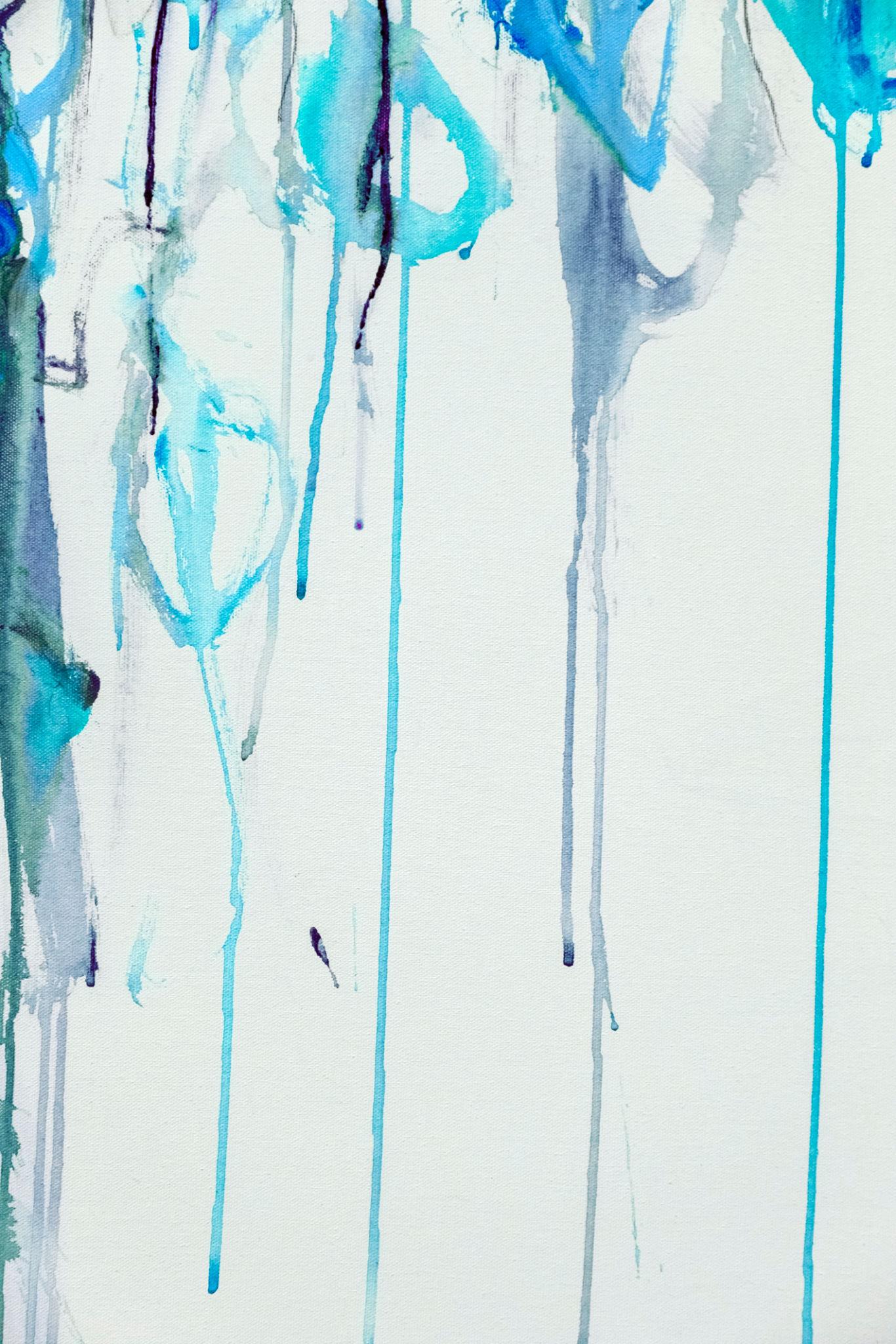

There is something increasingly rare about a painting that does not try to hide its own making.
A visible brushstroke. An uneven layer of color. A line that trembles instead of obeying. A figure that appears and disappears at the same time. These details may seem minor, but they carry a quiet resistance. They remind us that painting is not only an image. It is an encounter between intention and failure, control and accident, discipline and surrender.
After When Painting Refuses to Be Perfect, the conversation becomes larger than painting itself. The imperfect canvas speaks to a broader cultural condition. We live in an age where images are corrected before they are even allowed to exist. Faces are filtered. Interiors are staged. Bodies are edited. Objects are designed to appear seamless. Even emotion is often presented through a polished surface.
Perfection has become a visual language.
But perfection is not always depth. Sometimes it is only control.
Painting, at its most powerful, refuses that control. It allows the human hand to remain visible. It does not erase hesitation. It does not always smooth contradiction. It gives the viewer access not only to the final image, but to the emotional history of its making. The canvas becomes a record of time, pressure, instinct, correction, and doubt.
This is why imperfect painting still matters. It does not behave like a digital image. It cannot be endlessly corrected without consequence. Every gesture leaves a trace. Every decision changes the surface. Every mistake becomes part of the work’s memory.

In this sense, imperfection is not weakness. It is evidence.
It proves that something happened before the viewer arrived. It proves that the image was not simply produced, but lived through. A painting that contains visible imperfection often feels closer to the body, because it carries rhythm, pressure, fatigue, speed, silence. It allows the artist’s presence to remain inside the work, not as biography, but as touch.
This is where painting separates itself from pure decoration. Decoration often seeks harmony. Painting can survive discomfort. It can hold imbalance. It can allow beauty to emerge from fracture rather than symmetry. It can ask the viewer to stay with something unresolved.
And perhaps that is why the imperfect image feels so necessary now.
Contemporary culture often rewards immediate legibility. An image must be understood quickly, consumed quickly, liked quickly, and forgotten quickly. Painting asks for another rhythm. It slows the eye. It makes uncertainty visible. It refuses to become only content.
The imperfect canvas does not give everything away at once. It requires attention. It asks the viewer to look again, to notice the layers, to accept that meaning may not live in the most polished part of the image, but in the place where something almost collapsed.
There is a strange intimacy in that collapse.
A perfect image can impress us, but an imperfect one can make us feel included. It lets us recognize something human: the impossibility of total control. The beauty of effort. The dignity of incompletion. The emotional truth of things that do not resolve cleanly.
This is not a rejection of skill. On the contrary, imperfection in painting becomes powerful only when it is held with intelligence. A careless mark is not automatically profound. A broken form is not automatically meaningful. But when imperfection becomes part of the artist’s language, it can open a deeper space than technical perfection alone.
It can make the painting breathe.
The human hand has always been central to painting, but today it feels almost radical. In a visual culture increasingly shaped by speed, automation, retouching, and artificial smoothness, the visible hand becomes a form of honesty. It says: this was made, not generated. This was felt, not only arranged. This passed through a body.
That is why painting continues to occupy a unique place in contemporary culture. It does not only represent the world. It resists the way the world wants to be represented. It offers an image that is slower, more vulnerable, less obedient to perfection.

For QEditorial, this is not only an art question. It is also a question of identity. The way a culture treats imperfection reveals how it understands beauty, success, emotion, and the human body. If everything must appear flawless, then nothing is allowed to show its process. Nothing is allowed to carry the trace of becoming.
Painting refuses that erasure.
It keeps the process visible. It protects the unfinished gesture. It allows rupture to remain part of beauty. It tells us that an image does not have to be perfect to be complete.
Perhaps the most powerful paintings are not the ones that dominate the eye immediately, but the ones that remain with us because they feel unresolved in the same way we are unresolved.
Not broken.
Alive.
Editor’s Note
This supporting article continues the conversation opened by When Painting Refuses to Be Perfect. Where the first article explored painting’s refusal of flawless beauty, this second text looks at the cultural meaning of that refusal. In an age dominated by edited surfaces and controlled images, the imperfect canvas becomes a quiet act of resistance: a place where the human hand, the visible mistake, and the unfinished gesture still matter.



Leave a Reply