

There are brands that produce objects.
And then there are brands that create worlds.
Few companies in modern history have managed to build a cultural language as powerfully as Ferrari. To speak about Ferrari solely as a car manufacturer would be profoundly reductive. Yes, Ferrari represents one of the highest expressions of automotive engineering — a place where mechanics become emotion, speed becomes sculpture, and innovation is transformed into desire. But Ferrari is also something else: a symbol of aspiration, discipline, identity, and increasingly, lifestyle.
For decades, the image of Ferrari has extended far beyond the road. It has become shorthand for excellence, precision, exclusivity, and a very particular idea of Italian elegance. The red bodywork of a Ferrari does not simply signify performance. It represents mythology.
And like all myths, it eventually seeks new territories.

When Luxury Stops Being a Product and Becomes a Language
Luxury brands rarely remain confined to their original industry.
Fashion houses entered hospitality. Watchmakers entered jewelry. Furniture brands entered architecture. The evolution is almost inevitable: when a brand becomes emotionally desirable, consumers no longer want only the product — they want the world surrounding it.
Ferrari understood this before many others.
The transition from automobiles into lifestyle categories was not accidental, nor purely commercial. It reflected a broader cultural truth: modern luxury is no longer based only on ownership, but on immersion.
To own a Ferrari has always represented access to a certain mentality — one connected to performance, aesthetics, ambition, and heritage. Extending into apparel, watches, furniture, and interior objects simply formalized what already existed emotionally.
Ferrari was never only selling cars.
It was selling a way of seeing excellence.

Ferrari and Fashion: More Than Merchandise
Luxury automotive fashion once occupied an uncomfortable space.
For years, many car brands produced clothing that functioned largely as merchandising: logo-heavy polo shirts, jackets, caps, and racing-inspired accessories primarily intended for enthusiasts.
But something shifted.
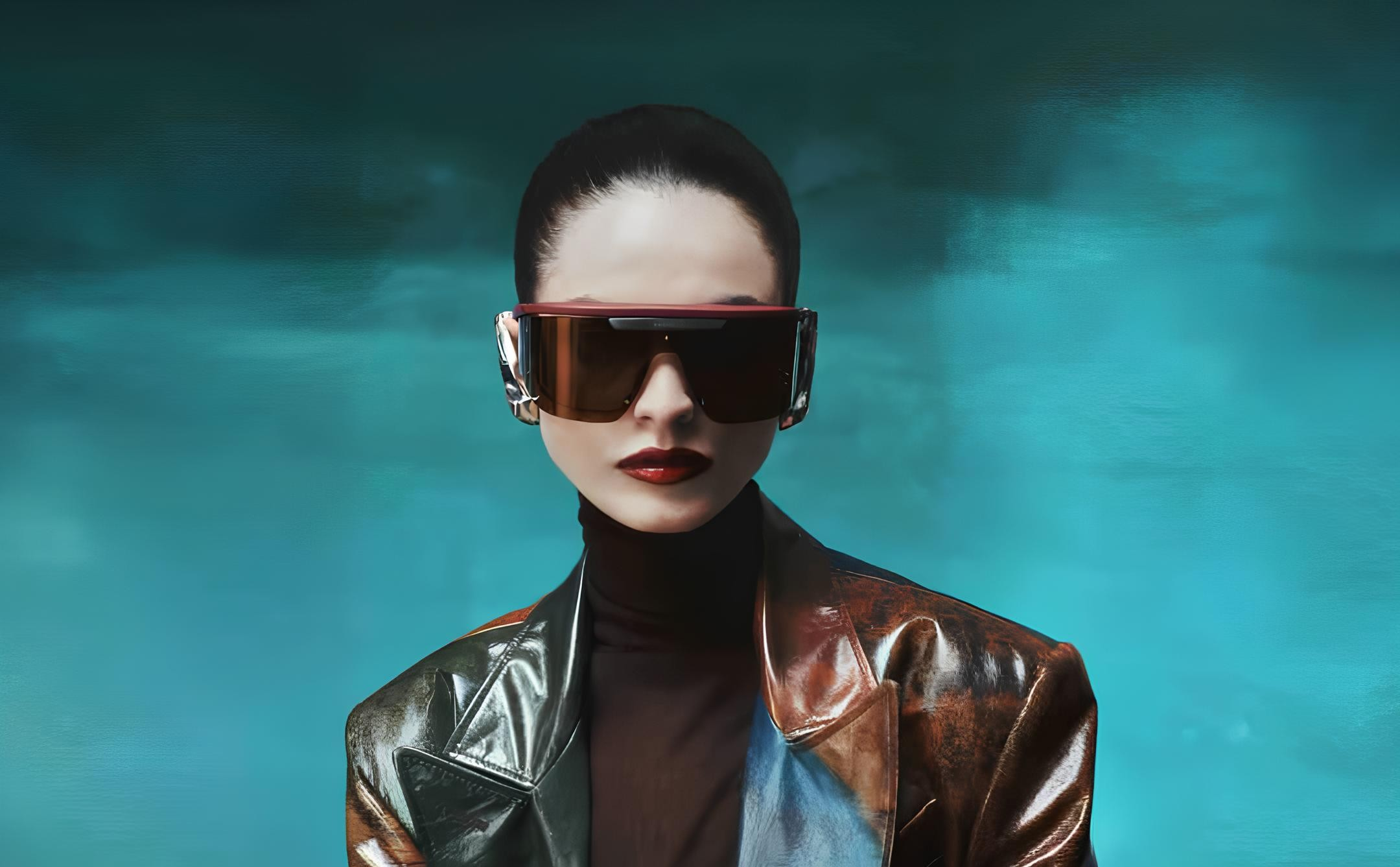
Under the creative direction of Rocco Iannone, Ferrari began repositioning itself not simply as an automotive brand selling clothes, but as a genuine fashion proposition.
The launch of Ferrari’s ready-to-wear collections signaled an important evolution. Tailoring, sculptural silhouettes, technical fabrics, leather experimentation, and references to automotive craftsmanship became central to the brand’s visual identity. Rather than imitate traditional luxury fashion houses, Ferrari sought to reinterpret the codes of motion, speed, and mechanics into garments.
The result was something increasingly interesting: Ferrari no longer wanted to look like “fashion inspired by cars.”
It wanted fashion to feel engineered.
This distinction matters.
Because true luxury fashion is rarely about decoration alone. It is about systems of meaning — craftsmanship, narrative, technical mastery, and visual coherence. The same principles that define an extraordinary supercar also define exceptional fashion.
Material quality.
Obsessive detail.
Proportion.
Performance.
Emotion.
In this sense, fashion and luxury automobiles have always traveled parallel roads.

The Parallel Between Tailoring and Engineering
There is something surprisingly similar between a handcrafted garment and a luxury automobile.
Both begin with structure.
A great jacket, much like a Ferrari engine, depends on invisible architecture. Precision matters. Weight distribution matters. The feeling of movement matters.
Italian tailoring understands silhouette the same way Ferrari understands aerodynamics: not simply as visual beauty, but as functional elegance.
This is perhaps why fashion and automotive luxury continue to gravitate toward one another.
Designers have long borrowed from motorsport aesthetics — leather driving gloves, racing stripes, protective outerwear, aerodynamic silhouettes, technical fabrics, speed-inspired minimalism. Meanwhile, luxury car brands increasingly borrow from fashion’s language of exclusivity, craftsmanship, and seasonal desirability.
The relationship is reciprocal.
Fashion dreams of motion.
Cars dream of identity.

When Fashion Houses Enter the Garage
The relationship between fashion and luxury automobiles is not one-sided.
Fashion has equally entered the world of engines.
Collaborations between automotive brands and fashion houses have become increasingly sophisticated. From limited capsule collections to luxury interiors, the boundary between fashion and automobiles has grown remarkably thin.
Porsche has embraced collaborations rooted in minimalist luxury. Lamborghini has explored aggressive fashion partnerships aligned with performance aesthetics. Mercedes-Benz has long existed inside the luxury-fashion ecosystem through sponsorships, collaborations, and cultural positioning.
But Ferrari occupies a unique place.
Unlike many luxury automotive companies, Ferrari possesses something closer to fashion mythology. Its visual codes are instantly recognizable. Red, speed, leather, carbon fiber, racing history, Italian identity — these already function like the symbolic language of a maison.
In many ways, Ferrari was already a fashion house before it officially entered fashion.
It simply happened to manufacture engines.
Ferrari Casa: When the Garage Enters the Living Room
Perhaps one of Ferrari’s most fascinating expansions lies in interiors.
Ferrari’s movement into furniture and home design reflects a deeper truth about contemporary luxury consumption: consumers increasingly seek coherence.
People no longer simply buy products. They curate environments.
The same person drawn to the engineering perfection of a Ferrari may seek similar emotional qualities inside the home: sharp lines, Italian craftsmanship, technical sophistication, sculptural materials, and restrained opulence.
Luxury today is increasingly interdisciplinary.
Fashion influences interiors.
Architecture influences hospitality.
Automotive design influences furniture.
Everything begins speaking to everything else.
And perhaps that is why Ferrari’s expansion feels strangely natural.
Not because Ferrari suddenly became a lifestyle brand.
But because it had quietly been one all along.

Beyond Speed: The Future of Luxury Identity
The future of luxury may depend less on categories and more on ecosystems.
Tomorrow’s consumer may not ask, “What product does this brand make?”
They may ask instead:
“What world does this brand allow me to inhabit?”
Ferrari seems to understand this intuitively.
The company no longer exists solely in garages or racetracks. It lives in wardrobes, watches, homes, hospitality experiences, and cultural imagination.
And perhaps this is the real evolution of modern luxury.
The most successful brands no longer sell objects.
They sell continuity of identity.
 Editor’s Reflection
As an Italian, there is something deeply fascinating about observing Ferrari’s evolution. It represents not only industrial excellence, but a distinctly Italian ability to transform craftsmanship into desire. What makes Ferrari extraordinary is not simply speed, engineering, or prestige — many companies possess aspects of these qualities.
What Ferrari mastered is something rarer: coherence.
The same obsessive precision found beneath the hood can now be felt in fabric, interiors, and design language. Whether one admires the expansion or questions it, Ferrari offers something worth observing carefully: proof that luxury today is no longer confined to one discipline.
Fashion and automobiles were perhaps never separate worlds.
They were always traveling the same road — only at different speeds.


Leave a Reply