
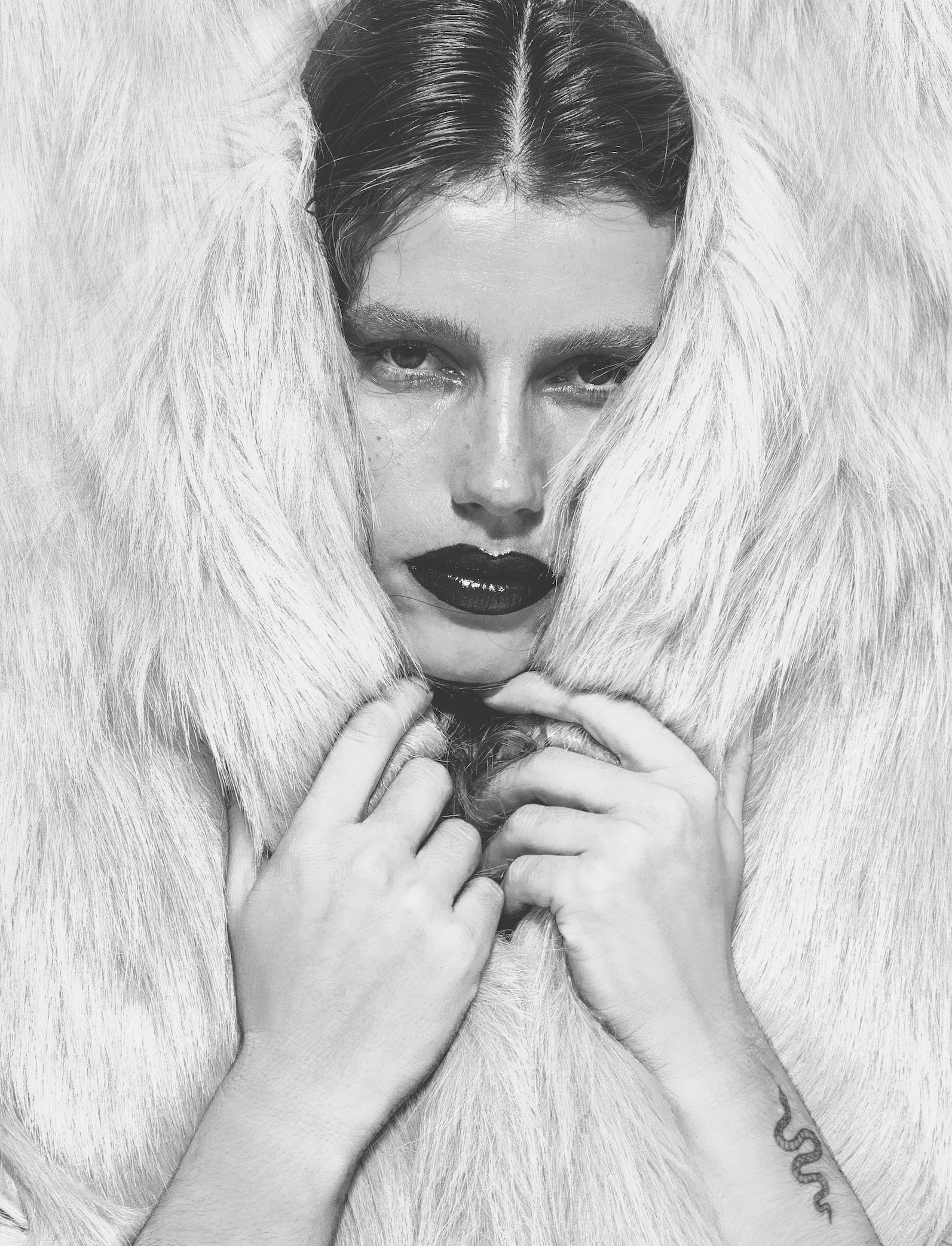
A reflection on whether fashion follows history, rewrites it, or quietly anticipates the world before the world learns how to name itself.

There has never been a clean line between culture and fashion. One does not simply begin where the other ends. They move together, disturb each other, borrow from each other, and at times become impossible to separate.
To ask whether culture influences fashion or fashion influences culture is to ask something deeper: does style emerge from society, or does society eventually learn to see itself through style?
Fashion has always existed inside the climate of its time. It is shaped by politics, art, social structures, religion, desire, rebellion, memory, and class. It absorbs the emotional temperature of an age and gives it visible form.
And yet fashion has never been only a witness.
More Than a Reflection
At its most powerful, fashion does not merely observe history from a distance. It steps into it. It takes the silent tensions of an era and translates them into lines, fabrics, colors, silhouettes, and codes.
That is why fashion has never been only about clothing. It is about interpretation. A dress can become a statement. A tailored jacket can become authority. A softened silhouette can suggest freedom. A severe one can suggest discipline, control, even fear.
Fashion does not simply record the world. It edits it. It dramatizes it. It returns it to us in a form we can immediately recognize, even before we fully understand what we are seeing.
When History Enters the Runway
History has always returned through fashion. Not as a museum object, but as a living language.
Every decade, every movement, every cultural fracture leaves traces that fashion later retrieves. Sometimes it is a gesture of admiration. Sometimes it is nostalgia. Sometimes it is critique. But the runway has long been one of the places where history is revived, reimagined, and made emotionally current again.
This is what makes fashion unique among creative fields: it never fully abandons the past. The archive is always open. The old world is always available to be touched again, reinterpreted, and given a new body.
Fashion does not bring history back unchanged. It reshapes it. It romanticizes it, sharpens it, modernizes it, and occasionally strips it of its original meaning just to make it speak to the present.

When Fashion Becomes a Cultural Force
There are moments when fashion clearly follows culture. It responds to war, liberation, youth movements, feminism, migration, technology, and the shifting architecture of everyday life. Society changes, and fashion changes with it.
But there are also moments when fashion does something more radical. It does not follow culture. It moves ahead of it.
It senses a transformation before the transformation has a stable name. It proposes a new body, a new attitude, a new identity, a new relationship with appearance. In doing so, it becomes more than a mirror. It becomes a cultural force.
Fashion often understands before culture explains.
It feels before language defines.
It stages before society fully accepts.
This may be one of its greatest powers.
The Weight of Reinterpretation
Still, contemporary fashion lives with a contradiction. It is exceptionally skilled at reinterpretation. It knows how to return to the archive, revive old codes, and make them feel urgent again. It can transform nostalgia into desire and memory into relevance.
But reinterpretation is not always anticipation.
Today, fashion produces endless imagery, yet not always new imagination. It often speaks fluently in references, but less confidently in prophecy. It knows how to restage the past, but not always how to invent a future that feels entirely its own.
This does not make contemporary fashion empty. But it does raise a necessary question: is fashion still capable of leading culture, or has it become too dependent on revisiting what has already been seen?

The Present as a Stage
Perhaps the answer lies in understanding what fashion truly anticipates today.
Maybe fashion no longer predicts the future in absolute terms. Maybe it does something subtler and, in some ways, more revealing. It anticipates the emotional condition of the present. It senses the anxieties of an era, its nostalgia, its exhaustion, its longing for identity, its obsession with visibility, its desire to be both individual and accepted.
In this way, fashion continues to act before explanation arrives. It reveals what society is becoming not always through ideology, but through image. Through texture. Through posture. Through the visual language of self-presentation.
And that is why it remains culturally powerful.

Protagonist or Self-Made Protagonist?
So was fashion always a protagonist, or did it make itself one?
Perhaps both.
It became protagonist the moment it understood that clothing is never neutral. That every garment carries an idea of the body, and every body carries an idea of society. That every aesthetic, whether soft or severe, minimalist or excessive, timeless or disruptive, tells us something about the world that produced it.
Culture influences fashion because fashion belongs to its time.
Fashion influences culture because culture eventually begins to wear what fashion has imagined.
The relationship has never been one-directional. It is a constant exchange. Culture gives fashion its substance. Fashion gives culture visibility.
Editor’s Reflection
Fashion does not simply follow culture, nor does it fully lead it. It moves between memory and invention, between inheritance and projection. And perhaps that is where its deepest power lies.
Not in predicting the future with certainty, but in sensing what the world is becoming before the world has fully learned how to speak of it.
By Nicolò Di S tefano
From the Editor
Fashion does not merely follow an era. It reveals what that era is unable to hide.
Selected by the Editor
Where luxury is designed for Shiba Inus and their people.
Editor’s Code: QEditorial5
Receive 5$ off your order at Shiba&Co.
Shop Now >

For selected advertising and editorial partnerships, contact: contact@qeditorial.com


Leave a Reply