
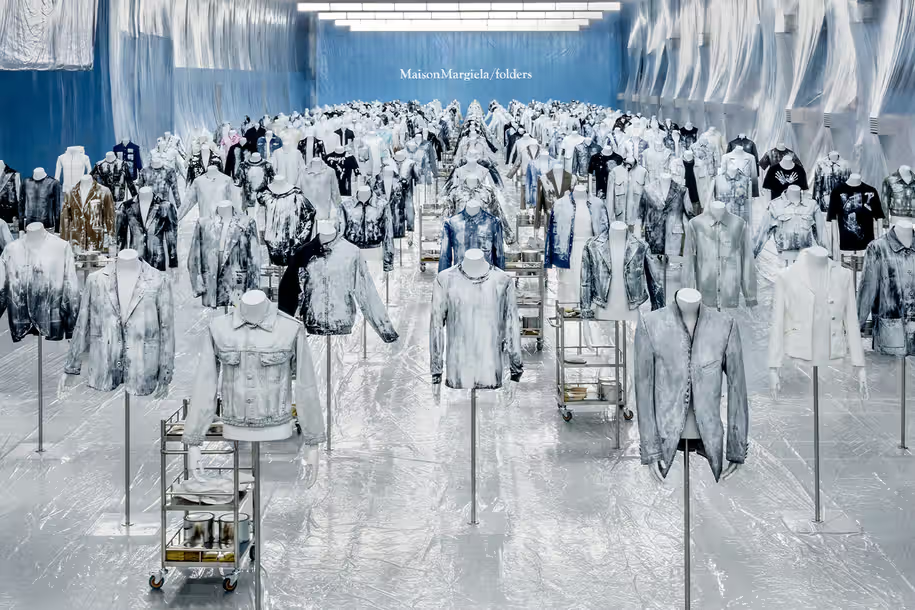
In Shenzhen, Maison Margiela did not simply stage an event. It reopened one of its deepest house codes, transforming white from a color into a gesture, a process, and a language.
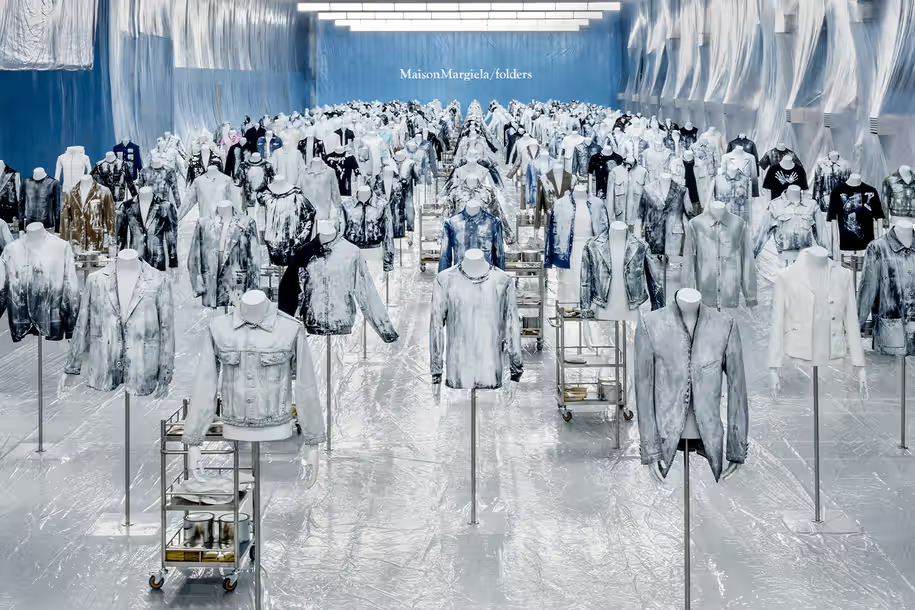
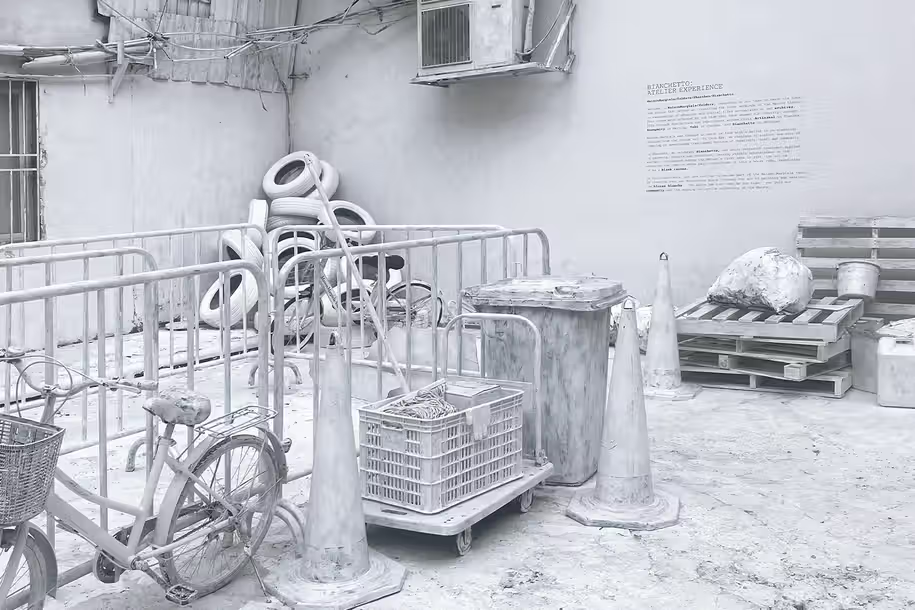
Maison Margiela has always stood apart from fashion’s more literal narratives. Where many houses build recognition through logos, spectacle, or celebrity, Margiela has long built meaning through absence, anonymity, and transformation. That is why the recent “BIANCHETTO: Atelier Experience” in Shenzhen, held on April 11–12, 2026, matters as more than a branded installation. It was the final chapter of the broader MaisonMargiela/folders initiative, a project conceived to reveal internal materials, creative timelines, and the hidden architecture behind the house’s identity.
At the center of this experience was one of the maison’s most recognizable visual codes: Bianchetto, the white overpaint technique that covers the surface of a garment while never fully erasing what lies beneath. Participants were invited to bring a piece from their own wardrobe and have it transformed under the guidance of the Maison Margiela Atelier team, turning the act of customization into something closer to ritual than decoration.
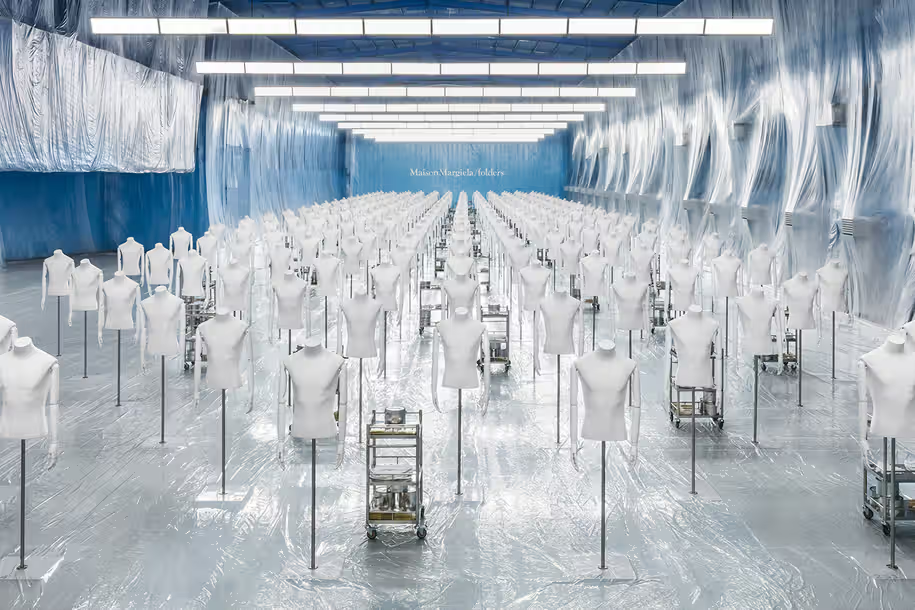
This is what makes Margiela different. The Bianchetto is not simply paint. It is a philosophy of surface. It suggests that fashion does not begin at perfection, but at intervention. A garment is not finished when it is made; it continues to evolve through gesture, wear, fracture, and memory. As the white layer ages, cracks, and fades, the object becomes more personal, not less. In Margiela’s world, clothing is never frozen. It records time.
The choice to stage this chapter in Shenzhen, at the Hairun Badminton Courts in Nanshan District, also matters. The experience was part of a wider China-centered expansion that included Maison Margiela’s Fall 2026 runway in Shanghai and a sequence of exhibitions across multiple cities dedicated to the maison’s foundational codes, including Artisanal, Tabi, Anonymity, and Bianchetto. Both Vogue and GQ framed this strategy as a major statement: not a temporary activation, but a serious cultural positioning of Margiela within a new global conversation.
What is especially compelling is that the Bianchetto experience collapses the distance between atelier and audience. Reports on the event describe participants entering a space shaped by the codes of the maison and, in some cases, wearing the white blouse blanche associated with the atelier tradition. The message was subtle but powerful: Margiela was not only showing a code, but inviting the public to step inside the grammar of the house itself.
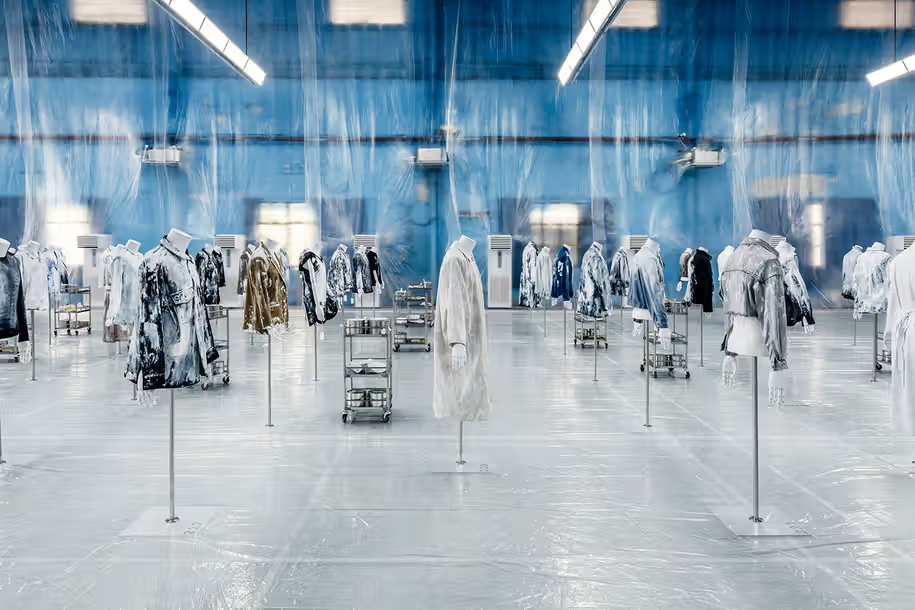
There is also something unusually intimate about asking someone to bring their own garment. Fashion usually sells us something new. Margiela, instead, asked for something already lived in. That decision changes the emotional structure of the experience. Rather than presenting luxury as possession, it presented luxury as transformation. The garment already had a past; the maison simply added a new layer of meaning to it. This feels especially coherent with a house that has always treated memory, incompleteness, and reconstruction as part of its visual intelligence. The event’s significance lies exactly there: in showing that the most radical fashion is sometimes not about invention, but reinterpretation.
Under Glenn Martens, this language appears not diluted but expanded. Recent coverage in Vogue and GQ suggests that Maison Margiela is entering a new phase of visibility and ambition, particularly through its 2026 China program. Yet what remains intact is the house’s resistance to obviousness. Even in expansion, Margiela does not abandon its codes. It doubles down on them. Bianchetto, then, becomes the perfect symbol of this moment: a white surface that conceals, reveals, and transforms all at once.
In the end, BIANCHETTO: Atelier Experience was not memorable because it was interactive. It was memorable because it expressed, with rare clarity, what Maison Margiela has always understood: that fashion is not only about form, but about what time does to form. White, here, is not purity. It is process. It is erasure and evidence at once. It is the moment a garment stops being merely worn and starts becoming remembered.
Editor’s Reflection
In Shenzhen, Maison Margiela did not simply stage an event. It reopened one of its deepest house codes, transforming white from a color into a gesture, a process, and a language.
What makes Bianchetto so enduring is that it has never been about decoration alone. It is about transformation. A surface is covered, but not erased. A garment is altered, yet its past remains visible beneath the white. In that tension between concealment and memory, Margiela continues to express one of the most intelligent ideas in fashion: that clothing is not static, but shaped by time, intervention, and meaning.
This is why the experience in Shenzhen felt significant. It was not only an event, but a reminder that Maison Margiela has always treated fashion as something deeper than image. Here, white became more than purity or minimalism. It became evidence of process — a way of showing that what is most powerful in fashion is often what reveals its own making.
By Nicolò Di Stefano

For selected advertising and editorial partnerships, contact qeditorial@gmail.com.


Leave a Reply