
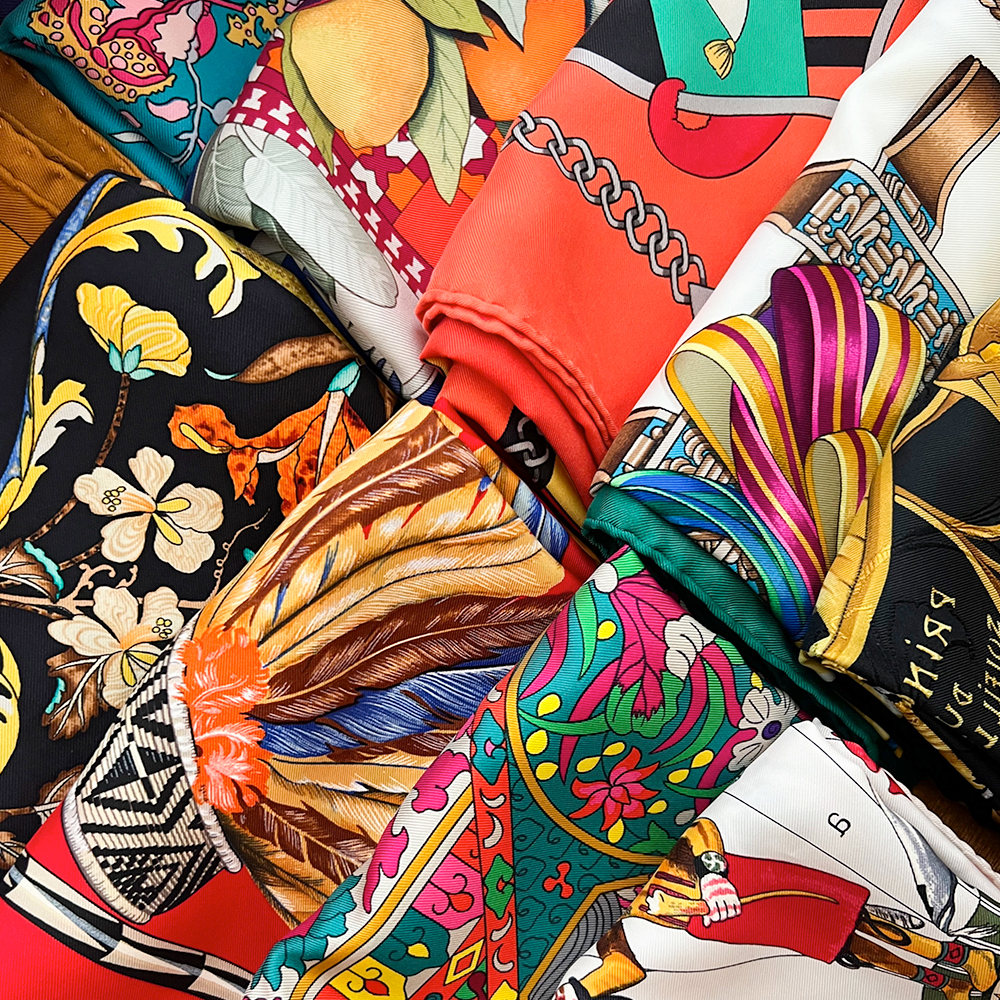
How a house born in harness-making became one of the most admired empires in fashion — not by chasing time, but by mastering it.

Luxury is often mistaken for excess.
But the greatest houses were not built on excess.
They were built on discipline.
Before Hermès became a symbol of refinement, rarity, and cultivated desire, it belonged to another world entirely: the world of utility, precision, and equestrian life. The house was founded in Paris in 1837 by Thierry Hermès as a harness and saddle workshop, serving a clientele for whom travel, carriage, and horse culture required objects of technical perfection as much as beauty. From the beginning, Hermès was not about decoration alone. It was about exactness. It was about making things properly.
This origin matters because it explains everything that followed.
Hermès did not enter fashion as a house of spectacle. It entered modernity through craftsmanship. Its identity was forged long before the modern luxury system existed, and that is precisely why its authority feels so different even today. Where many brands sell image first and product second, Hermès built its power from the opposite direction: material first, gesture first, savoir-faire first. The house itself continues to describe this as an artisanal model rooted in freedom to create, exceptional materials, transmission of know-how, and objects designed to last.

That is one of the secrets of Hermès:
its style was never invented as marketing.
It emerged from a way of making.
Over time, the house expanded beyond harnesses and saddlery into leather goods, silk, ready-to-wear, jewelry, watches, and the broader language of modern luxury. But unlike many empires that grow by dilution, Hermès expanded by coherence. Every category it entered still carried the same internal code: restraint, functionality, excellence of material, and an almost severe respect for craftsmanship. Even when the object became softer, more decorative, or more culturally visible, the grammar remained unmistakable. Hermès explicitly links its uniqueness to “the aesthetics of function,” beautiful materials, and durable objects rather than trend-driven novelty.

This is why Hermès became more than a brand.
It became a standard.
Its rise was not built on noise, but on consistency. Generation after generation, the house maintained a rare balance between continuity and evolution. It remained family-influenced, independent in spirit, and unusually protective of its internal culture. Hermès still describes itself as an independent, family-owned, artisanal, creative, and responsible French house — a positioning that is not only symbolic, but strategic. In an industry often transformed by conglomerate logic and short-term visibility, Hermès has turned patience into power.
And that patience has produced one of the strongest identities in fashion.
To understand Hermès is to understand that true desirability is not always created by saturation. Often, it is created by distance. Hermès never built its myth through indiscriminate accessibility. It built it through selectivity, continuity, and the quiet confidence of not needing to explain itself too often. Its objects do not usually scream for attention. They project something far more difficult to produce: certainty.
That certainty found some of its most iconic expressions in leather goods.
The Kelly bag, originally designed in the 1930s by Robert Dumas, became a legend after Grace Kelly was photographed using it to shield her pregnancy from paparazzi. What might have remained a beautiful structured bag became, through image and circumstance, one of fashion’s most enduring icons. Hermès itself recounts that moment as the event that transformed the bag into the Kelly as the world knows it.
The Birkin, later, would represent something else: not simply elegance, but modern cultural obsession. Hermès presents it today through the language of rare leathers, clean lines, patina, and connoisseurship — all elements that reinforce the bag’s status not merely as a fashion item, but as an object of fetishized permanence.

But Hermès is not loved only because it has icons.
It is loved because it created a total world in which every object seems to belong to the same philosophy. The scarves, the leather, the equestrian references, the discreet hardware, the color, the discipline of line, the refusal of vulgar overstatement — all of it contributes to a universe that feels complete. Hermès does not just sell products. It sells a coherent civilization of taste.
That is where its empire truly begins.
Many fashion houses become powerful because they dominate a season.
Hermès became powerful because it learned how to dominate meaning.
Its uniqueness lies in the fact that it never needed to abandon its origins in order to remain contemporary. The equestrian past did not become a museum relic. It remained active inside the brand’s codes: in leather, in hardware, in silhouette, in attitude, in the way movement and utility still inform beauty. Hermès has repeatedly framed its own history as a dialogue between the painstaking work of artisans and the changing lifestyles of its customers. That double thread — craft and life, permanence and adaptation — is what allowed the house to survive every era without becoming generic.
And survive it has.

More than survive, in fact: it has grown into one of the most powerful luxury houses in the world. Hermès reported €16 billion in revenue in 2025, with recurring operating income of €6.6 billion, figures that show not only scale but extraordinary profitability. These numbers matter because they confirm something cultural as much as financial: Hermès has managed to translate rarity, artisanal identity, and long-term brand discipline into modern market dominance.
Yet numbers alone do not explain affection.
Hermès remains one of the most admired brands because its power still feels tied to values people instinctively recognize: patience, excellence, restraint, and permanence. In an age of overproduction, it suggests control. In an age of imitation, it suggests lineage. In an age of speed, it suggests time.
That is why Hermès occupies such a singular place in the imagination of fashion.
It represents luxury not as trend, but as order.
Not as theatrical excess, but as cultivated exactness.
Not as seasonal excitement, but as continuity made desirable.

Its style is unique because it is not constructed around constant reinvention. It is built around fidelity — fidelity to materials, to gesture, to know-how, to the intelligence of function, and to a visual language that evolves without losing its center. Hermès does not need to become someone else to remain relevant. It remains relevant by becoming more fully itself.
And perhaps this is the deepest reason the house became an empire.
Because the world changes, but the desire for what is made with integrity does not.
Because taste changes, but the authority of true craftsmanship does not.
Because fashion is full of noise, but very few houses know how to turn silence into power.
Hermès did.
From a harness-maker’s workshop in nineteenth-century Paris to one of the most admired and profitable empires in luxury, its ascent was never merely commercial. It was civilizational. It taught the market that the highest form of luxury is not excess visibility.
It is unmistakable identity.

“Hermès did not become an empire by following fashion’s noise, but by turning discipline, craft, and permanence into one of the most powerful forms of desire the modern world has ever known”
By Nicolò Di Stefano
Selected by the Editor
Where luxury is designed for Shiba Inus and their people.

For selected advertising and editorial partnerships, contact: contact@qeditorial.com



Leave a Reply