
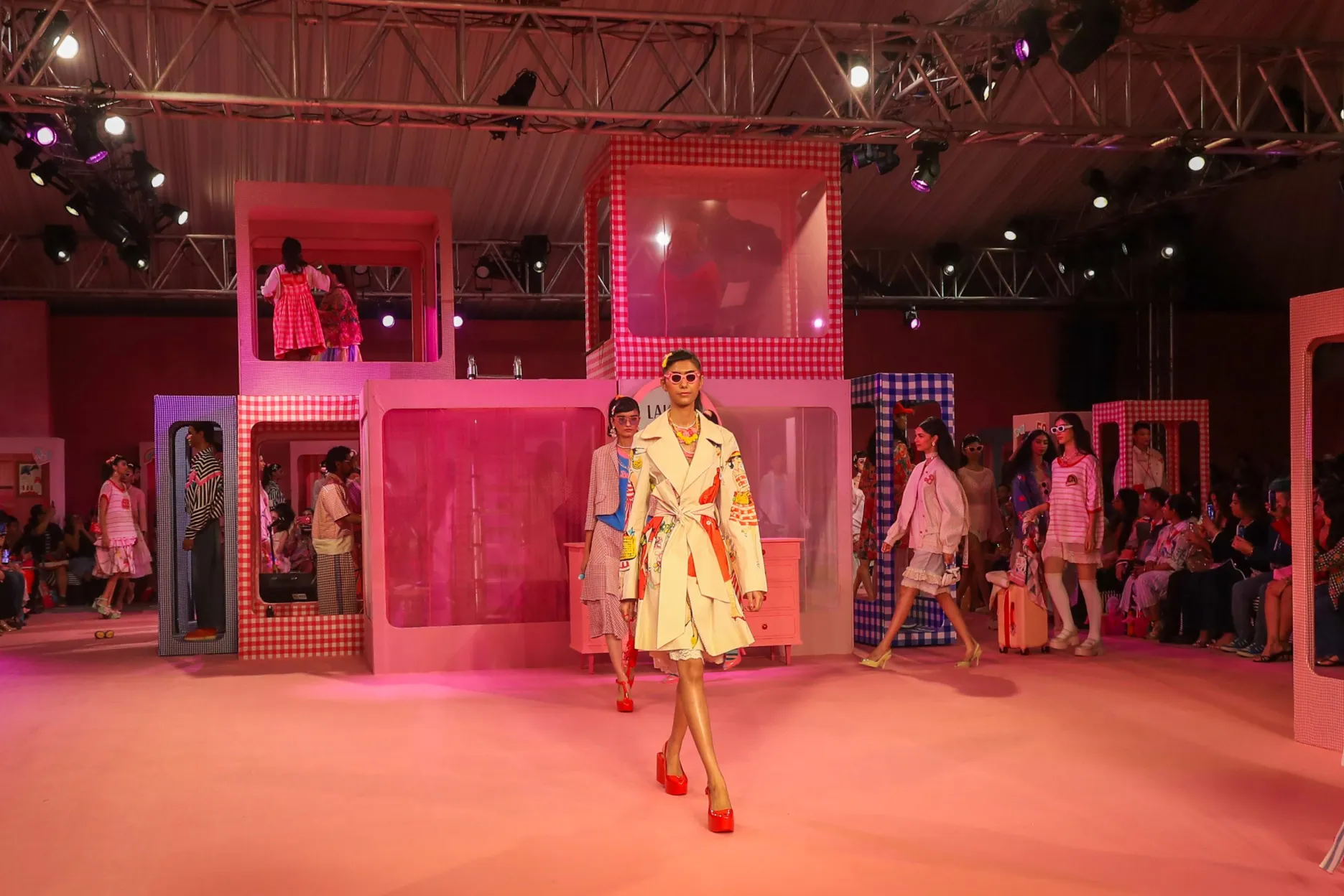
Péro reimagines Barbie’s wardrobe through Indian craftsmanship and the freedom of dressing up.

At the opening showcase of Lakmé Fashion Week in partnership with FDCI, held on October 14, 2026, at Taj Palace in New Delhi, Péro presented Dream Dress-Up, its Spring/Summer 2027 collection created in collaboration with Mattel’s Barbie. Against a pink backdrop, a live band, life-sized Barbie boxes and a playful runway presentation set the scene for a collection that drew on the doll’s familiar visual language while giving it a distinctly Péro interpretation.
Aneeth Arora founded the New Delhi-based Indian label Péro in 2009. The label draws on Indian textile traditions and artisan craftsmanship, combining relaxed silhouettes, handcrafted details, and unexpected patterns and textures. Its playful approach to clothing makes room for different fabrics and details to coexist. For Dream Dress-Up, Arora brought this design language into conversation with a character whose appearance has evolved across more than six decades.
The collection opened with black-and-white stripes, a reference to the swimsuit Barbie wore when she debuted in 1959. From there, the runway moved through pink separates, jackets, skirts, dresses, denim, checks, multicoloured stripes, and florals. Barbie-inspired motifs, bows, and playful accessories brought familiar elements of her world into the clothes. The silhouettes ranged from T-shirts and jackets to slip dresses, pyjamas, bloomers, and blouses, with lace and embellishments adding further detail.

Pink remained prominent, but it shared the collection with a variety of colours, patterns, and silhouettes. In an interview with Chloe Chou for The Nod, Arora observed, “The Barbie universe is very interesting. The first thing that comes to people’s minds is pink. But there’s much more to Barbie than just pink.”
The Barbie many of us recognise is closely associated with pink, polished femininity, and an hourglass silhouette. Her appearance has evolved over the years, and the 2023 film brought renewed attention to the character and the world surrounding her. Péro’s collection invites us to look at that evolution through clothing. If Barbie can wear so many different styles, what makes her recognisable? And how much can her appearance change before we stop seeing the character we know?
From Hello Kitty to Barbie
Péro had previously collaborated with Hello Kitty, a project that attracted international attention. According to Arora’s interview with The Nod, that collaboration helped bring the label to Mattel’s attention, leading the company to approach her about working with Barbie. The new partnership gave Péro an opportunity to explore another familiar character through its own design language.
Arora and her team studied Barbie’s history and visual details, from her original striped swimsuit to the motifs that have become part of her identity. Rather than recreate iconic outfits one by one, Péro used these references to develop a wardrobe that reflected both Barbie’s history and the label’s approach to clothing.
Rather than relying on a single aesthetic, the collection allows familiar elements of Barbie’s visual identity to coexist with different silhouettes, patterns, and details. Barbie remains recognisable, but her clothes allow her to take on different styles and moods. Péro’s interpretation makes room for that variety without relying on pink or any single visual reference to define the entire collection.

Inside Barbie’s Wardrobe
For Arora, Dream Dress-Up centred on the idea of building a wardrobe rather than creating a series of individual outfits. As she explained to The Nod:
“Because the overarching theme was ‘Dream Dress-Up’, it was about how a child sees a Barbie in an ensemble in the box. So, it was more about putting a wardrobe together—of silhouettes, colours, and patterns—and that’s how we approach clothing at Péro as well.”
The clothes reflect this approach. Denim and jackets sit alongside dresses and blouses, while lace, bows, and florals add different textures and moods. Decorative motifs and accessories carry the playful quality of dressing a doll.
The show extended this sense of play into its presentation. Models stepped out of Barbie boxes as a live band performed. The soundtrack alternated between pop music and voiceovers from vintage American Barbie advertisements, while some models wore inline skates or shoes fitted with wheels. References to Ken appeared through lettering and numbers incorporated into the clothes. The staging drew on the imaginative world of Barbie, where clothes, characters, and make-believe come together.
That sense of play also connects the collection to the way we use clothing. We dress differently depending on our surroundings, our circumstances, and how we feel. Sometimes we experiment with a look we wouldn’t usually choose; sometimes we dress for an occasion or try on an alter ego. A change in appearance doesn’t necessarily mean we want to become someone else. Clothes can help us express a side of ourselves that we don’t always show.
Barbie offers a familiar example of this process. Changing her outfit opens up possibilities for imagining different characters, occupations, and lives without erasing the character underneath. With Dream Dress-Up, Péro brings that imaginative freedom to the runway, connecting the pleasure of dressing up with the ways clothing allows us to explore and express ourselves.
Editor’s Note
This article is part of Q Voice, QEditorial’s platform for individual perspectives on fashion, culture, and identity. Written by Aditi Dhapola, it explores Péro’s Dream Dress-Up collection through the relationship between clothing, imagination, and self-expression. Quotations from Aneeth Arora are drawn from her interview with Chloe Chou for The Nod, linked within the text.




Leave a Reply