
he holiday season invites us to give generously. But before filling our wardrobes and shopping bags, perhaps we should ask a more meaningful question: what exactly are we buying, and what will it leave behind?
By Nicolò Di Stefano

The Most Wonderful Time to Buy. But Are We Buying the Right Things?
There is something beautiful about Christmas shopping.
The illuminated streets, the decorated windows, the anticipation of finding something special for someone we love. Fashion has always been part of this celebration. A beautifully made sweater, a warm scarf, a carefully chosen coat or a simple shirt can become more than a gift. It can become a memory.
Giving is a pleasure, and it should remain one.
But somewhere between seasonal promotions, endless online advertisements and the promise of extraordinary discounts, we seem to have forgotten an important question.
What are we actually buying?
Not the brand. Not the logo. Not the photograph that convinced us to click Add to Cart.
What is the product itself?
What is it made from? How was it constructed? Will it still look beautiful in two years? And when we no longer want it, what happens next?
These questions should not take the joy out of Christmas shopping. They should bring meaning back into it.
Because perhaps the most thoughtful gift is not the one that costs the most, but the one that deserves to be kept.
Five Sweaters or One Good Sweater?
Imagine walking into a store with $150 to spend.
One option is to buy five sweaters at $30 each. Different colors, different styles, an instant expansion of your wardrobe.
The alternative is to spend the same amount on one well-made sweater in good-quality wool.
At first, the decision may appear obvious. Five garments offer more variety. More outfits. More opportunities to wear something different.
But what happens after six months?
Will those five sweaters still hold their shape? Will the seams remain intact? Will the fabric retain its appearance after repeated washing? And, perhaps most importantly, will we still want to wear them?
The price of a garment means very little without considering how often we will use it.
A $150 sweater worn 100 times costs $1.50 per wear. A $30 sweater worn only five times costs $6 per wear.
Of course, an expensive garment is not automatically a better garment. A poorly made wool sweater can be a worse purchase than a durable, well-constructed cotton blend.
The lesson is not to spend more.
It is to understand what we are paying for.
For too long, fashion has encouraged us to measure satisfaction through quantity.
A fuller wardrobe. A new delivery. Another purchase. Another seasonal trend.
Yet a wardrobe filled with clothing we rarely wear is not necessarily a wardrobe of abundance.
Sometimes, it is simply a collection of forgotten decisions.
Are We Buying Clothing or Petroleum?
Here is a question worth considering before purchasing your next garment.
If the fabric is predominantly made from petroleum-derived synthetic fibres, are you paying for textile craftsmanship, or are you primarily paying for the transformation of fossil-based raw materials into something fashionable?
Polyester, conventional nylon and acrylic are synthetic fibres commonly produced using fossil-based feedstocks.
Their existence has transformed the textile industry. They are versatile, often inexpensive, and capable of delivering technical properties that natural fibres cannot always provide.
But their widespread use also raises important questions.
According to Textile Exchange’s 2026 Materials Market Report, polyester represented approximately 59% of global fibre production in 2025. Around 88% of polyester production came from virgin fossil-based materials.
That is an extraordinary figure for an industry so closely associated with beauty, creativity and self-expression.
A garment may be presented through an elegant campaign, styled by talented professionals and displayed in a beautifully designed store.
Yet its material composition might tell a very different story.
This does not mean synthetic fibres have no place in fashion.
Technical sportswear, protective clothing, waterproof garments and certain performance textiles benefit enormously from engineered materials. In some applications, their durability and functional properties are essential.
Nor should we assume that every garment containing polyester is disposable or poorly made.
The more important question concerns unnecessary dependence.
Does an everyday sweater really need to be made almost entirely from acrylic? Does a simple shirt require a high percentage of polyester? Are synthetic fibres being used for genuine performance, or simply to reduce production costs?
We should be curious enough to ask.

What Touches Your Skin Matters
Clothing is one of the few products we purchase that remains in direct contact with our bodies for hours every day.
We carefully consider what we eat, what we apply to our skin and which ingredients are present in our personal-care products.
Why should the fabrics touching our bodies deserve less attention?
Natural fibres offer characteristics that can make them particularly appealing for everyday clothing.
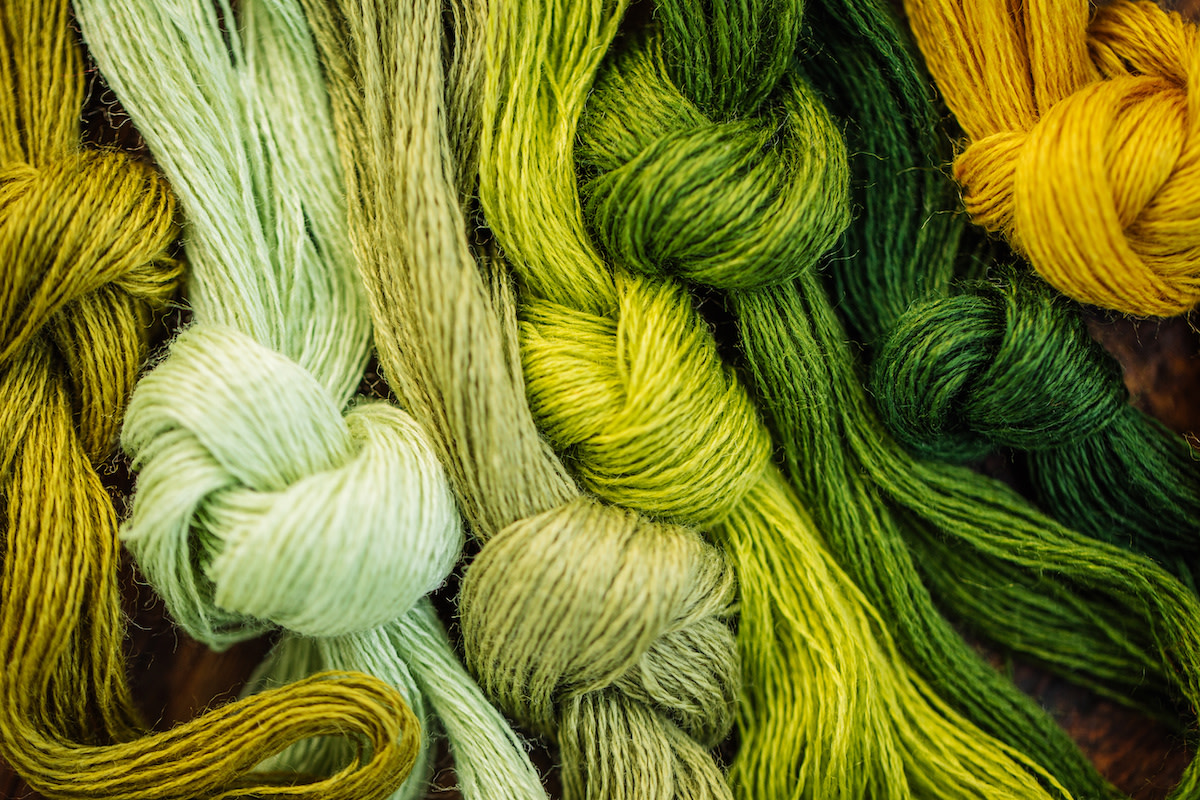
Cotton is generally comfortable, absorbent and familiar against the skin. Linen allows air to move through its structure and is particularly well suited to warmer climates. Wool provides natural temperature regulation and moisture management, while cashmere offers exceptional softness when properly selected and cared for.
Synthetic fibres behave differently.
Some polyester fabrics can retain body odors more readily than cotton or wool. Scientific studies have demonstrated differences in odor intensity and the interaction between textile fibres and odor-producing compounds.
Anyone who has worn a poorly ventilated synthetic sweater in a warm room may recognize the discomfort that can follow.
But an important distinction must be made.
Synthetic fibres are not automatically harmful to the skin. Comfort depends on fabric construction, fit, moisture management, finishing chemicals and individual sensitivity. Some engineered synthetic garments can perform exceptionally well, particularly during physical activity.
Natural fibres are not universally suitable for everyone either. Coarse wool can irritate sensitive skin, and certain fabric dyes or finishes can cause reactions regardless of whether the underlying fibre is natural or synthetic.
The argument for natural fibres does not require exaggeration.
Their qualities deserve appreciation on their own merits.
When choosing something to wear against the body, we should consider not only its appearance, but also its composition, breathability, texture and comfort.
That is part of understanding quality.
Read the Label, Not Just the Logo
There is a quiet irony in modern shopping.
We can spend twenty minutes deciding whether a logo is fashionable, yet barely five seconds examining the label that explains what the garment is made from.
Perhaps this Christmas, we should reverse that habit.
Look at the composition.
Is the shirt 100% cotton? Is the sweater made from genuine wool? Is the cashmere authentic, or is the garment primarily acrylic with a small cashmere percentage?
There is nothing inherently wrong with a blend. Some blended fabrics offer useful advantages in strength, stretch, care or performance.
The important thing is knowing what you are purchasing and whether that composition makes sense for the garment.
Then look beyond the fibres.
Examine the seams. Consider the density and consistency of the fabric. Look at the finishing, the buttons, the lining and the way the garment hangs.
Ask whether it can be maintained or repaired.
A beautiful piece of clothing should not become disposable simply because a button comes loose.
And do not confuse a famous name with guaranteed quality.
Luxury branding and quality craftsmanship can coexist, but they are not synonymous.
A well-made garment from an independent designer or a lesser-known manufacturer may offer excellent value without the price premium associated with a globally recognized label.
Fashion should celebrate creativity and craftsmanship, not teach consumers that quality can only be purchased through status.
Buy the material. Buy the construction. Buy the design. But never assume that the label on the outside tells the whole story.
Natural Does Not Mean Impact-Free
Choosing natural fibres can be a thoughtful step, but it is important to resist the temptation to describe every natural material as automatically sustainable.
Cotton cultivation can require substantial water and agricultural inputs, depending on where and how it is grown.
Wool production involves land use, animal welfare and greenhouse gas considerations.
Cashmere, despite its beautiful qualities, can carry environmental pressures associated with grazing and production practices.
Even biodegradable natural fibres may be treated with dyes, finishes or blended materials that complicate their eventual disposal.
A 100% natural-fibre label is therefore valuable information, but not proof of environmental responsibility.
Production methods matter. Traceability matters. The lifespan of a garment matters.
And above all, how much we purchase matters.
A beautifully made cashmere sweater bought unnecessarily and never worn is not automatically a responsible purchase.
The most sustainable wardrobe is not necessarily the one containing the greatest number of garments marketed as sustainable.
It may be the one in which every piece has a purpose.
The Hidden Cost of Disposable Fashion
The fashion industry’s environmental challenge does not end when a garment leaves the store.
It continues through washing, repeated consumption, disposal and the enormous quantities of textiles that enter waste-management systems every year.
The European Environment Agency identifies textile consumption as a significant source of pressure on natural resources, land, water and the climate.
Synthetic textiles also contribute to microplastic pollution through the release of microscopic fibres during washing, wearing and disposal.
These are not abstract concerns.
They are consequences of the materials we produce and the speed at which we consume them.
A garment purchased today may remain in the environment long after it disappears from our wardrobe.
And the problem is not simply that clothing eventually becomes waste.
It is that the system increasingly encourages us to treat clothing as temporary.
New collections arrive constantly. Trends are replaced before they have had time to mature. The desire for novelty becomes more important than the appreciation of what we already own.
We buy, wear, lose interest and buy again.
There is nothing wrong with enjoying fashion or expressing ourselves through changing styles.
But there is a difference between creativity and consumption without consideration.
Perhaps the future of fashion depends partly on learning that difference.

This Christmas, Give Something That Lasts
The holiday season should be a celebration of generosity, not an exercise in guilt.
Nobody should feel that responsible shopping is reserved for people who can afford expensive clothing.
Quality exists at many price points.
A carefully selected cotton shirt, a durable wool scarf, a secondhand coat in excellent condition, or a thoughtfully made garment from a small independent designer can all become meaningful gifts.
Sometimes, buying vintage or pre-owned clothing is an even better choice than purchasing something newly manufactured.
And sometimes, the best decision is not to buy another garment at all.
But when we do choose to buy, perhaps we can approach the experience with a few simple questions.
Will this person genuinely enjoy wearing it?
Does the material suit the garment’s purpose?
Is it made well enough to last?
Can it be cared for, repaired or passed on?
Am I paying for real quality, or merely for the impression of it?
These questions do not diminish the magic of gift-giving.
They make it more personal.
A good gift is something chosen with attention.
A great gift is something that continues to give pleasure long after the wrapping paper has disappeared.
The Future Is Already in Our Wardrobes
We often talk about environmental responsibility as though it belongs to governments, corporations or future generations.
Certainly, manufacturers and policymakers bear a major responsibility for how clothing is designed, produced, marketed and eventually managed as waste.
Consumers alone cannot solve the structural problems of the fashion industry.
But our decisions still matter.
Every time we choose quality over unnecessary quantity, every time we repair something instead of replacing it, and every time we question the materials behind a beautiful advertisement, we make a small but meaningful distinction.
We begin treating clothing as something worth valuing rather than something destined to be replaced.
Christmas offers a particularly powerful moment to remember this.
The season brings together generosity, reflection and the desire to make others happy.
Why not extend some of that consideration to the things we buy, the people who make them and the world that will inherit them?
The answer is not to stop enjoying fashion.
It is to rediscover the pleasure of choosing well.
To appreciate natural materials without romanticizing them. To recognize the usefulness of technical fibres without accepting unnecessary dependence on disposable synthetics. To value craftsmanship without confusing it with a prestigious logo.
And to understand that a good garment does not need to be new every season to remain beautiful.
This Christmas, buy fewer things if you can. Choose better things whenever possible. Give something worth keeping.
Because the most fashionable choice we make today may ultimately be the one that still makes sense tomorrow.
Editor’s Note
By Nicolò Di Stefano, Editor-in-Chief, QEditorial
I have spent many years observing how fashion influences the way we see ourselves and the world around us. I continue to believe in its beauty, its creativity and its extraordinary ability to express identity.
But I also believe we need to ask more questions about what we consume.
As Christmas approaches, I do not want to discourage anyone from buying gifts or enjoying the excitement of the season. Quite the opposite. I believe a thoughtfully chosen gift carries a special meaning.
What concerns me is the idea that buying more automatically means having more.
Five inexpensive sweaters are not necessarily a better investment than one beautifully made garment. A famous label is not necessarily proof of quality. And a low price does not always tell us the true cost of production.
I would like to encourage our readers to rediscover the value of materials: the feel of good cotton, the warmth of wool, the softness of authentic cashmere, and the craftsmanship behind garments designed to last.
Not because natural fibres are perfect or synthetic materials are always wrong, but because informed choices are better choices.
We cannot ask future generations to respect a world that we are unwilling to consider in our own everyday decisions.
This holiday season, my wish is simple: enjoy fashion, celebrate generosity and give beautiful things.
But remember that true luxury is not always found in the name we wear.
Sometimes, it is found in the quality we choose, the care we give and the years a garment remains part of our lives.
Buy with pleasure. Choose with knowledge. Wear with respect.
QEditorial Magazine




Leave a Reply