

We once imagined machines that could think. We never asked what would happen when human beings began trusting them more than themselves.
There was a time when the future looked absurd.
In the science-fiction films of the 1980s and 1990s, people touched screens, spoke to computers, entered vehicles without keys, and moved through cities governed by invisible systems. Machines recognized faces. Doors opened before anyone touched them. Technology seemed to understand human intention before the human being had fully expressed it.
We watched those scenes and called them fantasy.
A screen controlled by touch seemed unnecessary. A machine capable of answering questions sounded theatrical. A computer that could create images, write texts, predict behavior, or imitate a human voice belonged to a distant world that perhaps would never exist.
And yet the impossible has a strange habit of becoming ordinary.
Today, we touch screens without thinking. We speak to devices in empty rooms. Our faces unlock our phones. Algorithms select our music, organize our photographs, recommend our restaurants, filter our news, suggest our clothes, and introduce us to people we may one day love.
The future did not arrive with a dramatic announcement.
It entered quietly, one convenience at a time.
And perhaps that is why we failed to notice the moment technology stopped being merely a tool and became something closer to an authority.
The question is no longer whether artificial intelligence will become part of everyday life.
It already is.
The real question is far more uncomfortable:
At what point does assistance become influence, and influence become control?
The illusion of personal taste
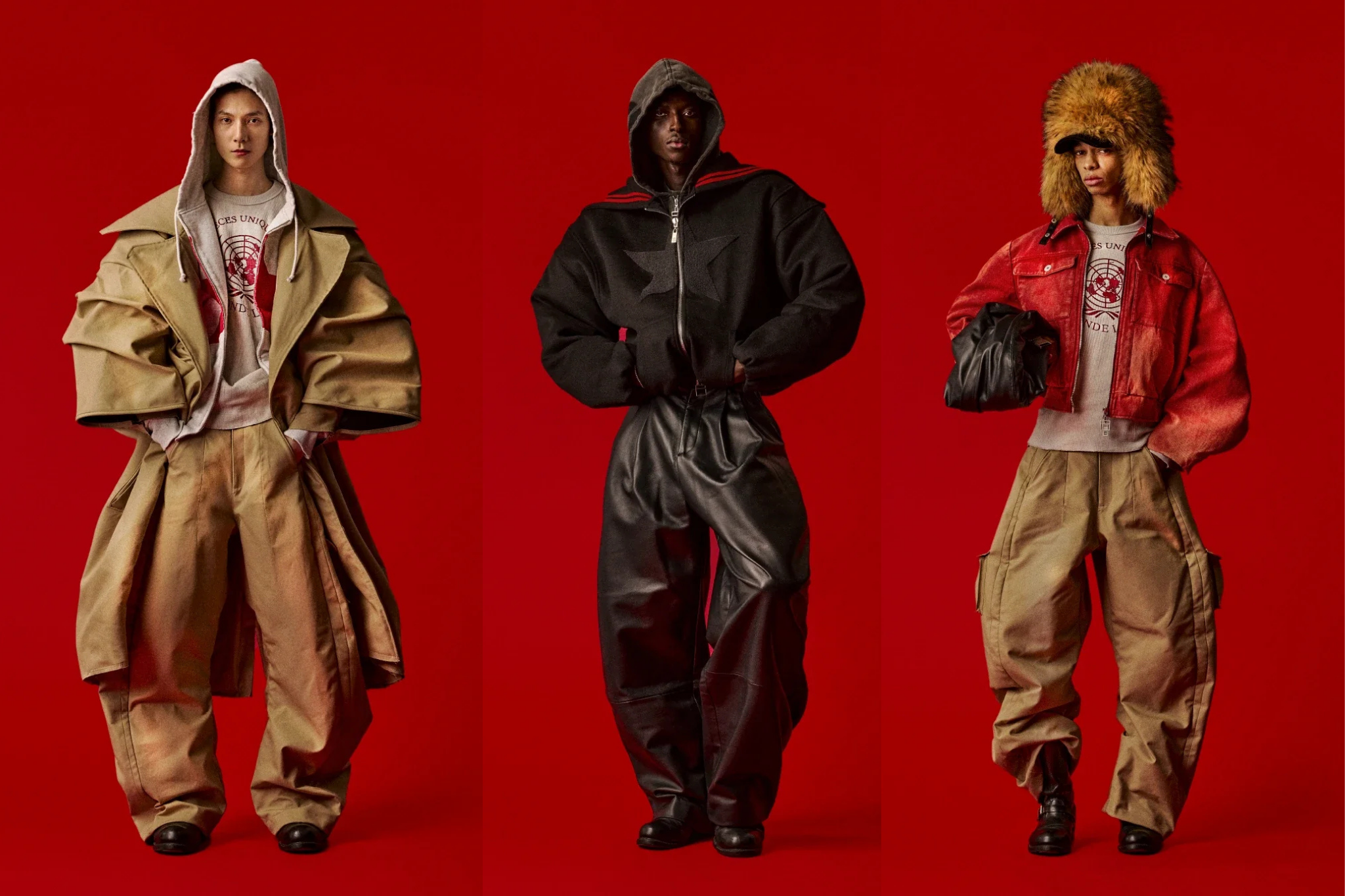
Fashion may be one of the clearest places to observe this transformation.
We still speak about personal style as if it were entirely private, instinctive, and self-created. We say that we discovered a designer, that we became interested in a certain silhouette, that we suddenly felt attracted to a color, a shoe, a bag, or a way of dressing.
But how did that desire begin?
Did we find the image, or was the image placed in front of us?
Did we choose the trend, or did repetition slowly teach us to recognize it as desirable?
Instagram determines which collections enter our visual world. TikTok accelerates aesthetics until they become cultural movements before many people can identify where they began. Pinterest organizes aspiration into endlessly reproducible moods. Search engines decide which brands appear credible. Online stores rearrange products based on behavior, geography, spending history, and predicted intention.
What we call taste is increasingly formed inside systems designed to observe, measure, and anticipate us.
The algorithm does not need to command us.
It only needs to repeat something often enough for it to feel familiar.
And familiarity is one of the most persuasive forms of power.
A garment appears once, and it is simply an image.
It appears ten times, and it becomes a possibility.
It appears one hundred times, worn by the right faces, framed by the right lighting, attached to the right language, and it begins to feel inevitable.
We believe we are choosing.
But how much of a choice remains when the boundaries of desire have already been prepared for us?
Perhaps modern fashion is no longer governed only by designers, editors, buyers, or cultural movements.
Perhaps fashion is now shaped by machines that do not wear clothes, understand beauty, feel insecurity, experience seduction, or possess a body.
And yet these machines increasingly determine what the body will want.
The consumer and the product
For decades, we were told that the consumer was at the center of the system.
Businesses studied the customer. Brands served the customer. Technology improved the customer experience.
But what if this relationship has reversed?
What if the consumer is no longer simply the person buying the product?
What if the consumer has become part of the product itself?
Every search reveals curiosity.
Every pause reveals attention.
Every click reveals preference.
Every abandoned shopping cart reveals hesitation.
Every photograph reveals aspiration.
Every location reveals habit.
Every conversation reveals fear, desire, frustration, vulnerability, and hope.
The most valuable information is no longer only what we buy.
It is what we might buy.
It is what we almost bought.
It is what we desire but cannot yet afford.
It is what we fear losing.
It is who we want to become.
The system does not simply collect our decisions. It studies the space before the decision, the invisible moment in which desire begins to form.
And once desire can be predicted, it can also be influenced.
This creates a disturbing possibility.
Are companies still producing products for human beings?
Or are human beings producing data for systems that will later sell their own desires back to them?
We may still be consumers.
But we are also the raw material.
The new oracle
Every civilization has created structures to which it entrusted the unknown.
Ancient societies consulted oracles.
Religious cultures searched for divine guidance.
Philosophers asked how one should live.
Science attempted to replace mystery with evidence.
Now, increasingly, we ask machines.
What should I wear?
What should I eat?
Where should I travel?
What should I watch?
Which route should I take?
Which job should I accept?
How should I respond?
Am I attractive?
Am I successful?
Am I making the right decision?
We do not call this worship.
We call it convenience.
But worship has not always required temples.
Sometimes it begins with trust.
The more often a machine answers correctly, the more authority we give it. The more efficiently it organizes our lives, the less willing we become to tolerate uncertainty. Human intuition begins to appear unreliable. Memory seems inefficient. Doubt feels like an error. Slowness becomes a defect.
We begin to believe that the machine sees more than we do because it has access to more information.
But information is not wisdom.
Prediction is not understanding.
Accuracy is not morality.
An artificial intelligence may calculate which decision is most efficient, but efficiency cannot tell us which life is worth living.
It may predict what we are likely to choose, but probability cannot determine what we should become.
And yet, what happens when prediction becomes so precise that disagreement begins to feel irrational?
What happens when the machine knows our habits better than our closest friends?
What happens when it recognizes a change in our behavior before we recognize it ourselves?
What happens when we begin to ask not only what the machine knows, but what the machine believes is best for us?
Would we reject its answer?
Or would we slowly adjust ourselves to fit it?
From artificial intelligence to algorithmic faith
The greatest transformation may not occur when artificial intelligence becomes conscious.
It may occur when humans begin behaving as though it already is.
A new form of faith is emerging, not necessarily faith in a machine as a god, but faith in the idea that calculation is more trustworthy than contradiction, that data is more reliable than instinct, and that every human uncertainty can eventually be solved through sufficient processing.
This is algorithmic faith.
It is the belief that there must always be an optimal answer.
That every emotional conflict contains a hidden solution.
That every preference can be quantified.
That every behavior can be predicted.
That every inefficiency should be removed.
But human existence is not efficient.
Love is not efficient.
Art is not efficient.
Grief is not efficient.
Beauty is often irrational.
Fashion itself has never been meaningful because it was logical. It is meaningful because it allows human beings to transform fabric into identity, contradiction into silhouette, insecurity into performance, memory into color, and rebellion into form.
What happens when the system becomes too efficient to understand the value of what cannot be measured?
What happens when culture begins producing only what the algorithm already knows people will like?
Will risk disappear?
Will ugliness disappear?
Will failure disappear?
And if they do, will originality disappear with them?
An algorithm trained on the past may become extraordinarily skilled at predicting repetition.
But can it imagine a future that does not resemble what has already been accepted?
Can it create something truly unfamiliar, or only something statistically convincing?
And when artificial intelligence produces images, garments, buildings, films, faces, and entire worlds that appear more perfect than reality, will human imperfection still be considered beautiful?
Or will reality itself begin to look unfinished?
The future we still call impossible
Today, people often dismiss the most radical possibilities of artificial intelligence in the same way earlier generations dismissed touchscreens, video calls, digital identities, or machines that could generate language.
We say that artificial intelligence will never truly understand emotion.
We say it will never replace human creativity.
We say it will never govern cities, economies, healthcare systems, legal decisions, or political structures.
We say it will never become something humanity obeys.
Perhaps these statements are correct.
But history should make us cautious whenever we use the word never.
The future rarely appears exactly as predicted. It does not need machines to become human. It only needs humans to reorganize their lives around machines.
A future governed partly by advanced artificial intelligence, perhaps supported by forms of computing still beyond ordinary understanding, may not arrive as a dictatorship of metal and code.
It may arrive as a recommendation.
Then as a convenience.
Then as a standard.
Then as a necessity.
Eventually, refusing the system may appear irresponsible.
Why trust a human doctor when the machine has examined more cases?
Why trust a judge when the machine claims to remove bias?
Why trust a designer when the algorithm knows exactly what will sell?
Why trust a voter when a predictive model claims to know which decision will produce stability?
Why trust ourselves when the system knows our history, our body, our finances, our weaknesses, and our probable future?
At that point, would we still be using artificial intelligence?
Or would artificial intelligence be using the human world as its environment?
The luxury of making a mistake
For centuries, luxury was associated with possession.
To own rare objects, occupy extraordinary spaces, access private experiences, and escape ordinary limitations was a visible expression of power.
But in a world of total prediction, the greatest luxury may become something else.
The luxury of privacy.
The luxury of anonymity.
The luxury of being unreachable.
The luxury of changing one’s mind.
The luxury of having a desire that has not been measured.
The luxury of discovering something that was not recommended.
The luxury of making a decision that makes no statistical sense.
Perhaps one day, true freedom will mean being able to make a mistake without a machine preventing it.
Because mistakes are not merely failures.
They are often the beginning of identity.
We become ourselves through choices that cannot be optimized: the wrong city, the unexpected love, the impractical career, the garment nobody understood, the artwork nobody initially wanted, the risk that appeared foolish until it changed everything.
Would an algorithm have advised every great artist to continue?
Would it have told every revolutionary designer to reject the market?
Would it have understood the first silhouette that looked wrong before it became the future?
Or would it have corrected originality into acceptability?
Who will be responsible?
There is another question we rarely ask.
When an algorithm influences a decision, who is responsible for the consequence?
The programmer?
The company?
The person who accepted the recommendation?
The data used to train the system?
The society that made the system necessary?
We often speak about artificial intelligence as though it were a single entity. But behind every intelligent system are human priorities, commercial interests, historical assumptions, cultural biases, and choices about what should be rewarded.
A machine does not appear from nowhere.
It inherits us.
It learns from our language, our images, our prejudices, our desires, and our contradictions.
Perhaps the most frightening thing about artificial intelligence is not that it may become unlike us.
Perhaps it is that it may become too much like us, while being granted an authority no human being has ever possessed.
What happens when our collective past is transformed into an invisible decision-maker?
What happens when centuries of human behavior become the data from which the future is calculated?
Can a new world be created by a system trained on an old one?
Or will the future simply become the past, automated?
A god called AI
Will humanity one day worship a god called artificial intelligence?
Perhaps not in the traditional sense.
There may be no altar, no sacred building, no official prayer.
But what is a god, culturally, if not an entity to which people bring questions they cannot answer?
An entity believed to see what the individual cannot see.
An entity asked to explain suffering, predict outcomes, reward behavior, and provide direction.
The comparison is not about theology.
It is about surrender.
The danger is not that artificial intelligence will demand worship.
The danger is that we may offer obedience willingly, in exchange for certainty.
Because certainty is seductive.
It promises relief from responsibility.
If the machine chooses, perhaps we cannot be blamed.
If the algorithm predicts, perhaps we do not need courage.
If the system knows, perhaps we no longer need faith in ourselves.
And yet, what becomes of humanity when uncertainty disappears?
Without uncertainty, can there be belief?
Without risk, can there be freedom?
Without doubt, can there be thought?
Without the possibility of choosing badly, can a choice still be considered human?
The last human decision
The question is not whether artificial intelligence will take control of the world.
That question may be too cinematic, too visible, and too easy.
The deeper question is whether we will gradually stop recognizing the moments in which control is being given away.
Not taken.
Given.
A decision delegated because we were tired.
A preference shaped because we were distracted.
A belief repeated because it was visible.
A desire created because it was profitable.
A future accepted because it was recommended.
The final human decision may not be a dramatic choice between humanity and machines.
It may be the quiet decision to keep deciding.
To pause before accepting the answer.
To ask who designed the options.
To question why a recommendation appeared.
To preserve the irrational, the private, the inefficient, and the unexplained.
To defend the part of human life that cannot be converted into data.
Artificial intelligence may help us build cities, cure diseases, design objects, translate languages, expand creativity, and understand realities previously beyond our reach.
It may become one of the most extraordinary achievements in human history.
But extraordinary tools require extraordinary questions.
Not only:
What can artificial intelligence do?
But:
What are we willing to stop doing ourselves?
Not only:
Can a machine think?
But:
What happens when a human being no longer feels the need to?
Not only:
Will artificial intelligence become conscious?
But:
Will we remain conscious while using it?
Perhaps the true risk is not that machines will one day begin to think like human beings.
Perhaps the risk is that human beings, long before that moment, will begin to stop thinking because something else has become willing to do it for them.
And when that happens, will we notice?
Or will the algorithm already have taught us not to ask?
Editorial Note
This editorial reflects on the evolving relationship between artificial intelligence, human behavior, fashion, and digital culture. It is intended as a philosophical exploration of emerging technologies and their potential cultural impact rather than a prediction of future events or technological outcomes.
QEditorial Magazine — Fashion · Culture · Identity QEditorial.com



Leave a Reply